












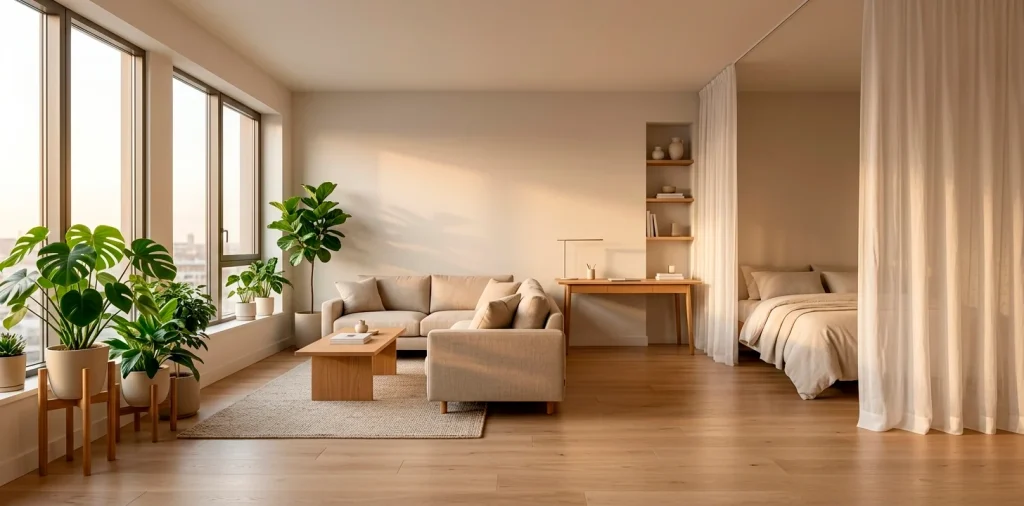

Living in a studio often feels like trying to fit a king-sized life into a shoebox, doesn’t it? I remember my first tiny flat where my bed was basically my dining table and my office. It was a chaotic mess until I discovered Feng Shui. Today, I’m sharing how you can turn that cramped energy into a balanced sanctuary that actually lets you breathe. 🌿
Mastering the Command Position
Ever felt a weird sense of anxiety while lying in bed? You likely have a ‘command position’ problem. In Feng Shui, your bed and desk should allow you to see the door without being directly in line with it. I call this the ‘boss move’ because it subconsciously tells your brain you’re safe and in control of your surroundings.
If your studio layout forces the bed into a ‘dead man’s position’ (feet pointing straight at the door), don’t panic. You can easily fix the energy flow with a solid footboard or a strategically placed trunk. I personally use a small bench at the end of my bed to create that necessary barrier. It keeps the chi from rushing right over you while you sleep. Ever noticed how much better you rest when you aren’t staring down the hallway?
Zoning with Purposeful Chi
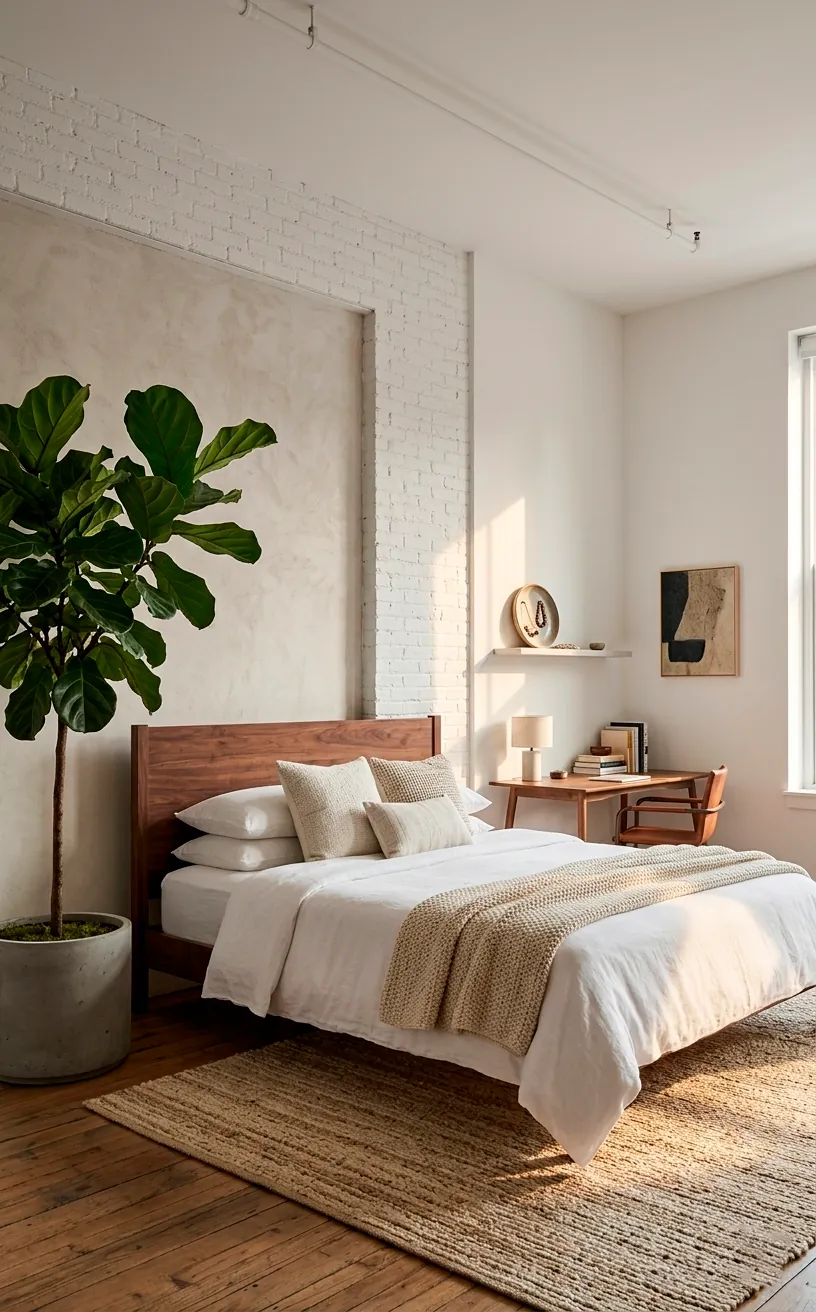
Your studio shouldn’t feel like one giant, blurry room where you eat, sleep, and cry over emails in the same spot. I recommend creating distinct ‘energy zones’ to keep your sanity intact. Use open shelving or sheer curtains to mark where the ‘bedroom’ ends and the ‘living room’ begins. This physical boundary helps your brain switch gears from work mode to chill mode. IMO, a clear division of space is the secret sauce to small-living happiness. For more inspiration on keeping things light, check out these breezy coastal studio apartment ideas for more layout inspiration.
Decluttering the Soul and the Floor
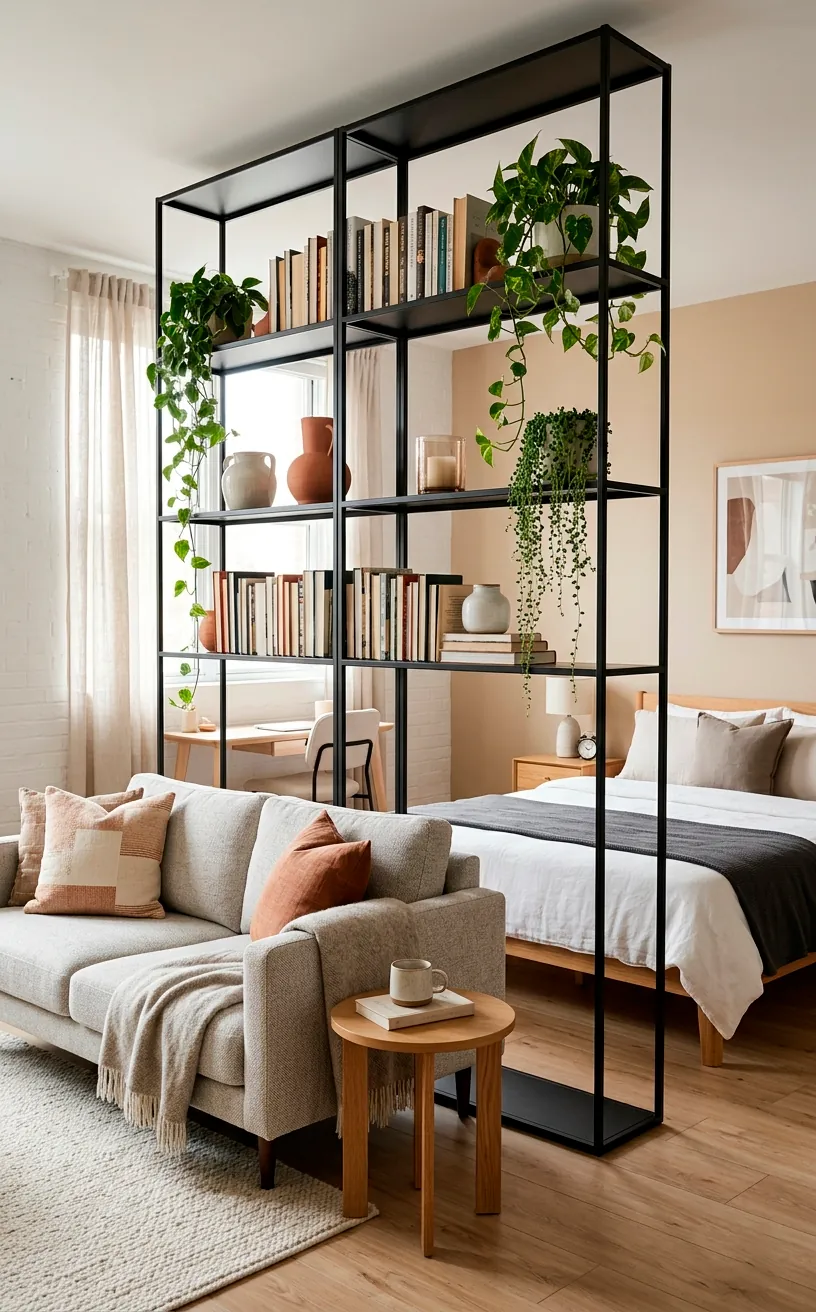
Let’s be real: clutter is the ultimate chi-killer. If you can’t see your floor, your energy can’t circulate, and neither can you! I firmly believe that every object in a studio must earn its keep. If you haven’t used that dusty air fryer in six months, it’s gotta go.
Floating furniture:
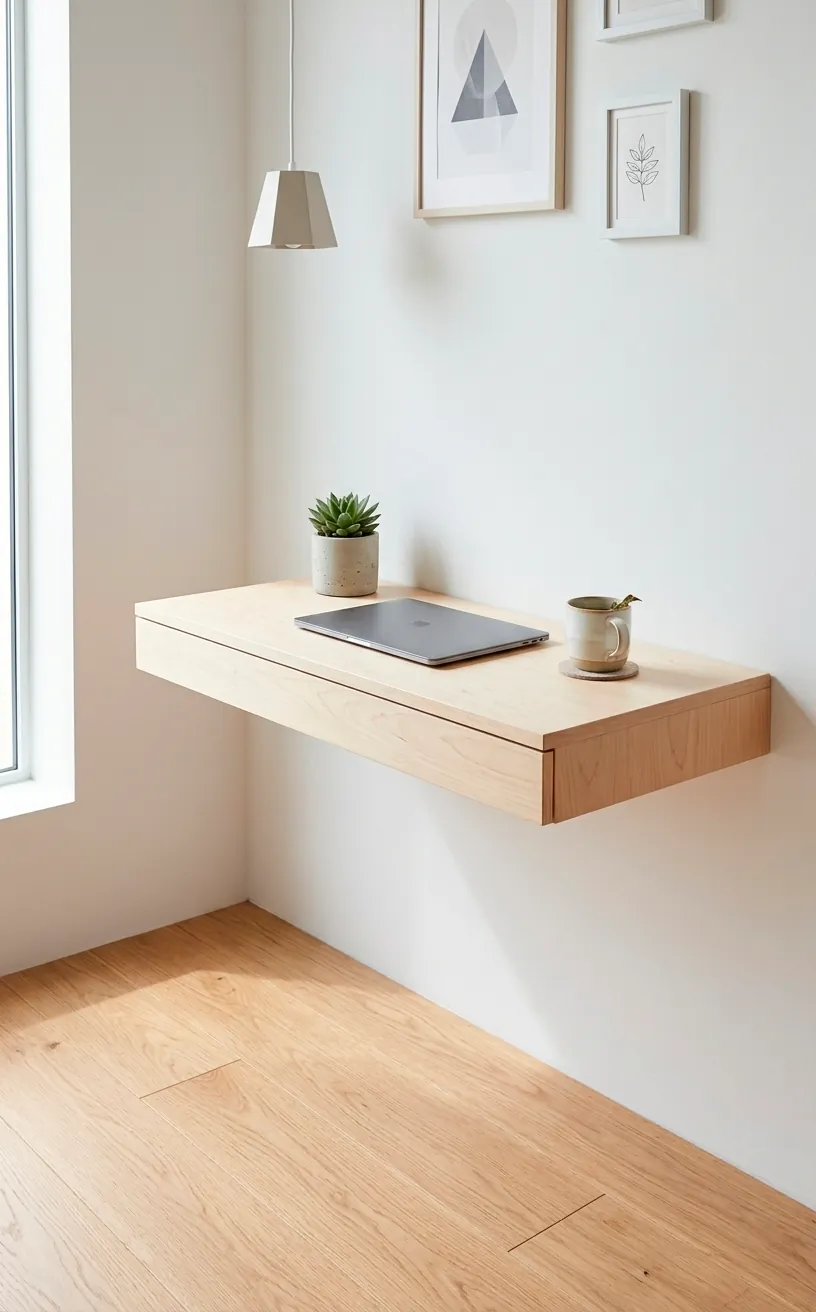
- Use wall-mounted desks to save floor space.
- Pick sofas with visible legs to let energy flow underneath.
- Install floating shelves for your ‘altar’ or decor items.
I once kept every single book I ever owned in a 300-square-foot space. It felt like the walls were closing in on me! Once I switched to a minimalist library, the whole room felt five degrees cooler and twice as big. Have you checked under your bed lately? If it’s a graveyard for old shoes, you’re blocking your own progress. Clean it out and watch your productivity soar.
The Magic of Reflective Expansion
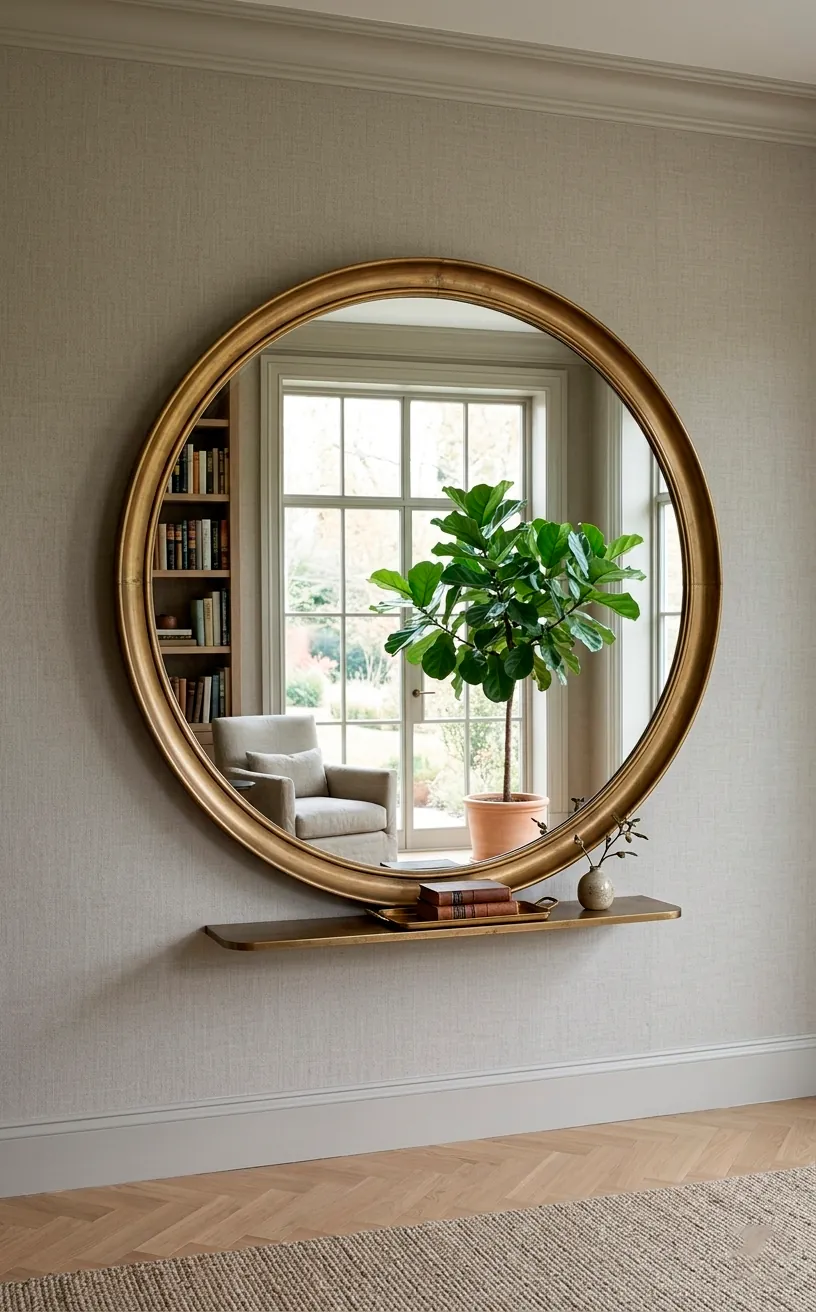
Mirrors are the ‘aspirin’ of Feng Shui because they fix almost everything. In a studio, a large mirror can virtually double your space, but placement is everything. I never place a mirror directly opposite the bed because it can bounce too much energy around while you’re trying to sleep. No one wants to wake up to a startled reflection at 3 AM, right?
Instead, hang a mirror where it can reflect a window or a piece of art. This brings more light and ‘outside’ energy into your home. It’s a total game-changer for those window-deprived units that feel a bit like caves. FYI, a round mirror works best to soften the harsh corners of a standard rectangular studio apartment.
Bringing the Outside In
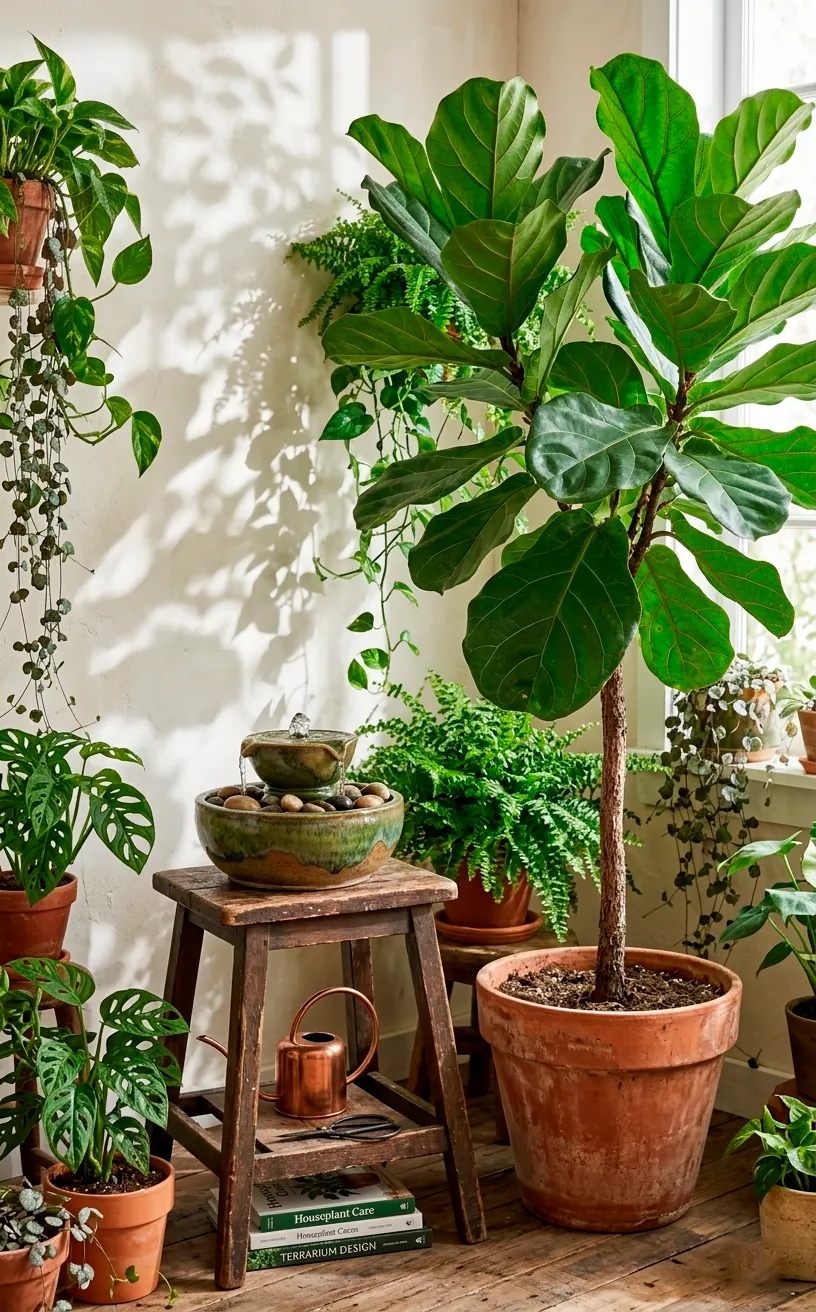
We aren’t meant to live in concrete boxes without a hint of nature. Adding plants is the easiest way to introduce the ‘Wood’ element, which represents growth and vitality. I suggest starting with a snake plant if you’re a notorious plant-killer like I used to be. They are basically indestructible and clean your air while you sleep.
Key elements to include:
- Wood: Use plants or wooden furniture for growth.
- Water: A small fountain or blue accents for flow.
- Fire: Candles or warm lighting for passion.
- Earth: Ceramic pots or crystals for grounding.
- Metal: Metallic frames or hardware for clarity.
Balance is key here. Too much ‘Fire’ in a tiny space might make you feel restless. I love using a mix of terracotta pots and wooden accents to keep things feeling earthy and stable. You can also find the perfect tall fiddle leaf fig to elevate your home’s chi.
Does your space have all five elements yet? If you’re missing one, you’ll probably feel it in your mood. I added a small brass tray last week to hit that ‘Metal’ requirement, and suddenly my workspace felt much more professional.
Softening the Sharp Edges
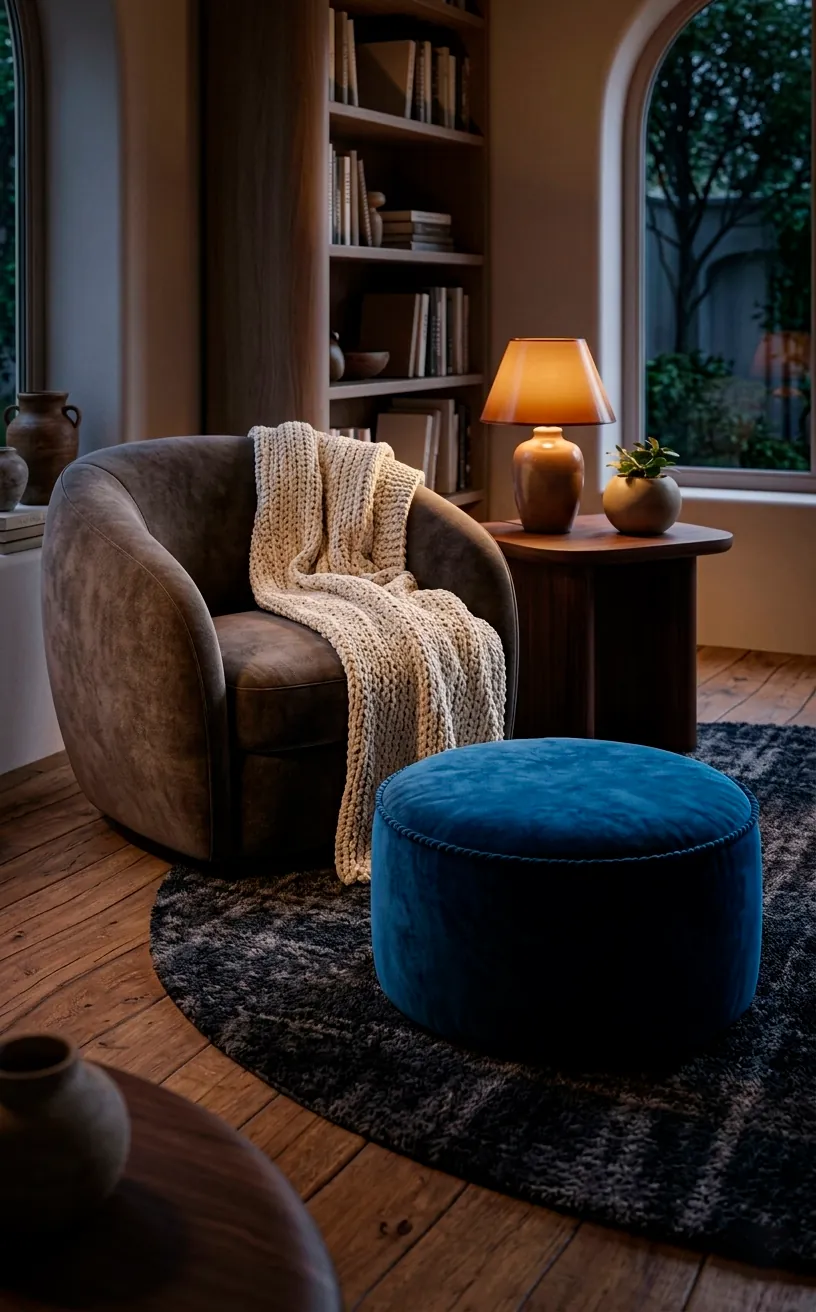
Most studio apartments are full of ‘poison arrows’—sharp corners from walls, desks, and cabinets that point directly at your sitting or sleeping areas. These ‘arrows’ cut through the chi and create a nervous vibe. I always choose furniture with rounded edges whenever possible. A circular coffee table or a curved armchair can instantly make a room feel more welcoming and less like a sterile office. If you’re stuck with a sharp-edged desk, just drape a soft throw over the corner or place a trailing plant there to mask the point. It’s a simple hack that makes a massive difference in how the room feels. Why live in a space that feels prickly when you could live in a hug?
Lighting Your Way to Zen
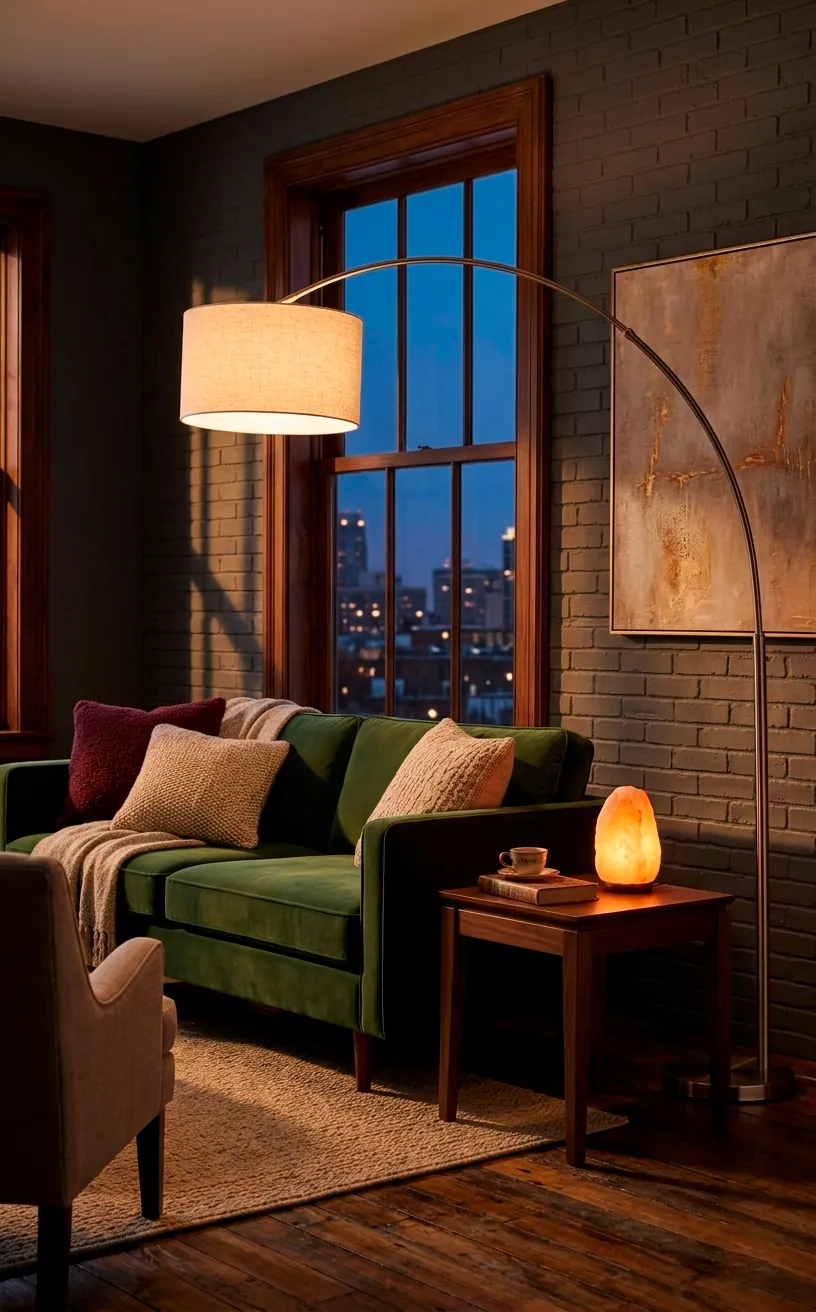
Harsh overhead lighting is the enemy of a balanced home. It flattens everything and makes your studio feel like a convenience store. I recommend ‘layering’ your light to create depth and warmth. Use floor lamps for general glow, task lamps for working, and small accent lights for mood.
In my experience, warm-toned bulbs (around 2700K) are essential for a cozy atmosphere. I also love using smart bulbs so I can dim the lights as the sun goes down. This signals to your body that it’s time to wind down. Ever tried reading by a salt lamp? The orange glow is incredibly grounding after a long day of staring at blue screens. It’s all about creating a rhythm that matches your natural energy levels throughout the day.
The Entryway Gateway
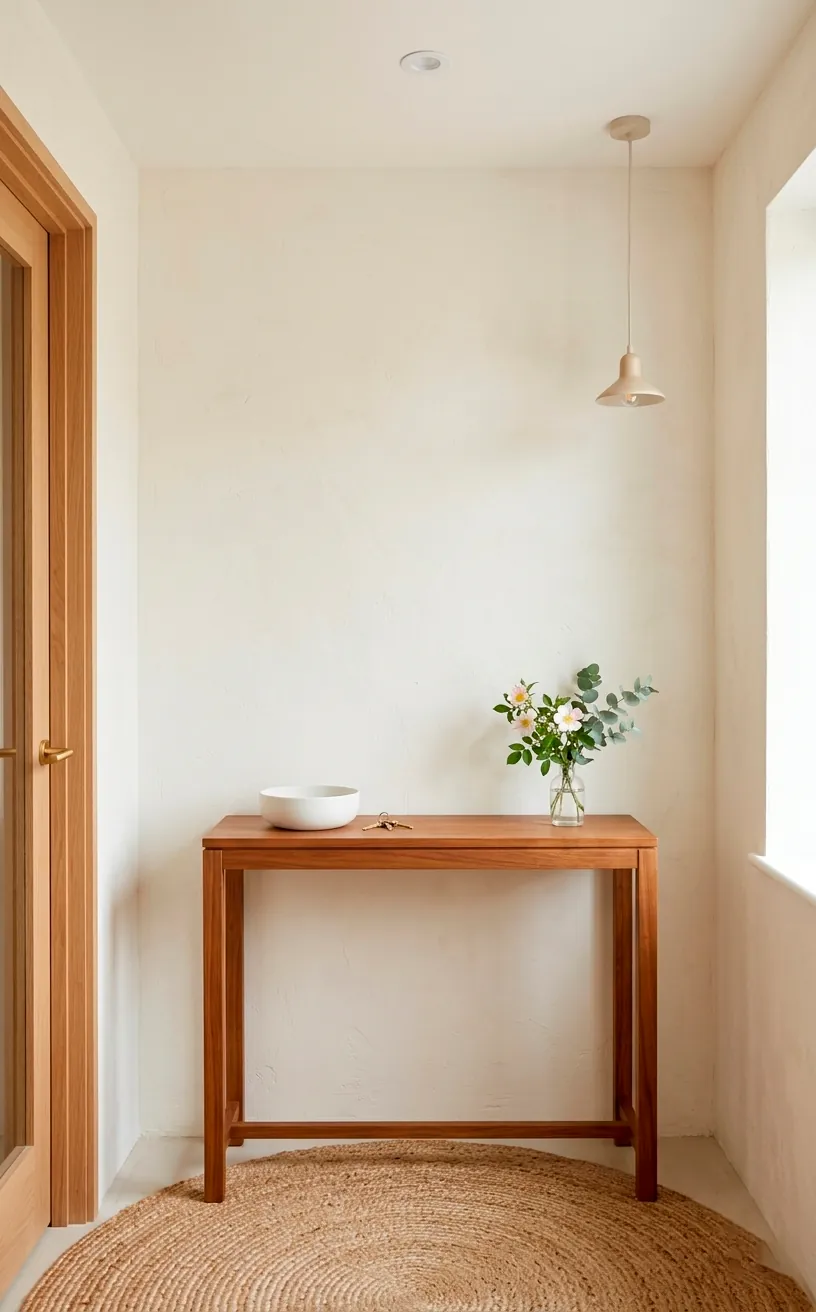
Your front door is the ‘mouth of chi.’ It’s where all the opportunities and energy enter your life. In a studio, the door often opens right into your kitchen or living room, which can feel jarring. I create a ‘mini foyer’ using a small rug and a wall hook for my keys. This defines the entrance and stops the outside world from crashing into your private space.
Entrance essentials:
- A clear path: Remove shoes and bags immediately.
- A bright light: Ensure the area is well-lit.
- Something beautiful: A small piece of art or a plant nearby.
Keeping this area clear is non-negotiable for me. When I used to pile my Amazon boxes by the door, I felt stuck in every other area of my life too. Coincidence? Feng Shui says no. Clean the entrance, and you’ll find that your mind feels clearer the moment you walk through the door. It’s like giving your apartment a deep, refreshing breath every time you come home.
Directing Energy Vertically
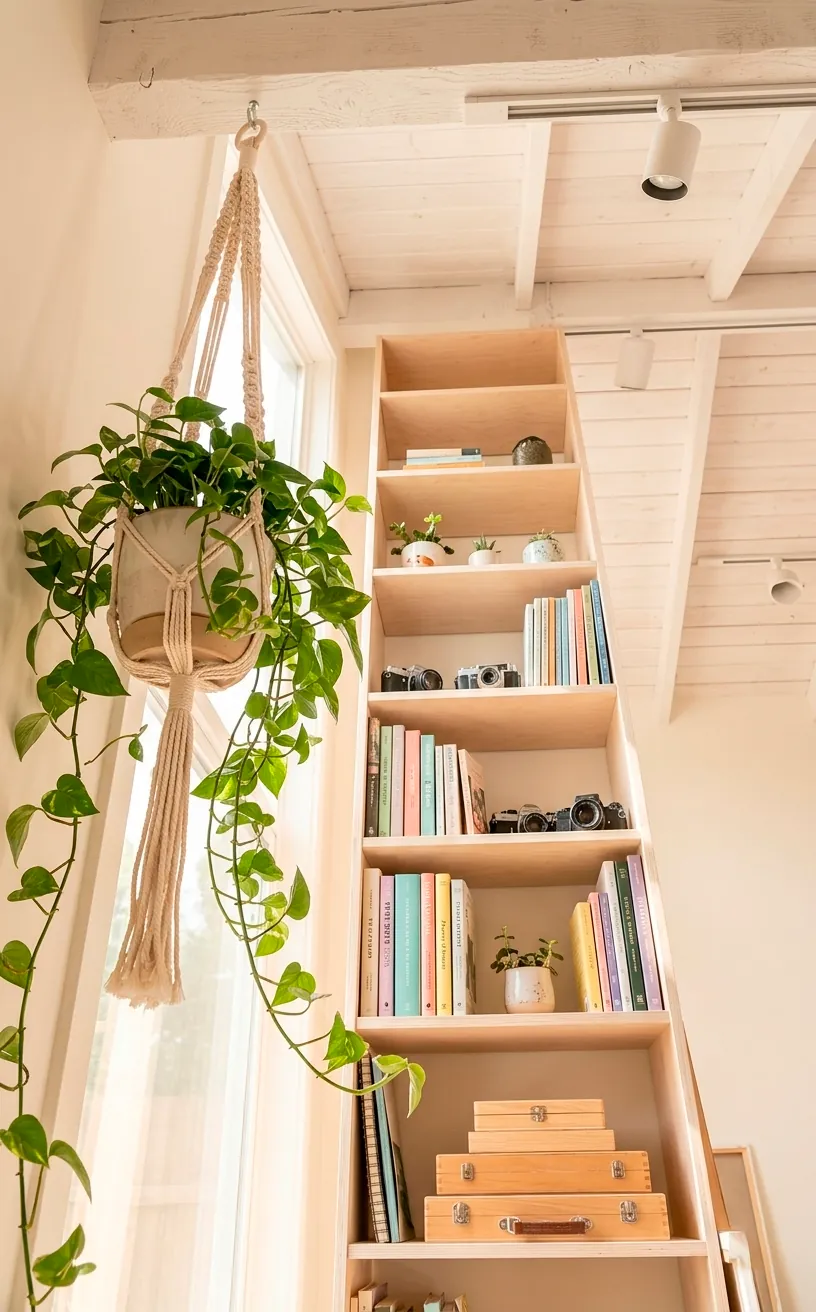
When square footage is tight, look up! Directing the eye upward lifts the energy of a room and prevents it from feeling heavy. I use tall bookshelves and hanging plants to draw the gaze toward the ceiling. This vertical movement makes the studio feel much loftier than it actually is. IMO, hanging a plant in a neglected corner is the fastest way to revive a ‘dead’ energy spot.
I also recommend using long, floor-to-ceiling curtains. Even if your windows are small, hanging the rod higher and wider creates the illusion of grandeur. It’s a classic designer trick that aligns perfectly with Feng Shui principles of expansion. Have you ever noticed how a room with high-reaching decor feels more inspiring? It literally encourages you to think bigger and reach higher in your daily life.
The Invisible Balance: Scent and Sound
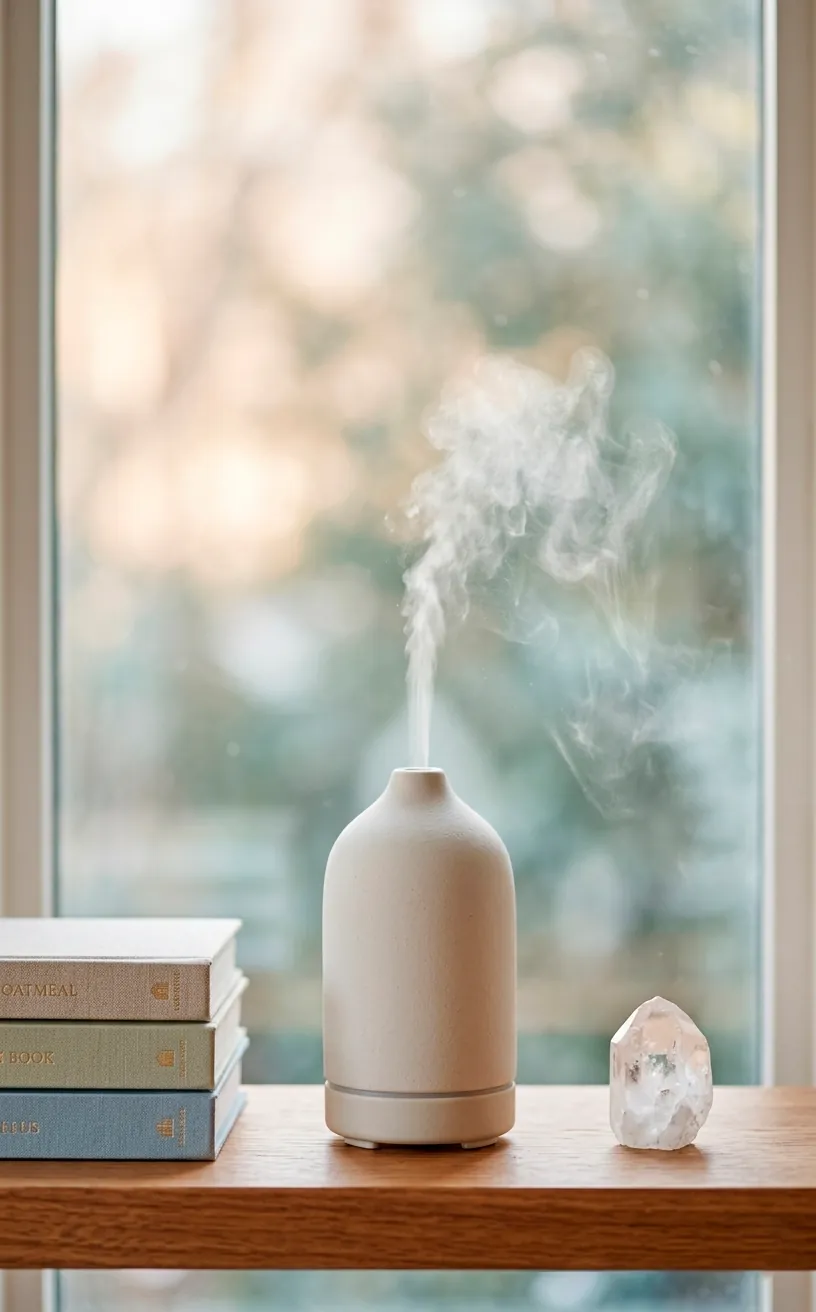
Feng Shui isn’t just about what you see; it’s about what you feel. In a small space, smells and sounds can become overwhelming quickly. I use an essential oil diffuser with peppermint or citrus during the day to keep the ‘Yang’ energy high and productive. At night, I switch to lavender or sandalwood for a ‘Yin’ vibe that aids sleep. Keeping the air fresh is vital—stale air equals stale energy. I also love a small wind chime or a singing bowl to ‘clear’ the space after a stressful day. It sounds a bit woo-woo, but try it once and tell me you don’t feel a shift. Your studio is your sanctuary, so make sure it smells and sounds like one too. 🍋
Conclusion
Creating a balanced studio doesn’t require a massive budget or a degree in interior design. It just takes a little intentionality and a few smart moves like finding the command position and clearing that entryway clutter. Remember, your home reflects your inner state, so treat your space with love. Which of these tips are you going to try first? Let me know in the comments, and happy decorating! 🏠
Related posts
See All15 Vintage Circus Inspired Details for Playful Kids Bedroom Decor
Bring the magic of the big top home! Discover 15 playful, vintage circus-inspired decor details that will transform your kid's …
Read moreThe Complete Guide to Styling a Dining Room Credenza for Everyday Elegance
Give your dining room credenza the ultimate glow-up. Discover easy, elegant styling tips that balance everyday function with show-stopping design.
Read more15 Dried Citrus and Cinnamon Garlands for a Naturally Cozy Kitchen
Forget mass-produced decorations. Transform your kitchen into a naturally cozy, aromatic sanctuary with these 15 beautiful dried citrus and cinnamon …
Read moreThe Dog-Friendly Camper: Designing a Van Interior for Your Pets
Transform your camper van into the ultimate dog-friendly adventure mobile! Discover clever interior design hacks, durable materials, and cozy setups …
Read more