











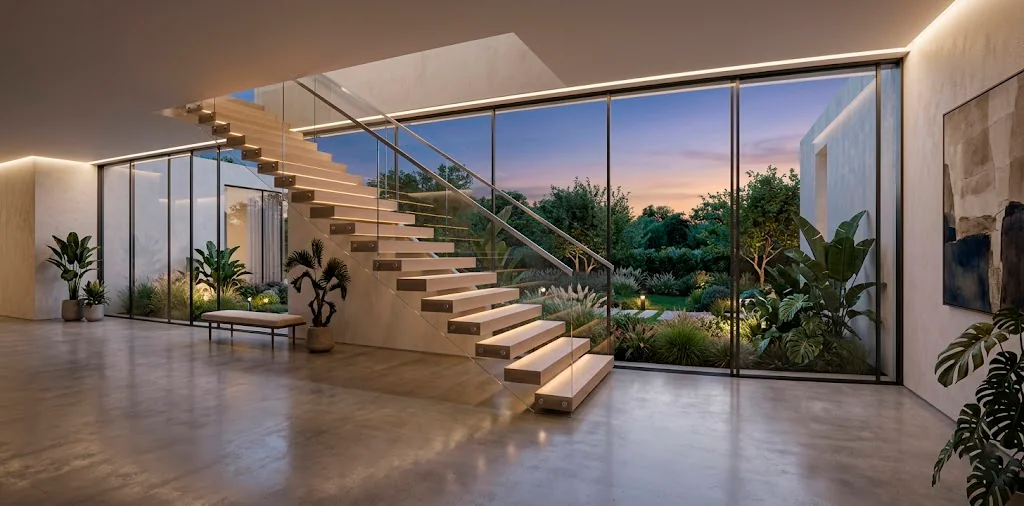

I’ve spent way too many hours scrolling through architectural eye candy, and nothing stops me mid-swipe like a staircase that looks like it’s defying gravity. You know the ones—those sleek treads that seem to sprout right out of the wall? If you’re ready to ditch the clunky wood blocks and go for that airy vibe, you’re in the right place. Let’s make it happen.
The Magic of the Hidden Stringer
Ever wonder how those stairs actually stay up without a massive pole or a chunky wall underneath? The secret usually lies in a hidden steel stringer tucked behind the drywall. Think of it as the invisible backbone that does all the heavy lifting while you take all the credit for having a cool house. It’s the ultimate architectural cheat code for that clean, ‘walking on air’ sensation.
You essentially bolt a massive steel beam to the wall studs before you even think about the finish. If you’re building from scratch, this is your best friend. IMO, there’s nothing more satisfying than watching a guest’s face when they realize there’s nothing but air beneath their feet. Just make sure your contractor doesn’t skip the reinforcement, unless you want your living room to become a crash pad.
Choosing Your Cantilever Strategy
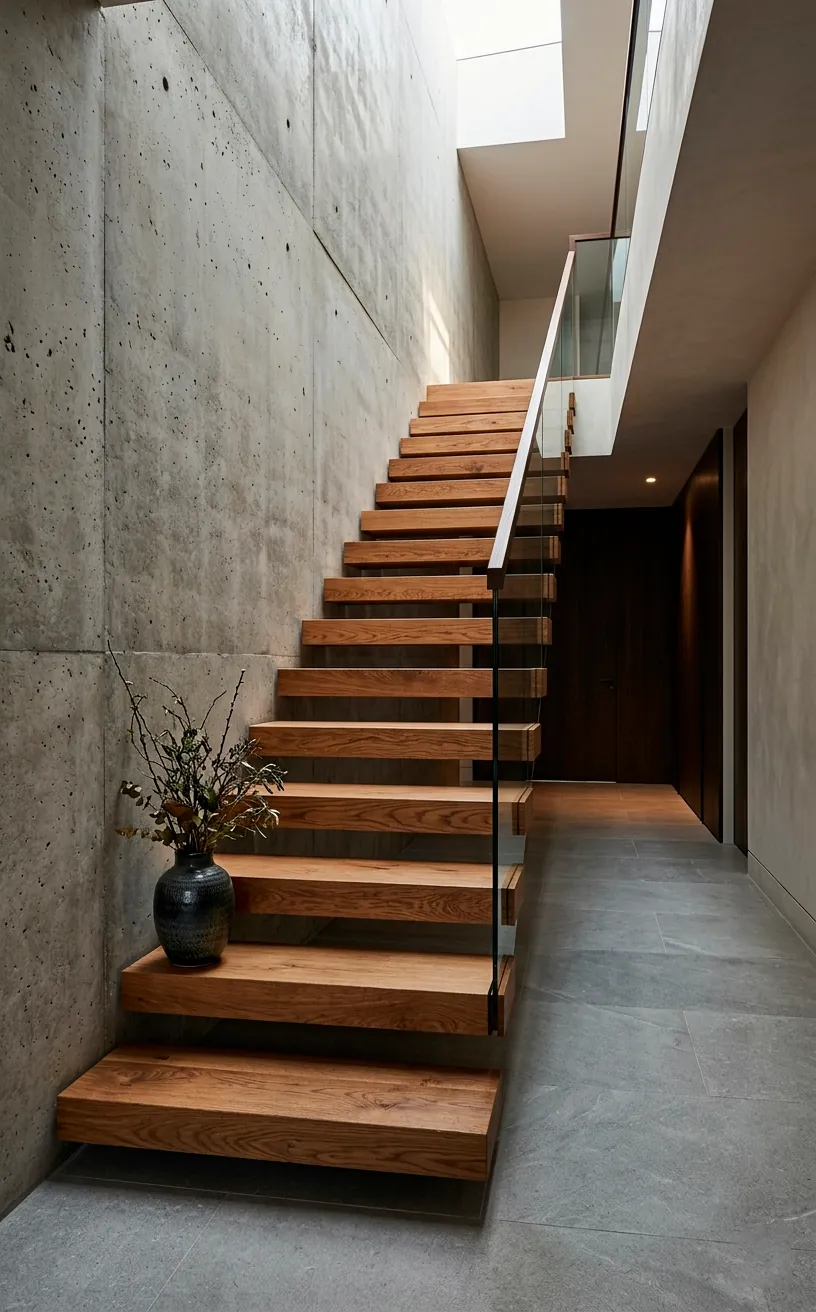
If you want the purest floating look, you need to go cantilevered. This means the treads are supported at only one end, usually anchored into a reinforced masonry or steel-framed wall. It’s a bit of a commitment, but the payoff is massive visual weightlessness. Why settle for a boring staircase when you can have a sculpture? You’ll need a structural engineer who actually knows their stuff to ensure the treads don’t flex like a diving board every time the dog runs up them.
The Power of Glass Balustrades
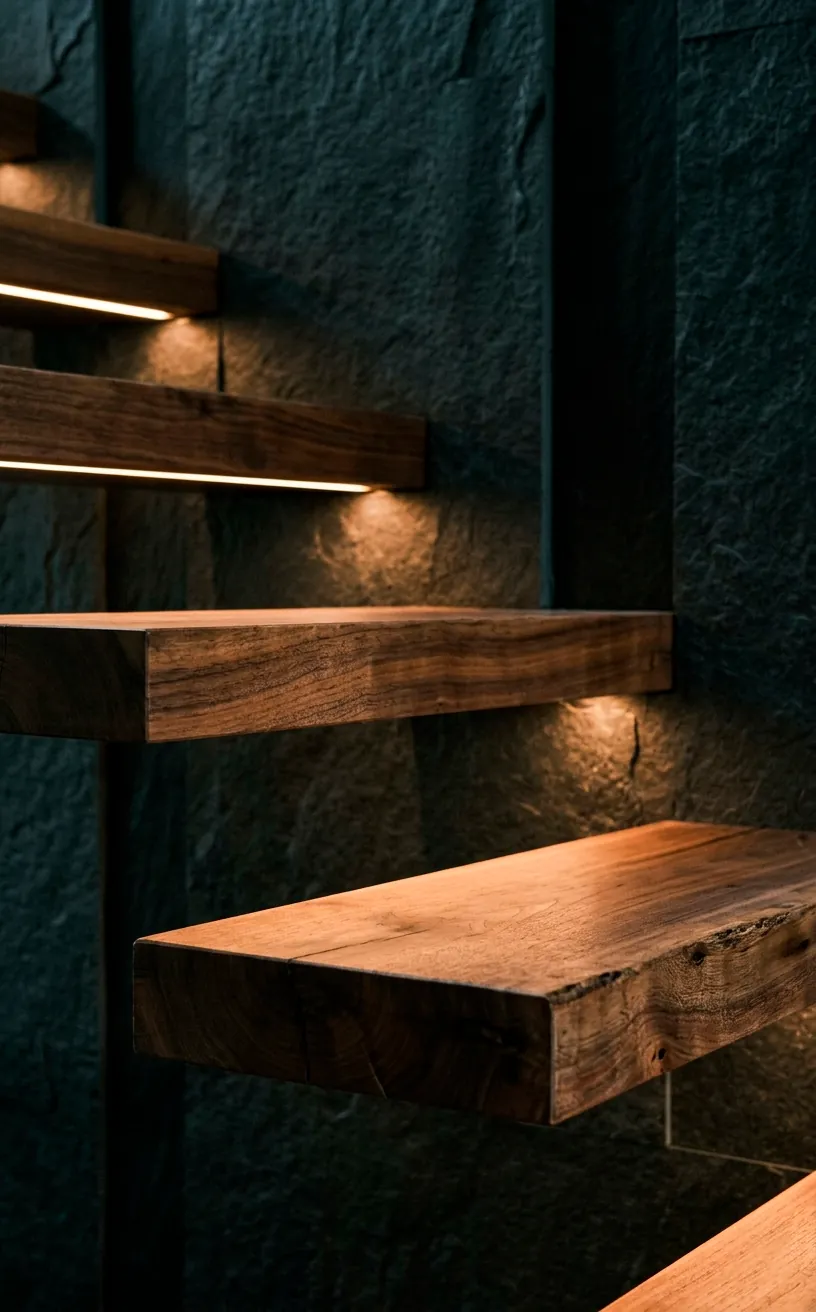
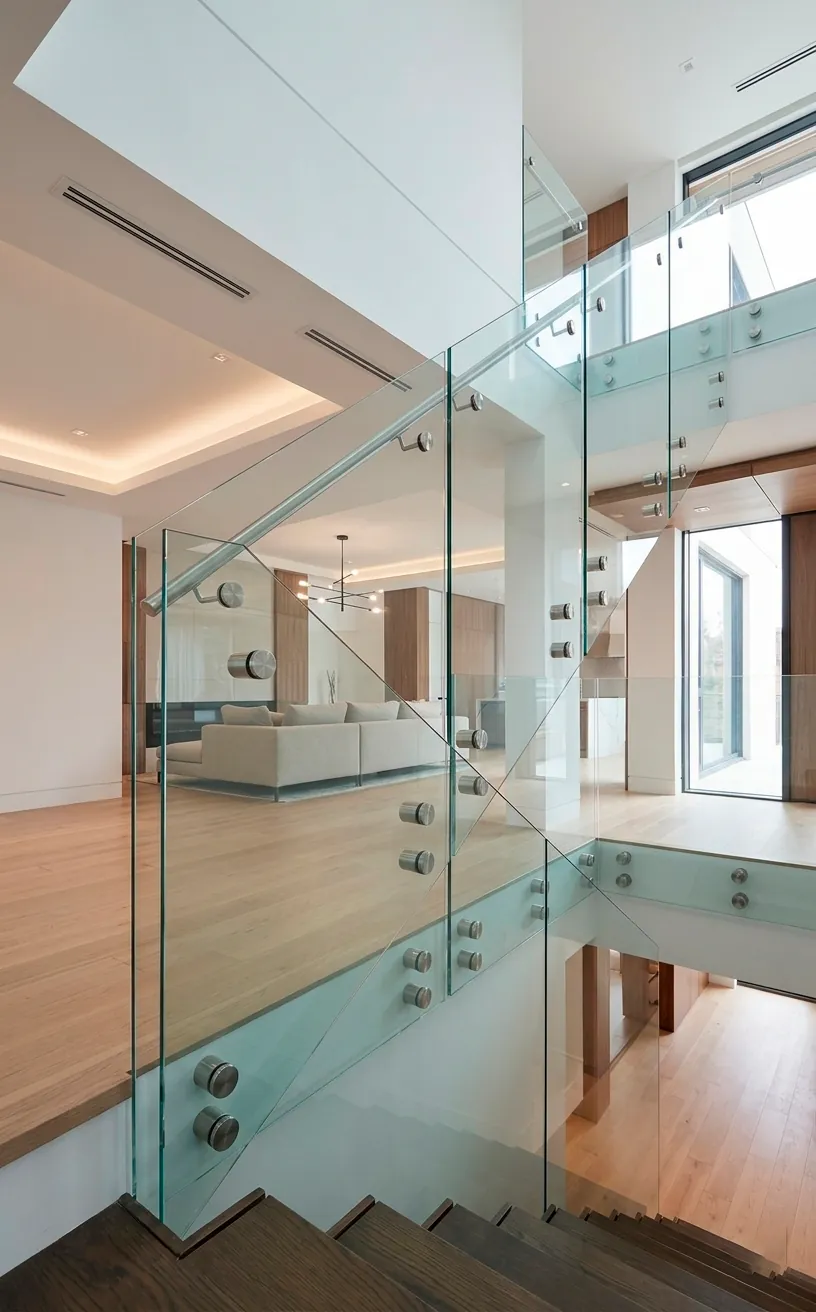
Nothing ruins a floating vibe faster than a clunky, outdated wooden railing. To keep the look seamless, frameless glass is the way to go. It keeps the sightlines open and lets the light flow through your space like it’s supposed to. Plus, it makes your home look twice as big as it actually is.
I love using low-iron glass because it doesn’t have that annoying green tint you see on cheaper panels. It looks completely clear, almost like it isn’t there at all. Just be prepared to buy a lifetime supply of glass cleaner if you have kids or pets with sticky noses.
Modern glass railings:
- Frameless standoff systems
- Top-mounted shoe channels
- Side-mounted glass buttons
- Minimalist handrail caps
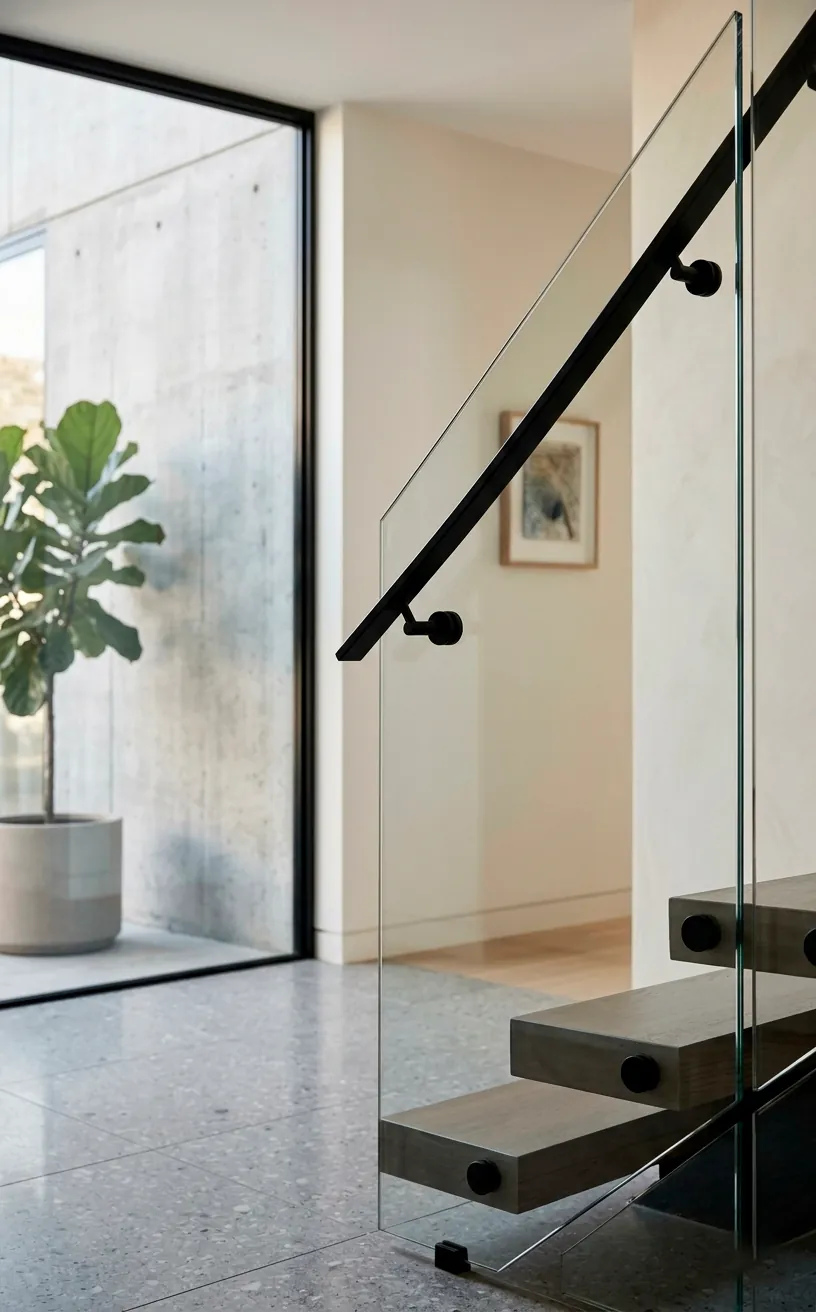
You want the glass to feel like a structural element, not just a safety fence. When you use side-mounted standoffs, the glass actually hovers off the side of the treads, adding another layer to the floating illusion. It’s sleek, it’s chic, and it’s honestly the only way to finish a modern staircase right. FYI, the standoff hardware comes in matte black now, which looks absolutely killer against light wood.
Selecting the Perfect Tread Material
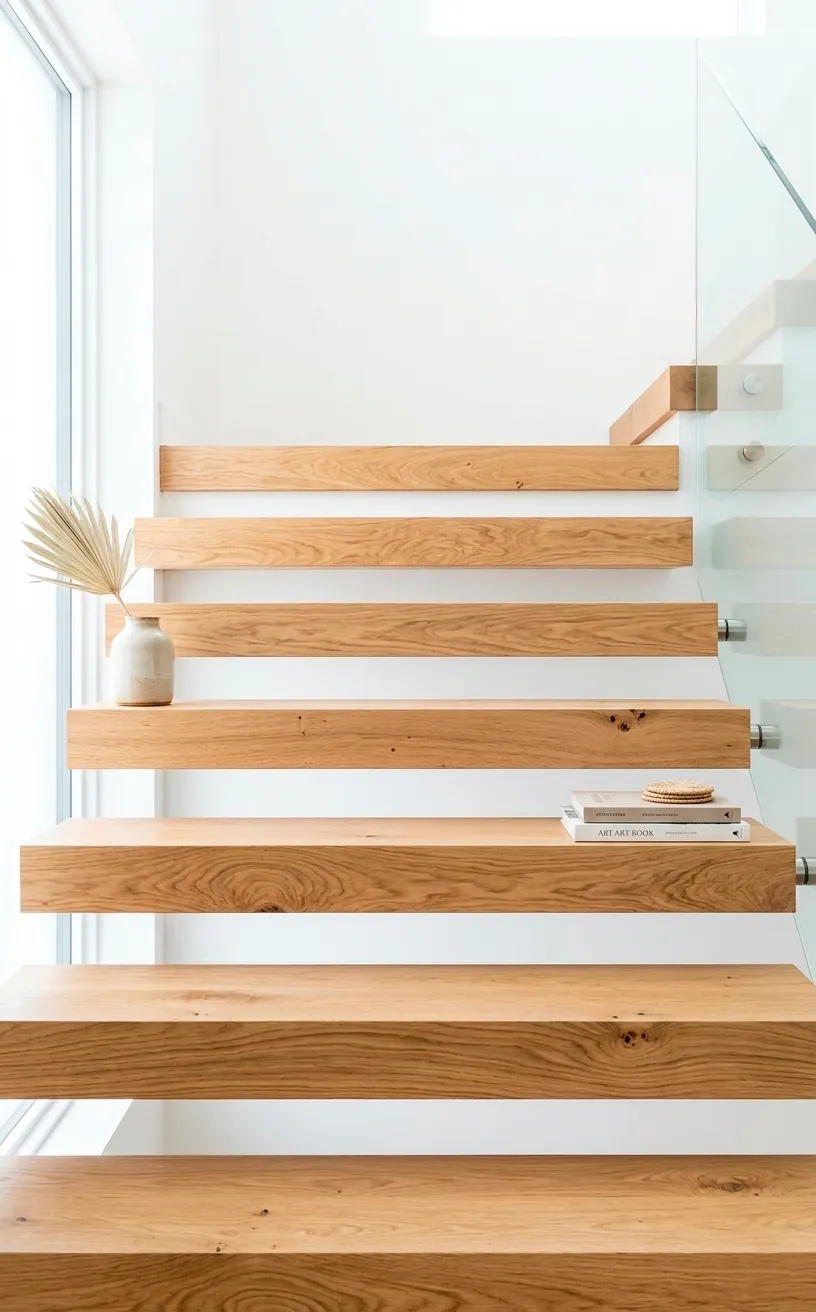
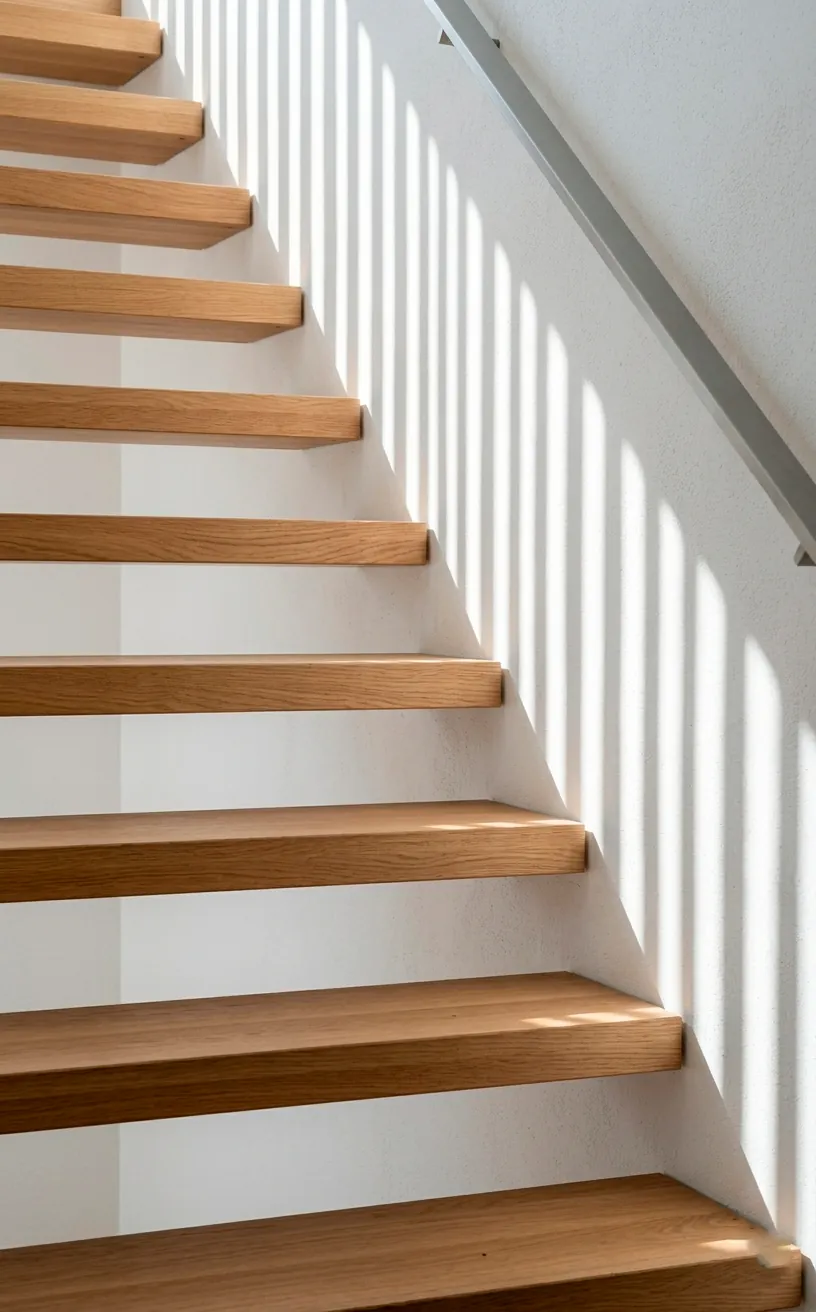
The material you pick for your treads can totally change the ‘temperature’ of your room. Thick, chunky wood like white oak or walnut adds a touch of warmth to a minimalist space, while stone or concrete steps give off that high-end, industrial gallery vibe. Personally, I think the wood-on-white-wall look is a timeless winner that won’t make you cringe in ten years. Just make sure the treads are at least 3.5 to 4 inches thick to maintain that substantial, expensive look.
Lighting Your Way to Glory
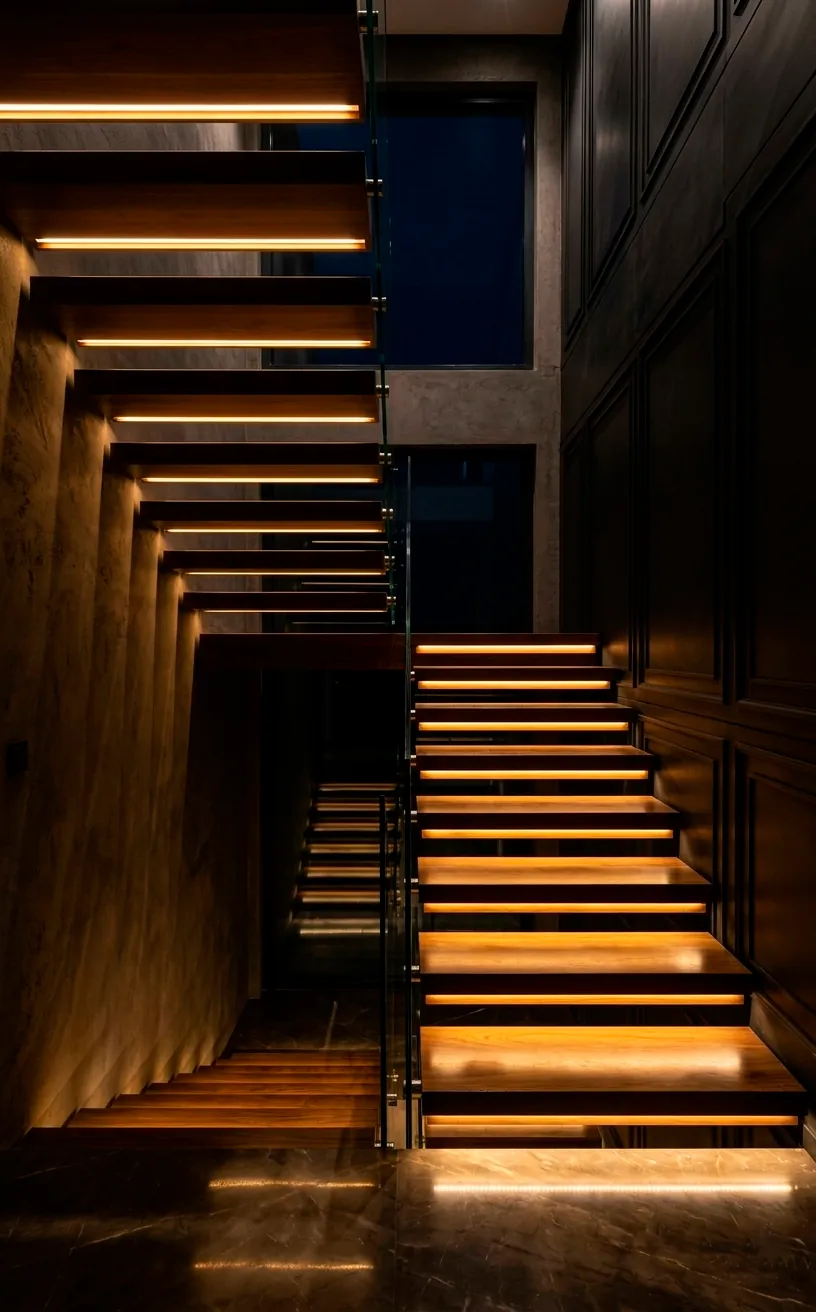
Lighting isn’t just about not tripping in the middle of the night; it’s about drama. Integrated LED strips under each tread or recessed into the wall will make your stairs pop after sunset. It literally makes them look like they’re hovering on a cloud of light. Who doesn’t want to feel like they’re ascending to a VIP lounge every time they go to bed?
You can use motion sensors so the lights kick on as you approach. It’s a bit ‘tech-bro,’ but honestly, it’s incredibly practical and looks cool as heck. Just hide those wires properly, because a stray cable will ruin the minimalist vibe faster than a pile of dirty laundry.
Lighting placement ideas:
- Undermounted LED strips for a soft glow
- Recessed wall spots for focal points
- Side-stringer glow for a continuous line
The Boring Reality: Safety and Codes
Alright, let’s talk about the buzzkill stuff: building codes. Most inspectors get a little twitchy about open risers and gaps wider than 4 inches. You don’t want a staircase that’s technically a giant ladder for toddlers or pets. You can usually bypass this by adding a small ‘toe’ or a glass riser that keeps the look open while staying legal.
Check your local rules before you start cutting into your walls. It’s way cheaper to plan for a handrail now than to have to slap a clunky one on later because you failed an inspection. Safety first, vanity a very close second, right?
Industrial Vibes with Steel Accents
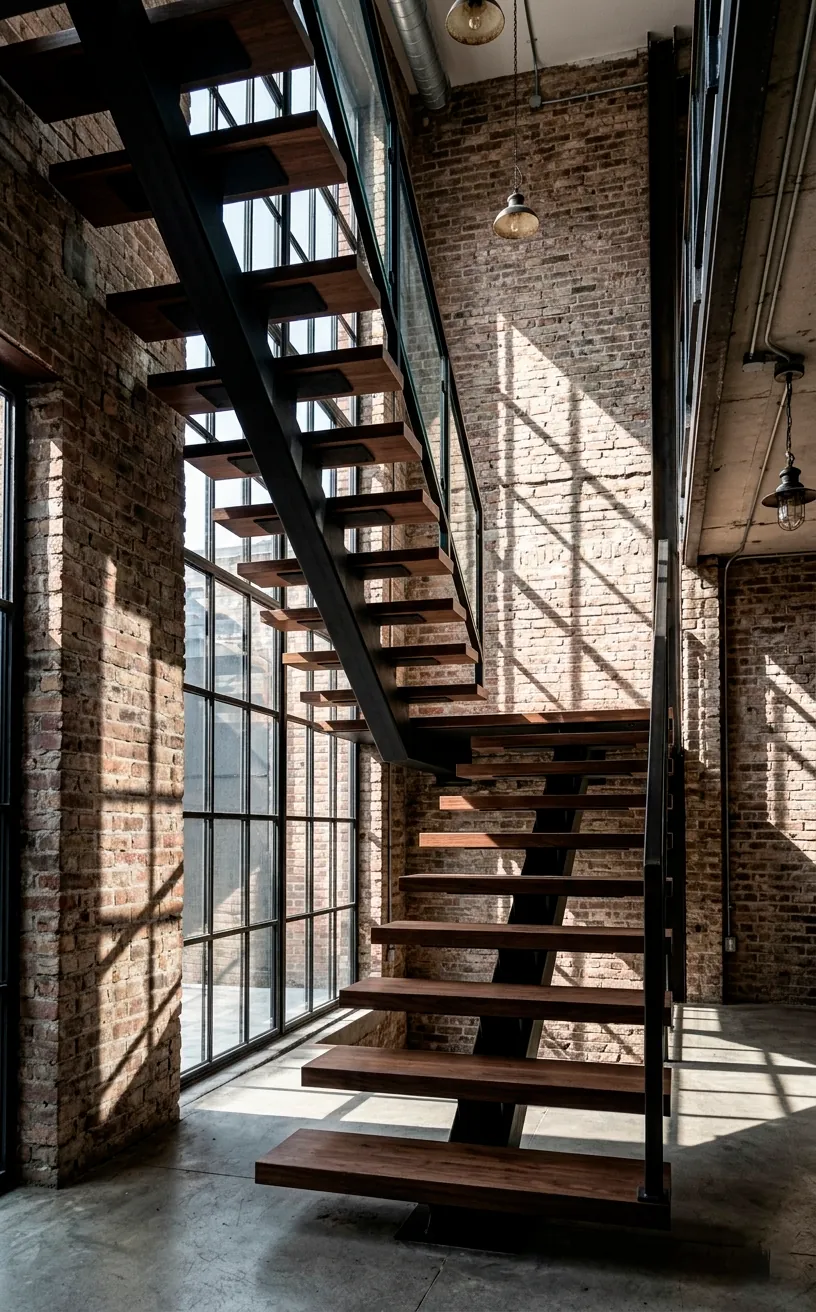
If you aren’t a fan of the all-white look, try incorporating some raw steel. A mono-stringer staircase—one central beam under the steps—gives off a heavy industrial vibe that’s still very much ‘floating’ in spirit. It’s bold, it’s rugged, and it looks incredible in a loft-style space.
Pairing your stairs with a matte black modern TV wall unit creates a killer cohesive look. It ties the metal elements together and makes the whole floor feel like a curated design project rather than just a bunch of random furniture.
The Mono-Stringer Masterclass
Maybe you can’t tear your wall apart to hide a stringer? That’s where the mono-stringer comes in to save the day. It’s a single, beefy beam that runs right down the center of the steps. While it’s technically visible, it still leaves the sides completely open, which keeps that airy feeling we’re chasing.
I’ve seen some great ones in matte black or even brushed stainless steel. It adds a bit of an architectural edge that you just don’t get with the fully hidden versions. Plus, it’s often easier to install in a renovation project than a true cantilever.
Key benefits of mono-stringers:
- Easier installation for remodels
- Strong structural integrity
- Open, modern aesthetic
- Customizable metal finishes
Don’t think of it as a compromise; think of it as a design choice. It gives the stairs a bit of ‘weight’ while still letting the room breathe. If you’ve got high ceilings, a mono-stringer can look like a piece of structural art stretching through the room.
Embracing the Open Riser
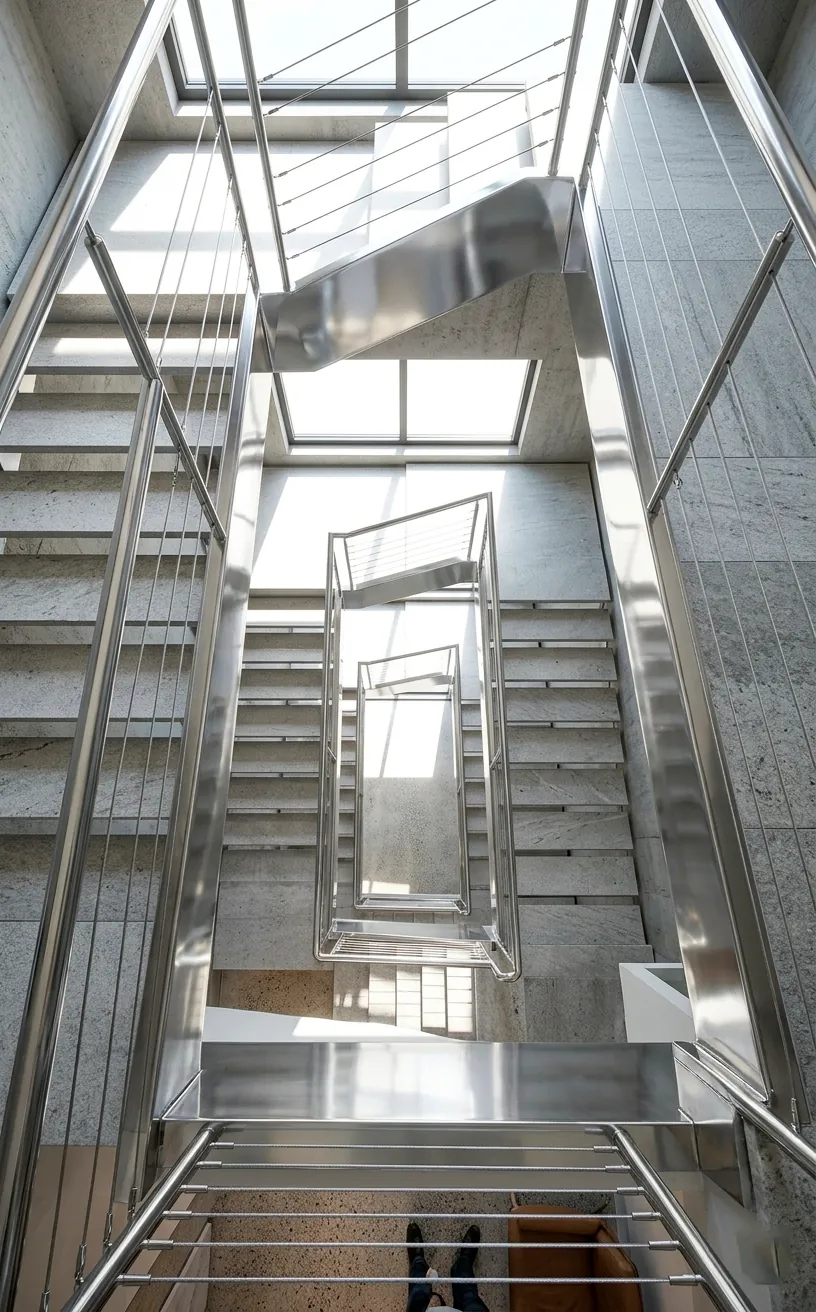
The fastest way to achieve the floating look is to simply ditch the risers. This is the vertical part between the steps. By leaving that space open, you allow light to travel through the staircase, which is basically the golden rule of modern design. It’s a simple change that makes a massive impact. Just make sure you’re cool with seeing the floor underneath—maybe keep that area tidy, okay?
The Final Aesthetic Polish
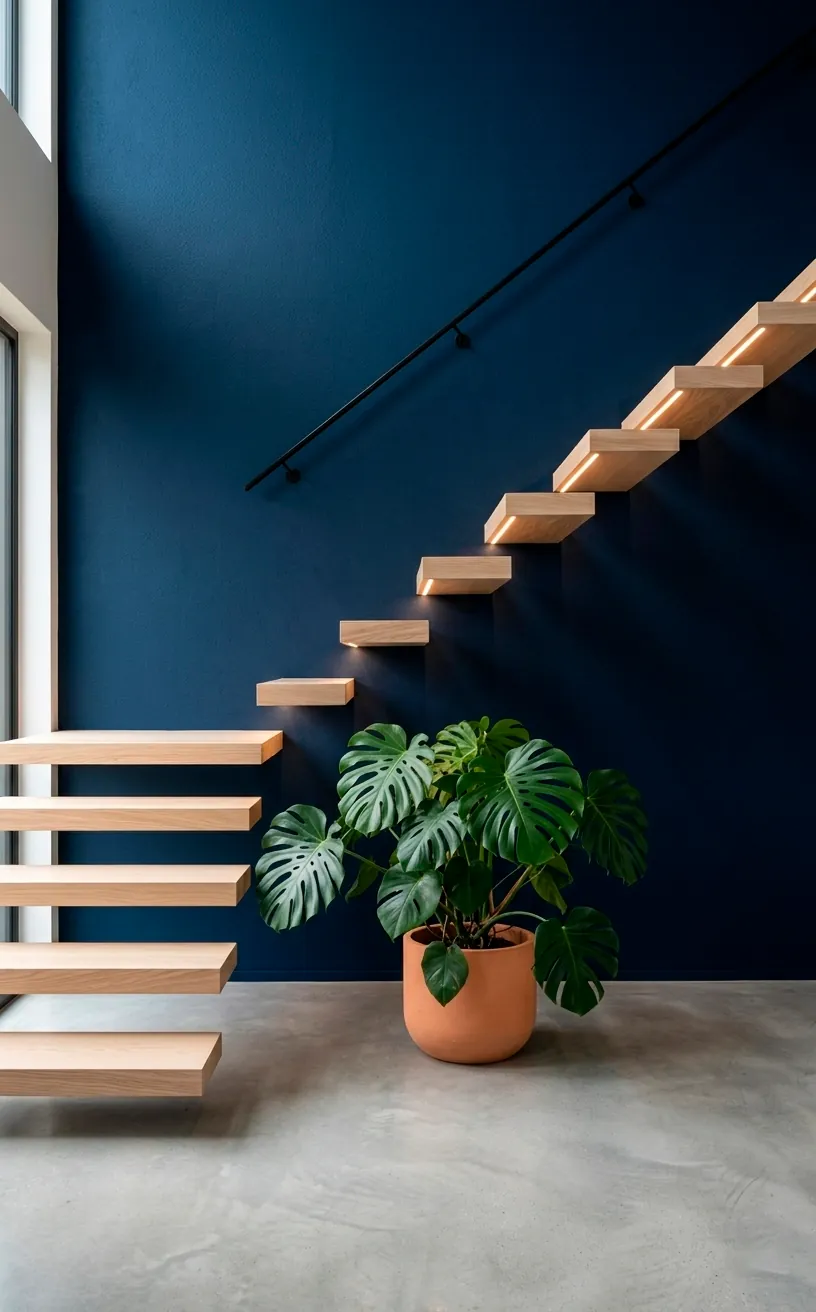
Once the structure is up, don’t forget the finishing touches. The wall color behind your floating stairs is just as important as the stairs themselves. A dark accent wall can make light wood treads pop, while a textured plaster finish adds depth without being distracting. It’s all about creating contrast so your stairs don’t just blend into the background. 🥂
You also want to think about the space underneath. Since it’s open, don’t just use it as a dumping ground for shoes. A single sculptural plant or a low-profile bench can turn that empty void into a deliberate design moment. It’s the difference between a house that looks finished and one that looks like a work in progress.
If you want to see how these sleek vibes compare to the old-school look, check out this guide on hand-carved wood ideas for traditional staircases. It’s always good to know the rules before you break them with your modern masterpiece. Which style are you leaning towards for your next big project?
The Final Step
Achieving that floating staircase look is all about balancing structural grit with visual lightness. Whether you hide the support in the wall or go with a bold mono-stringer, the result is always a showstopper. It’s a bold move that pays off every time you walk through your front door. So, are you ready to take the leap and start floating? Let me know in the comments!
Related posts
See All15 Vintage Circus Inspired Details for Playful Kids Bedroom Decor
Bring the magic of the big top home! Discover 15 playful, vintage circus-inspired decor details that will transform your kid's …
Read moreThe Complete Guide to Styling a Dining Room Credenza for Everyday Elegance
Give your dining room credenza the ultimate glow-up. Discover easy, elegant styling tips that balance everyday function with show-stopping design.
Read more15 Dried Citrus and Cinnamon Garlands for a Naturally Cozy Kitchen
Forget mass-produced decorations. Transform your kitchen into a naturally cozy, aromatic sanctuary with these 15 beautiful dried citrus and cinnamon …
Read moreThe Dog-Friendly Camper: Designing a Van Interior for Your Pets
Transform your camper van into the ultimate dog-friendly adventure mobile! Discover clever interior design hacks, durable materials, and cozy setups …
Read more