












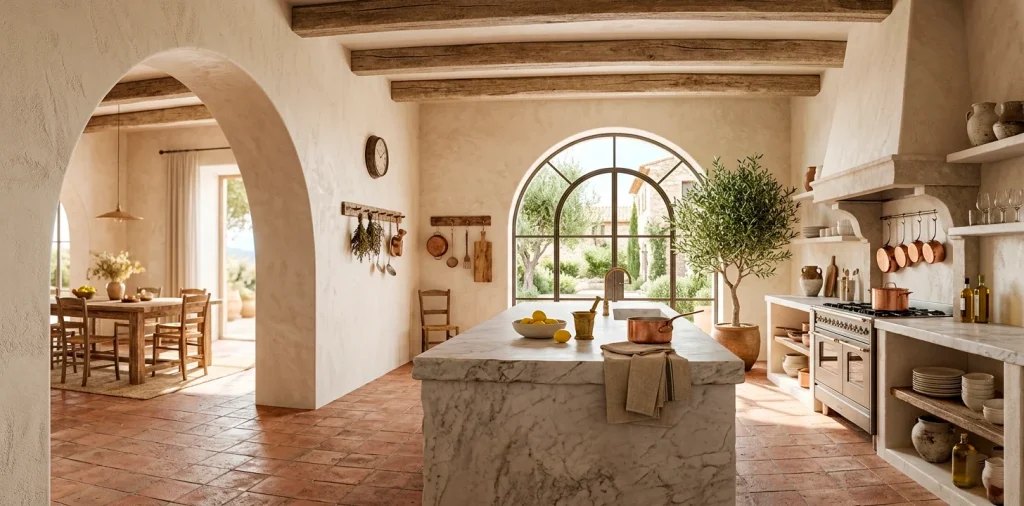

Ever walk into a kitchen and instantly feel like you’re on a breezy Italian holiday? That magic never happens by accident. I’m obsessed with how arched doorways and hand-troweled plaster walls anchor a room. They bring an effortless, lived-in warmth that standard drywall just cannot touch. Let’s figure out how to build that timeless Mediterranean foundation.
The Magic of the Arch
Arches instantly soften the hard, clinical lines of a standard modern kitchen. They draw the eye upward and create an undeniable sense of grandeur. Honestly, who actually gets excited about a plain rectangular doorway?
I adore how a curved threshold frames the transition between your cooking space and the dining area. It acts like a massive, architectural picture frame for your home. You automatically feel a sense of flow and organic movement that sharp ninety-degree angles simply crush. If you want a space that actually breathes and invites people in, you start by curving the entryways.

Plaster Walls 101
Let’s talk about the absolute superstar of Mediterranean design: plaster.
Standard drywall looks flat and lifeless compared to the rich, tactile nature of Venetian or Tadelakt plaster. These traditional finishes absorb and reflect light in ways paint simply cannot replicate.
I remember running my hand along the cool, chalky walls of a little villa in Mallorca. That sensory experience completely changed my perspective on interior design.
Plaster forgives imperfections while adding immense character. You literally bake history right into your walls. Have you considered ditching the standard matte white paint for something with actual soul? Top plaster finish styles:
- Smooth Venetian plaster
- Textured skip-trowel finish
- Waterproof Moroccan Tadelakt

Texture is Everything
A flat, perfectly smooth wall belongs in a corporate office, not a cozy Mediterranean haven. You need texture to bring the room to life. When you apply plaster with a trowel, the subtle sweeps and ridges catch the morning sunlight beautifully. This interplay of light and shadow changes throughout the day, making the kitchen feel like a living, breathing entity. I highly recommend asking your contractor for a “skip trowel” or “Santa Fe” texture if you want something subtle but striking. Stop settling for boring walls and embrace the beautiful imperfections of raw materials! ✨

Color Palettes That Work
Plaster walls shine brightest when paired with the right earthy tones. We want colors that evoke sun-baked clay, olive groves, and the shimmering sea.
Forget the sterile, cool grays of the last decade. Warm whites, rich creams, ochre, and soft terracotta dominate this aesthetic. These shades warm up the visual temperature of the room immediately. Classic palette choices:
- Sun-baked terracotta
- Warm ivory and alabaster
- Muted sage and olive greens
You can easily inject small pops of color through your backsplash or island base. I personally love a dusty Aegean blue for a little unexpected contrast. Ever thought about painting your lower cabinets a faded sea glass hue? FYI, it looks stunning against neutral plaster. If you love that breezy seaside vibe, check out how to style nautical accents coastal kitchen.

Natural Stone Accents
Plaster and arches need a rugged companion to ground the space. Enter natural stone.
Marble, limestone, and travertine countertops add incredible depth to your kitchen. I always urge people to skip the ultra-polished quartz and opt for a honed or leathered finish instead. A matte stone surface feels ancient and authentic, absorbing light softly rather than bouncing it around like a disco ball. Plus, a little etching on natural marble just adds to the European charm, IMO. Let the kitchen show that it actually gets used!

Wooden Beams and Ceilings
Look up! The ceiling offers massive potential for Mediterranean flair.
Reclaimed wooden beams provide the ultimate rustic contrast to smooth, curved arches. They draw the eye vertically and make the room feel incredibly expansive.
You want wood that looks weathered, chopped, and sun-beaten. Think rough-hewn oak or distressed cedar.
I recently helped a friend install lightweight faux cedar beams in her dining space, and the transformation absolutely blew my mind. It instantly added a hundred years of history to a brand-new build without requiring heavy structural reinforcements.

Terracotta Flooring
What goes underfoot matters just as much as what goes on the walls. Authentic terracotta tiles practically scream Mediterranean design. Their earthy, baked-clay coloring instantly warms up any cool natural light entering the space. I prefer the hand-shaped, irregular tiles over perfectly uniform squares because they add undeniable charm. You can lay them in a classic straight pattern or get creative with a beautiful herringbone layout. They naturally hide dirt, feel wonderful on bare feet, and gracefully age with every passing year. What more could you ask for in a kitchen floor? 🌿

Lighting the Space
Lighting completely makes or breaks a textured room. You absolutely need fixtures that highlight those gorgeous plaster ridges.
Wall sconces are your best friend here. Placing wrought iron or aged brass sconces along the walls casts dramatic, sweeping shadows across the plaster during the evening. It turns your kitchen into a moody, romantic sanctuary.
Avoid harsh, cool-toned overhead recessed lighting at all costs. Instead, hang a large, oversized woven rattan or forged iron pendant directly over your island to anchor the space. It gives the room a focal point while keeping the vibe relaxed.

Open Shelving Done Right
Upper cabinets often feel heavy and completely block the beautiful walls you just worked so hard to plaster. Open shelving offers a breathable, airy alternative.
Chunky, reclaimed wood shelves floating against a textured wall look absolutely striking. They give you the perfect stage to display your favorite artisan ceramics, wooden cutting boards, and trailing ivy. I completely ditched my upper cabinets last year, and my kitchen feels twice as large. Just remember to curate your displays carefully so the space doesn’t look cluttered!

Bringing the Outdoors In
Mediterranean living fully embraces the seamless connection between indoor and outdoor spaces.
A large, sweeping arched window over the sink completely transforms the daily dishwashing routine. It frames your garden like a living painting and floods the plaster walls with natural sunshine.
You also need greenery. Toss a large potted olive tree into an empty corner or line your windowsill with fragrant terracotta herb planters.
Basil, rosemary, and thyme not only look beautiful, but they make your kitchen smell incredible. It’s the easiest way to inject life into the room.

Iron Forged Hardware
We cannot forget about the jewelry of the kitchen! Matte black or wrought iron cabinet pulls completely pop against warm ivory plaster.
Forged metal carries that old-world blacksmith vibe that fits the Mediterranean aesthetic perfectly. Swap out those sleek, modern brushed nickel handles for something thick and heavy. You want hardware that actually feels substantial when you grab it to open a drawer. It’s a tiny detail, but I promise it fundamentally shifts the room’s energy.

The Statement Range Alcove
If you really want to lean into the architectural magic, build a plaster alcove for your stove.
An arched nook over the cooking range instantly transforms the stove into the absolute focal point of the room. It mimics the massive, traditional hearths found in centuries-old European estates.
Tuck your heavy-duty vent hood inside the alcove so it completely disappears from view. Then, add a beautiful tile backsplash directly behind the stove to create a stunning contrast against the raw plaster. It’s incredibly dramatic and entirely practical.

Conclusion
Designing a Mediterranean kitchen ultimately comes down to honoring raw materials and embracing imperfections. Those sweeping arched doorways and textured plaster walls give your home a soul that mass-produced trends completely lack. Grab some terracotta, install a few wooden beams, and watch your space transform. Which design element are you grabbing first? Let me know in the comments!
Related posts
See All15 Vintage Circus Inspired Details for Playful Kids Bedroom Decor
Bring the magic of the big top home! Discover 15 playful, vintage circus-inspired decor details that will transform your kid's …
Read moreThe Complete Guide to Styling a Dining Room Credenza for Everyday Elegance
Give your dining room credenza the ultimate glow-up. Discover easy, elegant styling tips that balance everyday function with show-stopping design.
Read more15 Dried Citrus and Cinnamon Garlands for a Naturally Cozy Kitchen
Forget mass-produced decorations. Transform your kitchen into a naturally cozy, aromatic sanctuary with these 15 beautiful dried citrus and cinnamon …
Read moreThe Dog-Friendly Camper: Designing a Van Interior for Your Pets
Transform your camper van into the ultimate dog-friendly adventure mobile! Discover clever interior design hacks, durable materials, and cozy setups …
Read more