












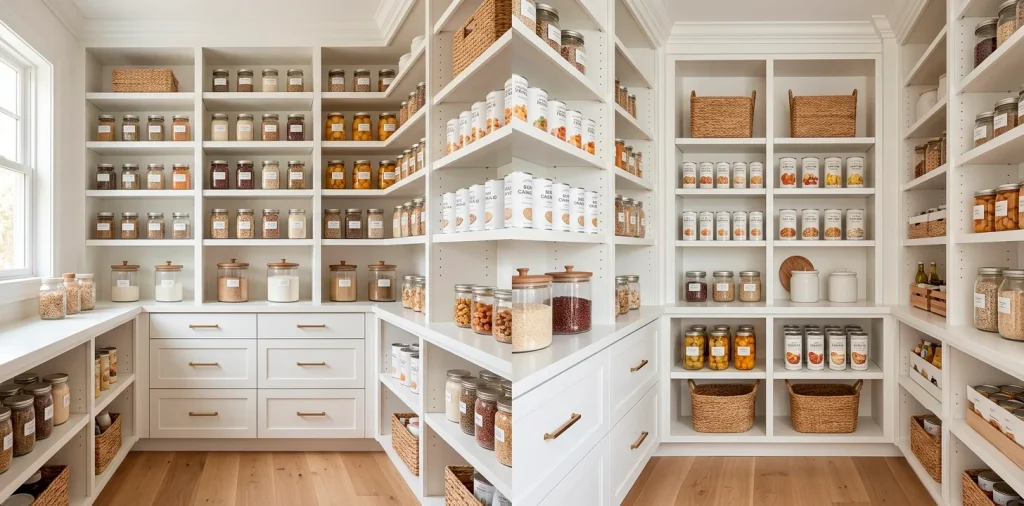

Ever opened your pantry door only to dodge a rogue can of kidney beans plummeting toward your toes? I have, and it is zero fun. If your canned goods look like a chaotic game of Jenga, it is time for an upgrade. We are tackling the ultimate kitchen storage showdown today. Tiered racks or gravity feeders—which one actually deserves a spot on your shelves?
The Great Can Avalanche
Let us address the elephant in the pantry. Stacking cans directly on top of each other is a recipe for absolute disaster. You bump one can of peas, and suddenly half your emergency food supply is rolling across the linoleum. It is annoying, loud, and frankly, completely avoidable.
I used to think I could just carefully balance my diced tomatoes. Spoiler alert: gravity always wins. We need proper systems to wrangle this mess. Sticking with the old stacking method just guarantees you will keep buying green beans you already own. FYI, if you are tight on space, you might also want to check out these over-the-door storage hacks.

What Exactly is a Tiered Rack?
Think of a tiered rack as a miniature set of bleachers just for your food. Instead of hiding the labels behind each other, this system elevates each row so you can actually read what you have. It is beautifully simple and incredibly effective for a quick visual inventory. You literally just place them on the steps and marvel at your newfound organizational prowess. No moving parts, no complicated assembly, just a straightforward staircase of soup. If you love seeing all your options at a single glance without having to dig around, this classic setup might be your absolute best friend.

The Perks and Quirks of Tiered Racks
Let us talk about the good stuff first.
Tiered racks are unbelievably versatile. They fit almost anywhere, from shallow upper cabinets to deep wire shelving units. You can even repurpose them for spices later if you change your mind.
Rack features you will love:
- Instant visibility of every label
- Zero height restrictions for taller cans
- No risk of cans getting stuck in a chute
But they do have a fatal flaw. They eat up vertical space like crazy. If your shelves sit close together, adding a staircase design completely eliminates your ability to store larger items. IMO, you need decent vertical clearance to make them work.

Enter the Gravity Feeder
If tiered racks are the bleachers, gravity feeders are the vending machines of the pantry world. You load your cans at the top, and they automatically roll down to the front as you grab them. It feels incredibly satisfying, almost like a supermarket display right in your own home. I grabbed my first gravity feeder last year, and watching that soup roll down smoothly into place actually made me excited to organize. This system forces a first-in, first-out rotation, meaning you will never accidentally let a tin of pumpkin puree expire in the dark corners of your shelf ever again.

Why Gravity Feeders Steal the Show
The absolute biggest advantage here is depth utilization.
Instead of wasting the back half of a deep shelf, a gravity feeder fills that void completely. You can cram an astonishing number of cans into a very narrow footprint. It completely maximizes the volume of your storage space.
But they are not perfect. Sometimes cans catch on the wire framing and awkwardly jam sideways. You also have to load them blindly, so if you mix different soups in one track, you are playing dinner roulette. Need a specific broth? You might have to unload three cans of chili just to reach it. 🤦♀️

The Ultimate Showdown: Space vs. Visibility
So how do you actually choose between these two titans of tidiness? It essentially boils down to the physical dimensions of your specific pantry and your shopping habits.
If you buy lots of the exact same item in bulk, gravity feeders win easily. They handle multiples perfectly without taking up premium visual space. However, if your collection is a chaotic mix of random ingredients for various recipes, you desperately need the clear visibility a tiered rack provides. Seeing exactly what you own prevents overbuying and sparks dinner inspiration much faster. Nobody wants to dig through a metal chute to find the one can of coconut milk they bought last month.

Setup and Maintenance
Installing these organizers requires minimal effort.
Tiered racks usually come fully assembled. You literally just wipe down your shelf, set the plastic or bamboo rack down, and start stacking.
Maintenance tasks to remember:
- Dusting the steps of tiered racks monthly
- Checking the metal tracks of feeders for bent wires
- Wiping down the base to prevent sticky residue buildup
Gravity feeders might require snapping a few metal brackets together, but it takes less than five minutes. Just remember to measure your shelf depth before ordering. If the feeder overhangs, your pantry door absolutely will not close.

Final Verdict Based on Pantry Size
If you are rocking a shallow pantry where shelves are basically the depth of a cereal box, stick to tiered racks. They maximize the visual layout without needing deep tracks. On the flip side, if you have a deep, cavernous closet where things easily get lost, gravity feeders will completely change your life. They bring the food straight to the front so you never have to reach into the abyss again. Assess your space, evaluate your grocery hauls, and choose the system that genuinely solves your specific headache. Which one are you grabbing first?

Mixing and Matching Systems
Do you absolutely have to choose just one? Not at all! Combining both systems often yields the ultimate organized pantry setup. You can dedicate the deeper bottom shelves to gravity feeders for your heavy stock of staples like crushed tomatoes, black beans, and chicken broth.
Keep the eye-level, shallower shelves for a beautifully stained bamboo tiered rack holding your specialty items. This hybrid approach gives you the absolute best of both worlds. You get bulk efficiency down below and quick recipe inspiration right at your fingertips. I highly recommend trying this if you have adjustable shelving.

Budgeting for Your Pantry Upgrade
Let us talk about the financial side of pantry organization.
Tiered racks generally cost less upfront, especially if you grab a basic plastic or wire model. Bamboo options look much nicer but carry a slightly higher price tag. They remain incredibly budget-friendly overall.
Gravity feeders represent a slightly bigger investment, particularly the sturdy metal ones designed to hold heavy soup cans. However, consider the amount of expired food you currently throw away because it gets lost in the back. A good feeder pays for itself by entirely eliminating food waste.

Conclusion
Getting your pantry in order does not have to be an overwhelming chore. Whether you prefer the beautiful visibility of a tiered rack or the automated convenience of a gravity feeder, upgrading your can storage simply makes cooking easier. Take a quick look at your shelves today, take some measurements, and conquer that clutter. Let me know in the comments!
Related posts
See All15 Vintage Circus Inspired Details for Playful Kids Bedroom Decor
Bring the magic of the big top home! Discover 15 playful, vintage circus-inspired decor details that will transform your kid's …
Read moreThe Complete Guide to Styling a Dining Room Credenza for Everyday Elegance
Give your dining room credenza the ultimate glow-up. Discover easy, elegant styling tips that balance everyday function with show-stopping design.
Read more15 Dried Citrus and Cinnamon Garlands for a Naturally Cozy Kitchen
Forget mass-produced decorations. Transform your kitchen into a naturally cozy, aromatic sanctuary with these 15 beautiful dried citrus and cinnamon …
Read moreThe Dog-Friendly Camper: Designing a Van Interior for Your Pets
Transform your camper van into the ultimate dog-friendly adventure mobile! Discover clever interior design hacks, durable materials, and cozy setups …
Read more