












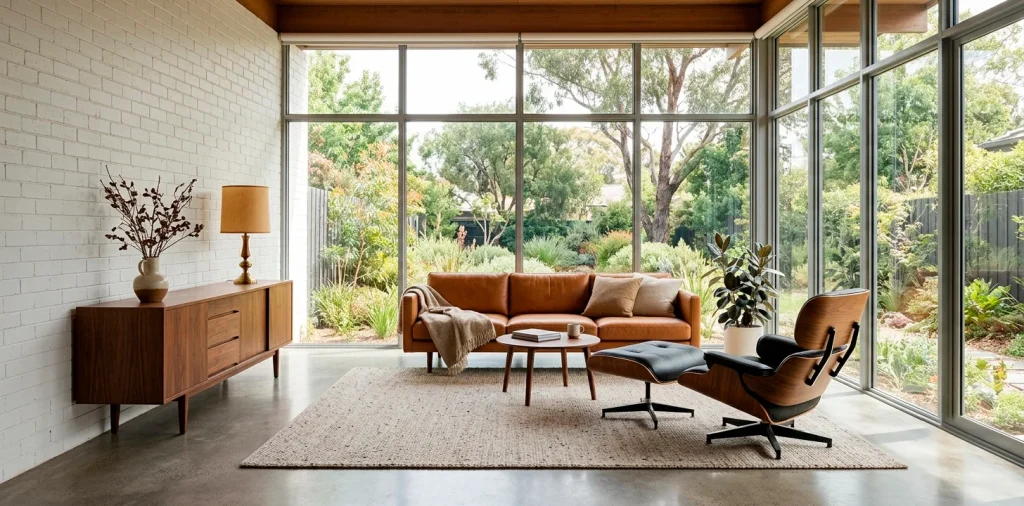

Ever walk into a room and instantly feel like you’ve been transported to a 1960s Palm Springs lounge? That is the magic of Mid Century Modern design. I bought my first vintage sideboard years ago, and my obsession skyrocketed from there. This style isn’t just a passing trend; it is a timeless movement that refuses to leave our living rooms.
The Birth of a Movement
Where did this all start? We have to look back to the post-World War II era, roughly between 1945 and 1969. Soldiers returned home, families expanded rapidly, and everyone needed affordable, functional housing. Traditional, heavy Victorian furniture just didn’t fit the vibe of these new, compact suburban spaces.
Designers suddenly shifted their focus toward mass production and utility. They wanted to create beautiful pieces that everyday people could actually afford. This perfect storm of economic boom and cultural shift birthed the clean lines we still drool over today. It was a complete design revolution.

Form Follows Function
If there is one golden rule of this aesthetic, it is that form follows function. This means a chair shouldn’t just look pretty; it actually needs to support your back during a long evening. Designers stripped away unnecessary carvings and ornate decorations. Instead, they celebrated pure geometry and sleek profiles. Have you ever noticed how low to the ground most mid-century sofas are? This intentional design choice creates an illusion of higher ceilings and wide-open spaces. IMO, it’s absolute genius. Every single curve or angle serves a distinct structural purpose, giving your eyes a peaceful place to rest.

Breaking Boundaries with New Materials
Before this era, wood was the undisputed king of home furniture.
Then came the industrial tech boom of the 1950s. Creative minds started experimenting with molded plywood, fiberglass, and tubular steel.
Suddenly, craftsmen could bend wood into seemingly impossible curves. Think about the iconic lounge chairs of the era. They completely changed the game by combining bent plywood shells with leather.
They also embraced vibrant plastics. These materials weren’t cheap substitutes; they were exciting mediums for artistic expression.

Seamless Indoor Outdoor Living
Mid-century architects completely shattered the walls dividing us from nature. They introduced massive picture windows, sliding glass doors, and open floor plans. The goal was simple: make nature a living canvas inside your home. You could sit on your living room sofa and feel like you were relaxing in your backyard garden. They frequently extended materials like brick and wood from the interior right out to the patio. It creates a seamless visual flow that makes even tiny homes feel incredibly vast. Who doesn’t want to feel connected to the outdoors while staying cozy inside?

Bold Colors and Earthy Tones
Let’s talk color palettes because they are anything but boring. The foundation always relies on rich, earthy base tones like mustard yellow, avocado green, and burnt orange.
But they didn’t stop there. Designers loved to inject pops of bright, saturated accent colors to break up the monotony of the wood grains.
Think a stark white room accented by a shocking turquoise cushion or a matte black floor lamp. This clever contrast keeps the style from looking like a dusty time capsule. It feels fresh, energetic, and highly intentional.

Masterminds Behind the Icons
We can’t discuss this history without bowing down to the absolute legends who built it. Charles and Ray Eames, Eero Saarinen, and Hans Wegner completely redefined how we sit and dine. They weren’t just making furniture; they were sculpting functional art pieces.
Saarinen’s famous Tulip table eliminated the ugly clutter of legs beneath traditional dining sets. If you want to see how these historic concepts translate into contemporary spaces, check out the latest 15 modern dining room trends 2026 for some serious styling inspiration. These geniuses looked at everyday problems and solved them with beautiful, sweeping curves.

Why the Aesthetic Never Fades
So, why are we still buying these designs decades later? The secret lies in its unmatched versatility. Mid-century pieces possess a unique ability to play nice with almost any other interior style. Drop a vintage teak sideboard into an ultra-modern industrial loft, and it instantly anchors the space. It adds warmth, character, and a sense of history without overwhelming your current decor. Furthermore, the focus on clean lines means these pieces never feel dated or cluttered. They offer a masterclass in timeless restraint that our chaotic modern minds crave.

Spotting Authentic Vintage vs Reproductions
Hunting for these treasures can feel like a high-stakes game. Authentic vintage pieces usually feature solid wood edges, heavy craftsmanship, and maker’s marks hidden under drawers or table frames. Look for stamps from iconic Danish or American manufacturers.
On the flip side, modern reproductions offer incredible accessibility. You don’t need a millionaire’s budget to capture this gorgeous look in your own home. Just keep an eye out for quality materials like real wood veneers over cheap particle board.
If you are building a display area for your vintage finds, consider planning a full layout. Elevate your collection with a curated layout using this complete guide gallery wall layouts ideas to map it out perfectly.

Incorporating the Look Today
Ready to bring this vibe home without making it look like a time capsule? The key is moderation. You don’t need to purchase an entire matching set from a showroom floor. In fact, please don’t do that.
Instead, mix a single hero piece, like a stunning starburst clock or a walnut credenza, into your existing setup. Pair it with contemporary textiles, fluffy rugs, and tons of leafy houseplants. This eclectic blending makes your space feel curated over time rather than staged for a retail catalog.

The Future of the Mid Century Aesthetic
As we move deeper into 2026, we see this iconic style evolve yet again.
Designers are constantly blending it with contemporary sustainability principles. They now use reclaimed woods and eco-friendly finishes while carefully preserving those classic, beloved silhouettes.
It proves that excellent design never truly dies; it simply adapts beautifully to new generations.
The structural integrity and pure aesthetic joy of this movement ensure it will remain relevant for decades to come. Enjoy the curation journey!

Conclusion
Mid Century Modern design is far more than a vintage trend. It represents a brilliant marriage of functional engineering and timeless beauty that effortlessly elevates our daily lives. Whether you own a single reproduction chair or an entire house full of authentic Danish teak, you are participating in a beautiful design legacy. Which iconic piece are you adding to your wishlist next? Let me know in the comments!
Related posts
See All15 Vintage Circus Inspired Details for Playful Kids Bedroom Decor
Bring the magic of the big top home! Discover 15 playful, vintage circus-inspired decor details that will transform your kid's …
Read moreThe Complete Guide to Styling a Dining Room Credenza for Everyday Elegance
Give your dining room credenza the ultimate glow-up. Discover easy, elegant styling tips that balance everyday function with show-stopping design.
Read more15 Dried Citrus and Cinnamon Garlands for a Naturally Cozy Kitchen
Forget mass-produced decorations. Transform your kitchen into a naturally cozy, aromatic sanctuary with these 15 beautiful dried citrus and cinnamon …
Read moreThe Dog-Friendly Camper: Designing a Van Interior for Your Pets
Transform your camper van into the ultimate dog-friendly adventure mobile! Discover clever interior design hacks, durable materials, and cozy setups …
Read more