












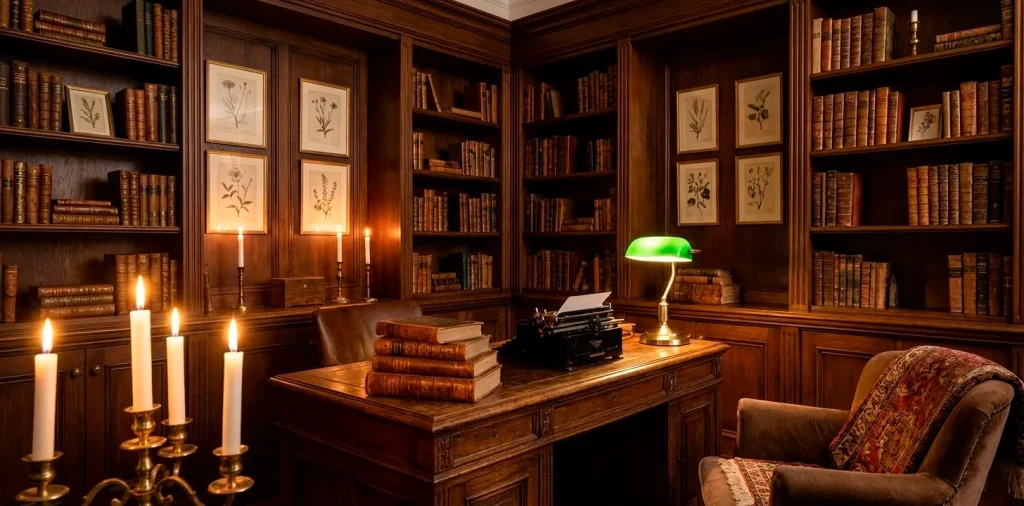

Some people want a glass-and-chrome office that looks like a high-end dentist’s waiting room. I am not one of those people. I want my workspace to feel like a secret library hidden in a 19th-century manor, where the only thing on the schedule is writing poetry and drinking far too much tea.
Have you ever noticed how much easier it is to focus when your surroundings actually have a soul? Creating a cozy study nook with vintage charm isn’t just about buying old stuff; it’s about curate-ing a vibe that makes you feel like a scholar from a bygone era. I’ve spent years perfecting my own “moody” corner, and I’ve learned that the secret lies in the layers.
I’m talking about the smell of old paper, the click-clack of a mechanical keyboard (or a typewriter if you’re feeling brave), and lighting so warm it feels like a hug. If you’re ready to ditch the sterile modern aesthetic for something with a bit more mystery, you’re in the right place. IMO, a desk should be a destination, not just a place where you answer emails. 🙂
The Anchor: Choosing Your Vintage Desk and Typewriter
Every great study nook needs a protagonist, and in this story, it’s the antique wooden desk. I personally swear by heavy, dark woods like oak or mahogany because they carry a certain “weight” that flimsy MDF just can’t replicate. When I found my first roll-top desk at a thrift shop, it changed everything about how I approached my morning coffee and journaling.
But let’s talk about the real star of the show: the vintage typewriter. Does it make writing 2,000 words a day harder? Absolutely. Does it look incredibly cool? You bet it does. Even if you don’t use it for your daily tasks, a classic typewriter serves as a tactile reminder to slow down and think about your words.
If you aren’t ready to commit to the mechanical struggle of a 1940s Underwood, you can still capture the aesthetic. Place it on a leather desk mat to protect your wood and add another layer of texture. I love how the cold metal of a typewriter contrasts with the warm grain of an old desk.
Why the “Writer’s Corner” Works:
- Tactile Feedback: Old-school tools make the act of creating feel more physical.
- Visual History: Antique furniture tells a story that modern pieces lack.
- Focused Environment: A dedicated “nook” signals to your brain that it’s time for deep thought.

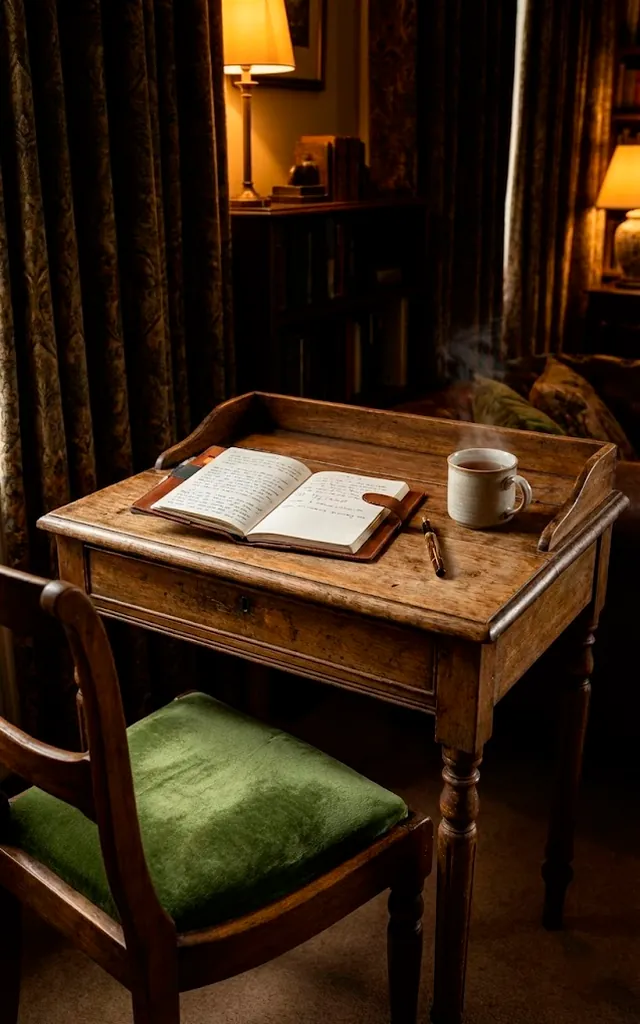
Lighting the Way: Atmospheric Glow Over Harsh Bulbs
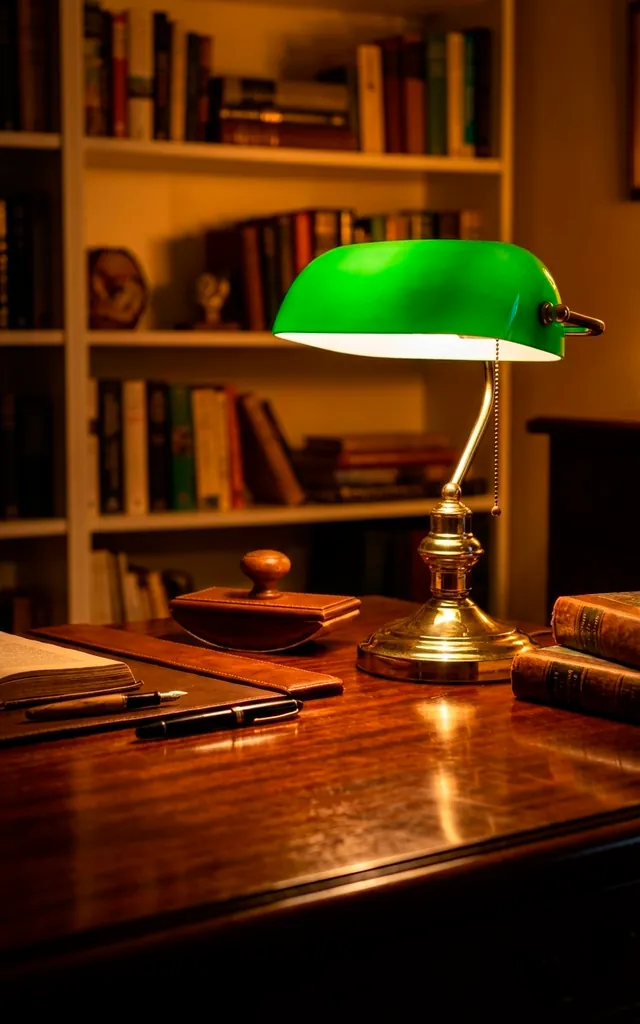
If you turn on a bright overhead LED light in a Dark Academia room, the magic immediately dies. It’s a fact of life. To get that moody office aesthetic, you need to think in layers of light. I always start with a classic banker’s lamp—the kind with the green glass shade that makes you feel like you’re about to solve a Victorian mystery.
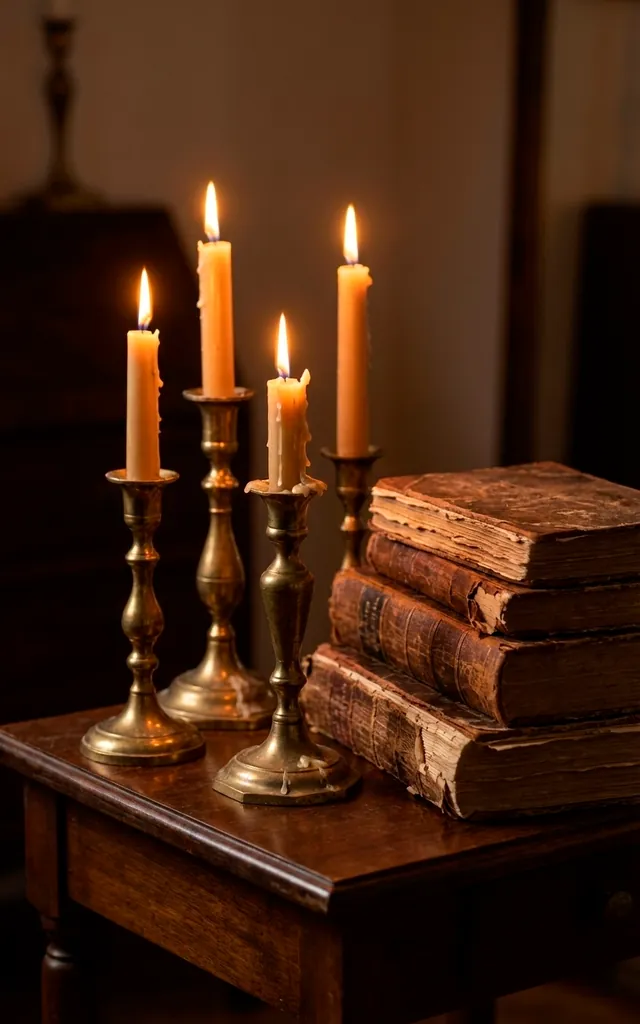
Relying on a single light source is a rookie mistake. I use a combination of a soft desk lamp, a floor lamp in the corner, and as many candles as I can fit without becoming a fire hazard. Beeswax candles or flickering LED versions provide that rhythmic, warm glow that mimics a fireplace.
Ever wondered why libraries always feel so peaceful? It’s because they use “pools” of light rather than a flood of it. By focusing your light only on your workspace and your books, the rest of the room fades into a cozy shadow. This creates a literal “nook” feeling, even if your desk is just in the corner of a large living room.
Must-Have Lighting Elements:
- The Task Light: A brass or green glass lamp for direct work.
- The Ambient Light: A small lamp with a fabric shade to soften the corners.
- The Accent Light: Taper candles or tea lights for that “1800s scholar” vibe.
Curating Your Walls: Botanical Prints and Floating Shelves
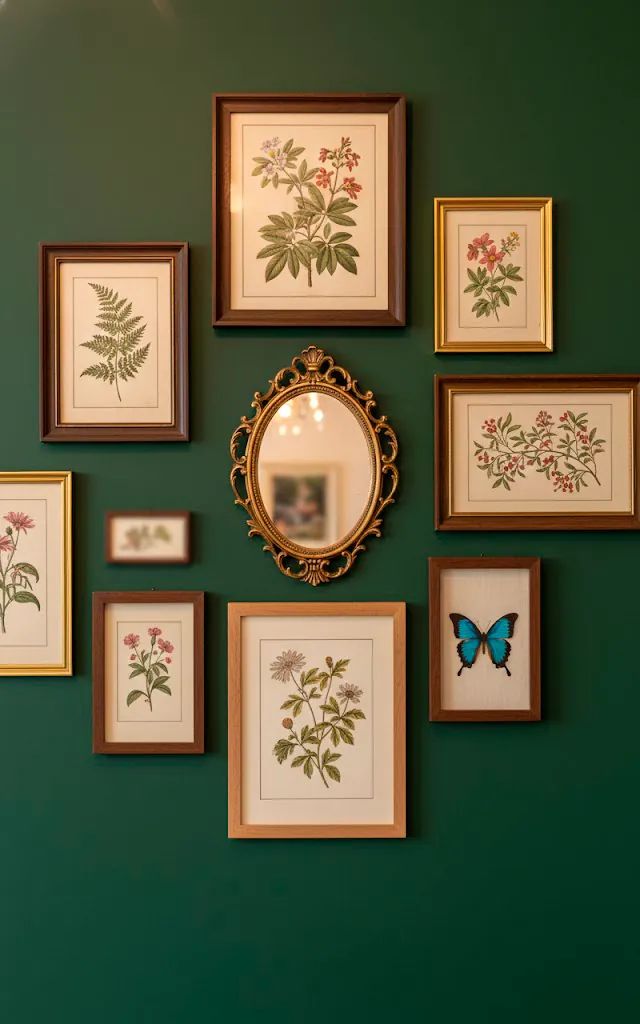
Empty walls are the enemy of charm. In a vintage study, your walls should look like a curated collection of a life well-traveled. I’m a huge fan of botanical prints and anatomical sketches because they add an intellectual, “naturalist” touch to the space.
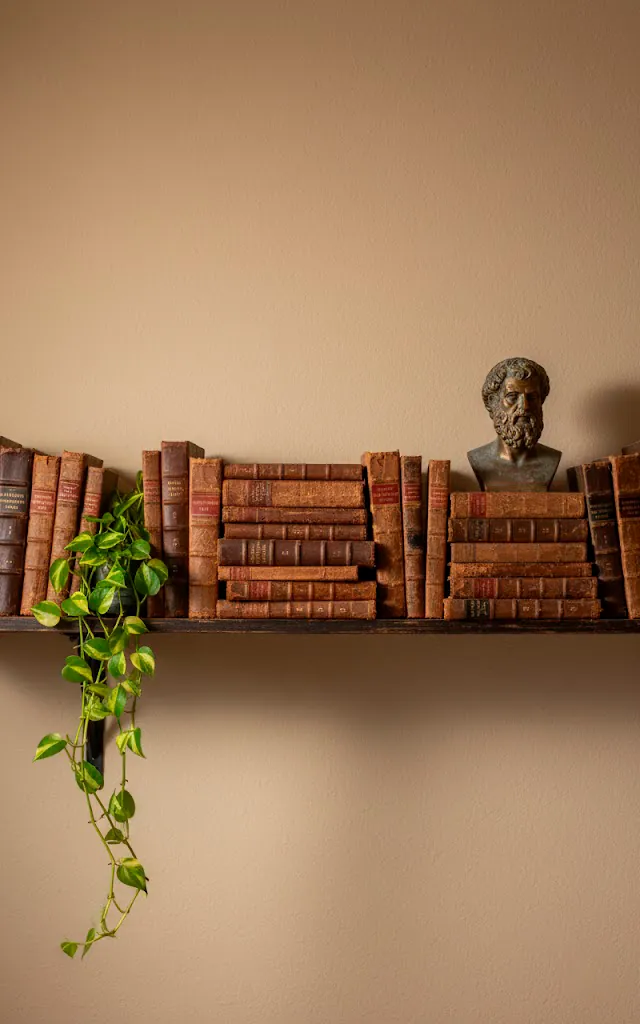
Instead of one giant piece of art, I recommend creating a gallery wall. Mix framed sketches with small mirrors or even dried flowers. Using floating wooden shelves is another great way to display your most “aesthetic” books—you know, the ones with the gold-embossed spines that you swear you’ll read one day.
Don’t worry about being too symmetrical. A slightly cluttered, “lived-in” look actually adds to the coziness. FYI, if everything looks too perfect, it starts to feel like a museum rather than a home. I personally like to lean a few unframed prints against the back of the desk for a more casual, effortless vibe. 🙂
How to Style Your Shelves:
- Vary the Heights: Stack some books horizontally and others vertically.
- Add “Breathing Room”: Don’t jam every inch with books; leave space for a small bust or a vintage clock.
- Incorporate Nature: A small ivy plant or a vase of dried eucalyptus brings life to the dark wood.
The Comfort Factor: Textiles and Textures
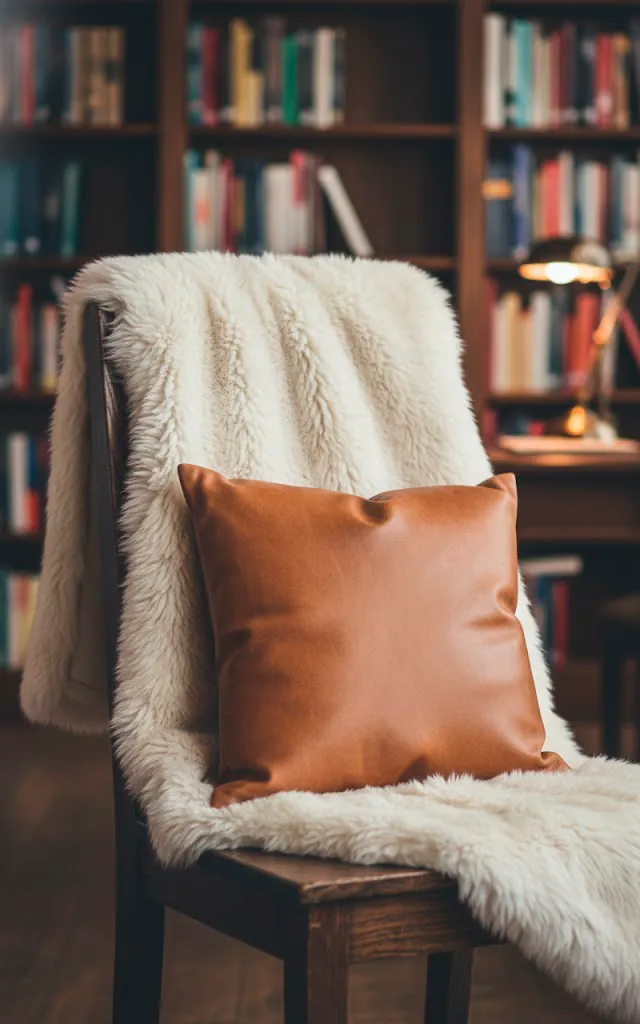
We can’t forget that you actually have to sit here. A vintage wooden chair looks amazing, but it can be about as comfortable as sitting on a rock after twenty minutes. I solve this by layering textiles. A faux fur throw or a thick wool blanket draped over the back of the chair instantly makes the space look more inviting.
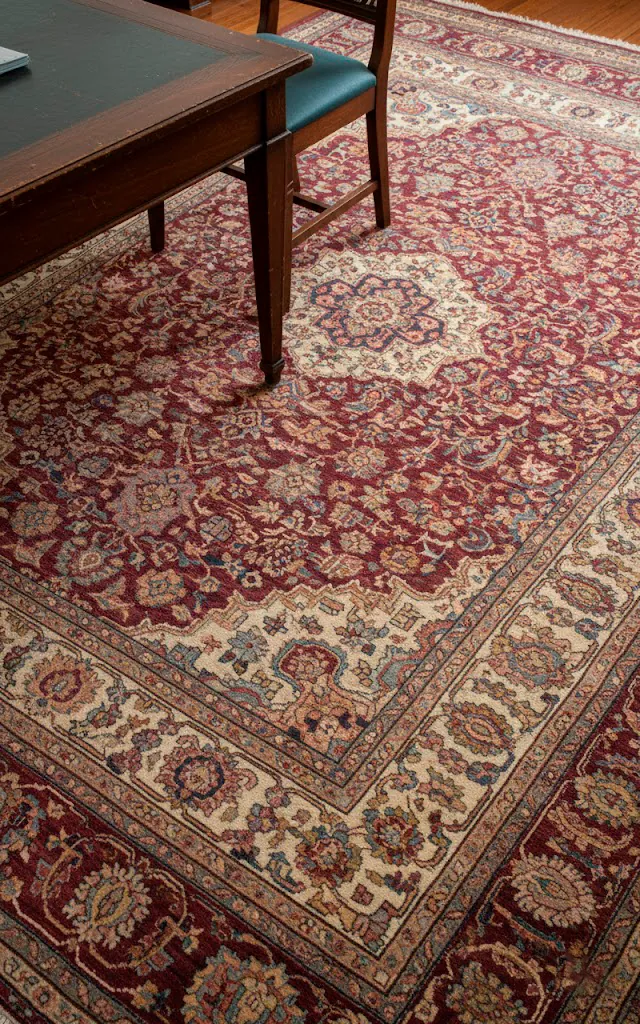
Underneath the desk, a distressed Persian-style rug is a non-negotiable for me. It anchors the furniture and keeps your feet warm while you’re deep in thought. I prefer rugs with deep reds, burnt oranges, and navy blues—colors that feel “expensive” and old-world.
Do you ever feel like a room is “loud” because of the echoes? Textiles aren’t just for looks; they dampen sound. A rug and some heavy curtains will turn your study nook into a quiet sanctuary where the outside world just disappears. It’s all about creating that “cocoon” effect.
Essential Textiles for the Nook:
- The Rug: Look for faded, oriental patterns.
- The Cushion: A velvet or leather pillow for lower back support.
- The Throw: Something heavy and textured to contrast with the smooth wood of the desk.
The Little Things: Stationery and Curated Curiosities
The difference between a “desk in a room” and a “vintage study nook” is in the details. This is where you get to be a bit of a collector. I’m talking about brass magnifying glasses, inkwells, and small globes. These items might seem like “clutter” to some, but to us, they are essential props in our scholarly fantasy.
I love using glass apothecary jars to hold small items like paperclips or fountain pen nibs. It looks much better than a plastic organizer from a big-box store. And please, for the love of all things aesthetic, get yourself a proper desk clock. Checking your phone for the time is a total vibe-killer.
When you’re selecting these curiosities, try to stick to a consistent metal finish. If your lamp is brass, try to find a brass letter opener or a brass tray for your pens. This small bit of consistency ties the whole “moody” look together without making it feel messy.
Curiosities to Consider:
- Timekeeping: An antique-style flip clock or a small brass desk clock.
- Organization: A wooden letter sorter or a leather pen cup.
- Whimsy: A magnifying glass with a bone or wood handle.


Final Thoughts on Your Intellectual Sanctuary
Designing a cozy study nook with vintage charm is a marathon, not a sprint. You don’t have to find every perfect piece today. In fact, it’s better if you don’t. The best spaces feel like they’ve been assembled over decades, filled with “cherished books” and “antique finds” that actually mean something to you.
Remember, the goal is to create a space that inspires you to be your most creative, thoughtful self. Whether you’re writing the next great novel or just paying your water bill, you deserve to do it in a place that feels magical. Honestly, if you don’t feel at least a little bit like a professor at a mystical university while sitting there, we might need to add more candles.
So, go ahead—clear out that dusty corner, find a desk that speaks to you, and start building your sanctuary. Your inner scholar will thank you. 🙂
Related posts
See All15 Vintage Circus Inspired Details for Playful Kids Bedroom Decor
Bring the magic of the big top home! Discover 15 playful, vintage circus-inspired decor details that will transform your kid's …
Read moreThe Complete Guide to Styling a Dining Room Credenza for Everyday Elegance
Give your dining room credenza the ultimate glow-up. Discover easy, elegant styling tips that balance everyday function with show-stopping design.
Read more15 Dried Citrus and Cinnamon Garlands for a Naturally Cozy Kitchen
Forget mass-produced decorations. Transform your kitchen into a naturally cozy, aromatic sanctuary with these 15 beautiful dried citrus and cinnamon …
Read moreThe Dog-Friendly Camper: Designing a Van Interior for Your Pets
Transform your camper van into the ultimate dog-friendly adventure mobile! Discover clever interior design hacks, durable materials, and cozy setups …
Read more