












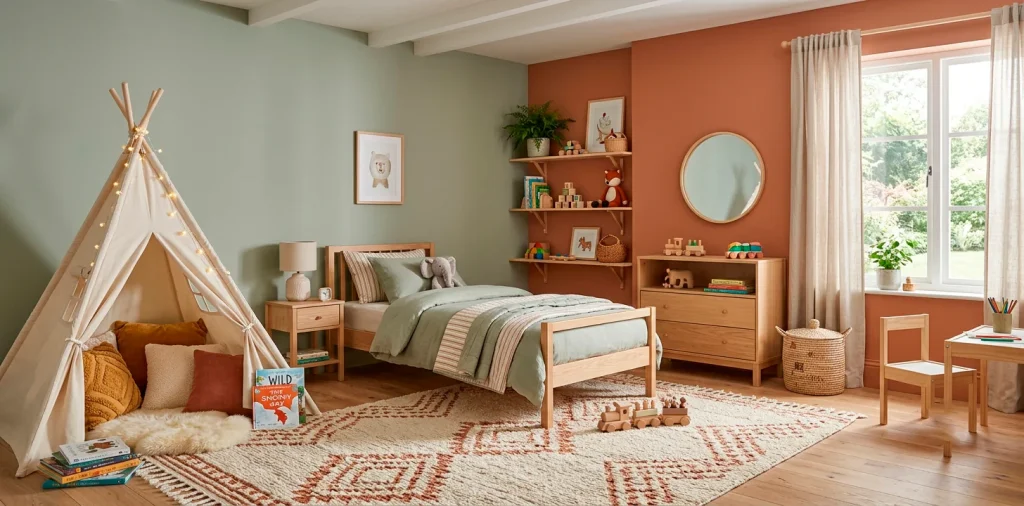

Ever stepped into your kid’s bedroom and immediately felt overstimulated by the neon colors and a mountain of noisy plastic toys? I know I have. Designing a sensory-friendly space isn’t about stripping away the fun; it’s about intentionally creating a calm sanctuary where your little one can decompress. Let’s build a relaxing retreat they will actually love.
Ditch the Neon Colors
Let’s talk about the absolute foundation of any room: color. You want to lean heavily into muted, earthy tones rather than those aggressive primary colors that scream for attention.
Trust me, swapping out that fire-engine red for a soft sage green or a warm beige changes the entire vibe instantly. I painted my nephew’s room a dusty blue, and the drop in bedtime tantrums was basically miraculous.

Mastering the Lighting Layers
Overhead “big light” is the absolute enemy.
Seriously, nobody looks or feels good under glaring ceiling bulbs, especially a kid winding down after a chaotic school day. You need layers.
Grab a few dimmable floor lamps and maybe some warm-toned fairy lights to scatter around the space. Soft, diffused lighting signals to the brain that it’s time to relax.
Ever wondered how a simple desk lamp can change the mood? It makes a huge difference, especially if you explore some whimsical childrens reading room ideas.

Texture is Your Best Friend
Kids experience the world through touch, so we need to give them a tactile wonderland. IMO, mixing materials is the easiest way to achieve this without cluttering the room. Think chunky knit throw blankets, velvet pillows, and maybe a high-pile rug that feels like walking on a cloud. Avoid anything scratchy or overly synthetic. When their little fingers brush against these soft surfaces, it instantly grounds them and reduces anxiety.

The Magic of Decluttering
Visual clutter equals mental clutter.
If every single toy they own is out on display, their brain constantly works to process all that scattered information. We need to hide the chaos, folks. 😅
Invest in some opaque storage bins. Baskets with solid lids are absolute lifesavers here because they keep the mess completely out of sight. Keep only a few favorite items out on the shelves, and rotate them weekly to keep things fresh without overwhelming them.

Soundproofing Secrets
You don’t need to rebuild the drywall to make a room quieter. Adding heavy textiles naturally absorbs excess noise.
Hang some thick, blackout curtains over the windows. Not only do they block out the pesky streetlights, but they also muffle the sound of passing cars outside. I threw a plush, oversized rug over the hardwood floor in our playroom, and it instantly stopped the echoey madness.

Conclusion
Creating a sensory-friendly bedroom doesn’t have to feel overwhelming. By simply adjusting the lighting, softening the textures, and managing the visual clutter, you successfully give your child a true sanctuary. It’s all about crafting a personalized space that hugs them back after a long day. So, which of these calming changes are you trying first? Let me know in the comments!
Related posts
See All15 Vintage Circus Inspired Details for Playful Kids Bedroom Decor
Bring the magic of the big top home! Discover 15 playful, vintage circus-inspired decor details that will transform your kid's …
Read moreThe Complete Guide to Styling a Dining Room Credenza for Everyday Elegance
Give your dining room credenza the ultimate glow-up. Discover easy, elegant styling tips that balance everyday function with show-stopping design.
Read more15 Dried Citrus and Cinnamon Garlands for a Naturally Cozy Kitchen
Forget mass-produced decorations. Transform your kitchen into a naturally cozy, aromatic sanctuary with these 15 beautiful dried citrus and cinnamon …
Read moreThe Dog-Friendly Camper: Designing a Van Interior for Your Pets
Transform your camper van into the ultimate dog-friendly adventure mobile! Discover clever interior design hacks, durable materials, and cozy setups …
Read more