












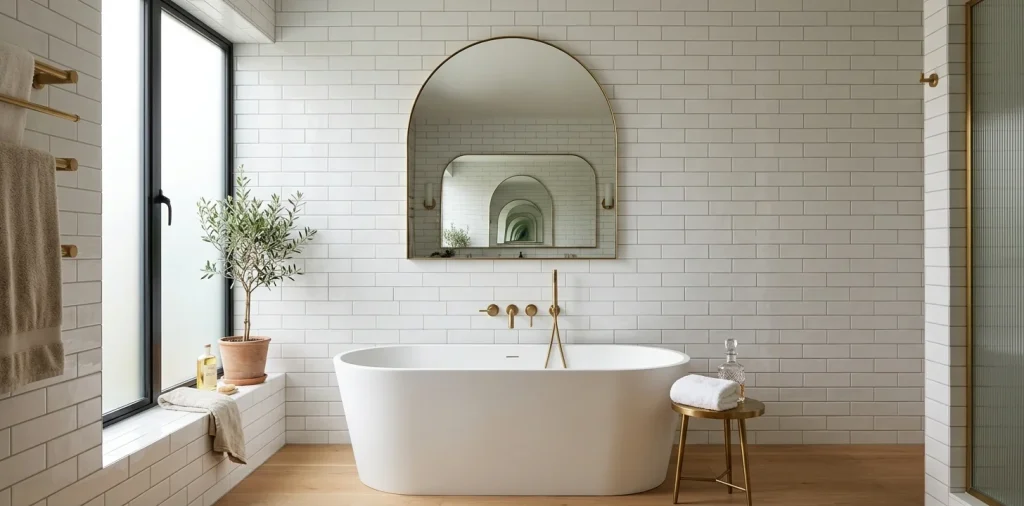

Ceilings feeling a little too close for comfort? You aren’t alone. We all crave that spacious, airy vibe, but tearing off the roof isn’t exactly practical. Instead, we trick the eye! Vertical subway tile layouts work absolute magic for low ceilings. Ready to stretch those walls and fake some extra height? Let me show you how it’s done.
Classic Vertical Stack
Let’s start with the undisputed king of height illusions. The straight vertical stack takes your standard subway tile and simply flips it 90 degrees.
Think clean, unbroken lines rushing straight up to the ceiling. It draws your eye upward instantly. Honestly, it transforms a cramped shower into what feels like a luxury spa vault. I used this in my tiny guest bath, and the difference blew my mind.
Want to nail this look? Keep the grout lines thin to maximize that continuous upward flow. You seriously cannot go wrong with this timeless layout, especially if you crave a modern edge.

Vertical Running Bond
Ever seen a traditional brick wall? Now imagine turning that entire wall on its side. That is the vertical running bond layout, and it brings a fantastic sense of movement to any space. By offsetting each vertical tile by half its length, you create a cascading waterfall effect that naturally pulls your gaze upward. This layout adds subtle texture without overwhelming the room. IMO, it looks incredibly chic in a kitchen or bathroom where you want height and classic charm. Speaking of perfect pairings, check out these ideas to mix brass and chrome for a stunning finish.

Skinny Vertical Tiles
Okay, let’s talk about proportions. Standard 3×6 tiles are great, but skinny subway tiles? They are next-level magic.
When you use a 2×8 or even a 2×10 tile vertically, you amplify that stretching effect dramatically.
The exaggerated length-to-width ratio forces the eye to travel further up. It acts like a pinstripe suit for your bathroom walls!
Layout accents:
- Stick to matte finishes for a soft, modern vibe.
- Try glossy glazes to bounce light around the room.
- Use contrasting trim to frame the installation beautifully.

Vertical Herringbone
Want to add some serious drama while still faking those tall ceilings? Enter the vertical herringbone layout. Instead of laying the classic V-shape horizontally, you point those arrows straight up. This creates an energetic, upward-pointing chevron effect.
It literally points to the ceiling, telling your brain the room is taller than it actually is. Yes, your tile installer might grumble a bit about the intricate cuts, but the stunning, high-end result pays off completely. It brings such a dynamic, woven texture to flat walls.

Double Vertical Stack
Why settle for a single column when you can double up? The double vertical stack pairs two tiles side-by-side, creating thicker vertical bands.
Think of it as creating distinct architectural columns along your wall. These broader vertical stripes feel more substantial and anchor the room beautifully.
I love using this layout behind a freestanding tub or a wide bathroom vanity. It gives off a slightly retro, mid-century vibe while still doing the heavy lifting of elongating those short walls. Just make sure your walls are perfectly plumb before trying this precise grid!

Offset Vertical
If the traditional half-step running bond feels a bit too predictable for your taste, you need to try the one-third offset vertical layout. Instead of shifting the vertical tiles by 50 percent, you stagger them by just a third of their length. This subtle shift creates a diagonal stair-step pattern within the vertical lines. It keeps the upward momentum going strong but adds a highly customized, architectural twist. It looks wildly expensive and sophisticated, especially in a moody, dark-hued shower enclosure. Honestly, it is a brilliant way to break the mold.

Contrasting Grout Vertical
Layouts are only half the battle; grout color actually does the rest of the heavy lifting here.
When you pair a vertical layout with a highly contrasting grout, you outline every single tile perfectly. This highlights those crucial vertical lines, making them impossible to ignore.
Dark grout on white vertical tiles acts like bold marker lines forcefully drawing the eye up.
Grout tips:
- Charcoal grout adds a sharp industrial edge.
- Warm terracotta grout brings in earthy, cozy vibes.
- Keep the lines narrow so the contrast remains crisp.

Vertical Gradient Fade
Ready for something truly artistic? A vertical gradient fade uses subway tiles in varying shades of the same color. You start with the darkest tiles at the bottom and slowly transition to the lightest tiles at the top.
This ombre effect mimics the natural lightening of a sky, instantly making the ceiling feel infinitely higher. It takes some serious planning to mix the boxes right, but the resulting optical illusion absolutely stuns everyone who walks in. It brings an airy, weightless feel to previously heavy, cramped spaces.

Vertical Wainscoting
Who says tile needs to go all the way up to work its magic? Installing vertical subway tiles as wainscoting works incredibly well for low ceilings.
Stop the tile about two-thirds of the way up the wall and paint the remaining top section a bright, crisp white. This stark contrast between the vertical tile and the painted upper wall creates a false horizon line.
Your brain naturally assumes the ceiling sits much higher above that horizon than it actually does. It feels classic, elegant, and saves you a ton of money on materials. Win-win, right?

Mixed Finish Vertical
Texture plays a massive role in how we perceive space. By mixing matte and glossy vertical subway tiles in the same exact color, you create a mesmerizing interplay of light. As natural light hits the wall, the glossy tiles reflect it upward, while the matte tiles absorb it. These alternating vertical reflections create an illusion of depth and added height. It keeps the wall from looking flat and lifeless. I highly recommend trying this with deep, moody colors like forest green or navy blue to maximize the luxurious, reflective drama in your room.

Floor-to-Ceiling Vertical Block
Sometimes, you just need to commit fully to the bit. A floor-to-ceiling vertical block means covering the entire wall without any breaks, borders, or trim.
You run those vertical subway tiles straight from the baseboard directly into the ceiling line.
Removing visual interruptions allows the eye to travel seamlessly up the wall.
Design benefits:
- Eliminates all distracting horizontal transition lines.
- Makes small, cramped bathrooms feel highly architectural.
- Hides wonky drywall imperfections absolutely flawlessly.

Diagonal Vertical Slant
Let me introduce you to the rebellious cousin of the vertical stack: the diagonal vertical slant. Instead of perfectly plumb lines, you lay the tiles at a steep 45-degree or 60-degree angle sloping upward.
This aggressive angle forces your gaze to shoot diagonally across and up the wall. It breaks up the boxy feeling of a square room and tricks the mind into perceiving more vertical volume. It feels incredibly dynamic, almost like the walls are in motion, making it a stellar choice for modern accent walls. If you want something unexpected, this is your winner.

Thick Striped Vertical
What happens when you alternate colors in your vertical stack? You get thick, glorious vertical stripes! By alternating columns of white and a subtle contrasting color, you create a bold wallpaper effect using tile. These vertical stripes aggressively push the ceiling away from the floor. It feels playful yet incredibly structured. You can use soft grays for a muted look, or go wild with contrasting pastels. It turns a boring bathroom wall into a massive statement piece that automatically elevates the entire room’s perceived height.

Subway Tile Shower Niche Vertical
Don’t forget about your shower niches! If you run your main wall tiles horizontally, you can switch to a vertical layout exclusively inside the recessed niche.
This sudden burst of verticality acts like a visual exclamation point, instantly drawing attention upward. It breaks the monotony of horizontal lines and provides a clever, subtle lift.
Plus, it requires zero extra square footage. It perfectly frames your shampoos while quietly telling your brain the shower ceiling sits much higher. If you love deep colors, you can easily tie this look into some forest green bathroom accents for a stunning, earthy retreat.

Asymmetrical Vertical
Let’s finish with something slightly chaotic but deeply stylish. The asymmetrical vertical layout mixes different lengths of subway tiles—say, 3×6, 3×9, and 3×12—all running vertically.
This irregular pattern prevents the eye from resting on a predictable grid, encouraging it to wander up the wall. The unpredictable joints create an organic, custom-built aesthetic. It completely breaks every traditional tile rule in the best way possible, proving that you do not need perfect symmetry to achieve that soaring, airy high-ceiling illusion.

Conclusion
There you have it! Faking a taller ceiling doesn’t require massive structural changes when you have clever tile layouts on your side. These vertical subway tile ideas instantly lift the gaze and breathe fresh life into cramped rooms. Whether you go for a classic stack or a wild asymmetrical vibe, your walls will thank you. So, which layout are you grabbing first? Let me know in the comments below!
Related posts
See All15 Vintage Circus Inspired Details for Playful Kids Bedroom Decor
Bring the magic of the big top home! Discover 15 playful, vintage circus-inspired decor details that will transform your kid's …
Read moreThe Complete Guide to Styling a Dining Room Credenza for Everyday Elegance
Give your dining room credenza the ultimate glow-up. Discover easy, elegant styling tips that balance everyday function with show-stopping design.
Read more15 Dried Citrus and Cinnamon Garlands for a Naturally Cozy Kitchen
Forget mass-produced decorations. Transform your kitchen into a naturally cozy, aromatic sanctuary with these 15 beautiful dried citrus and cinnamon …
Read moreThe Dog-Friendly Camper: Designing a Van Interior for Your Pets
Transform your camper van into the ultimate dog-friendly adventure mobile! Discover clever interior design hacks, durable materials, and cozy setups …
Read more