












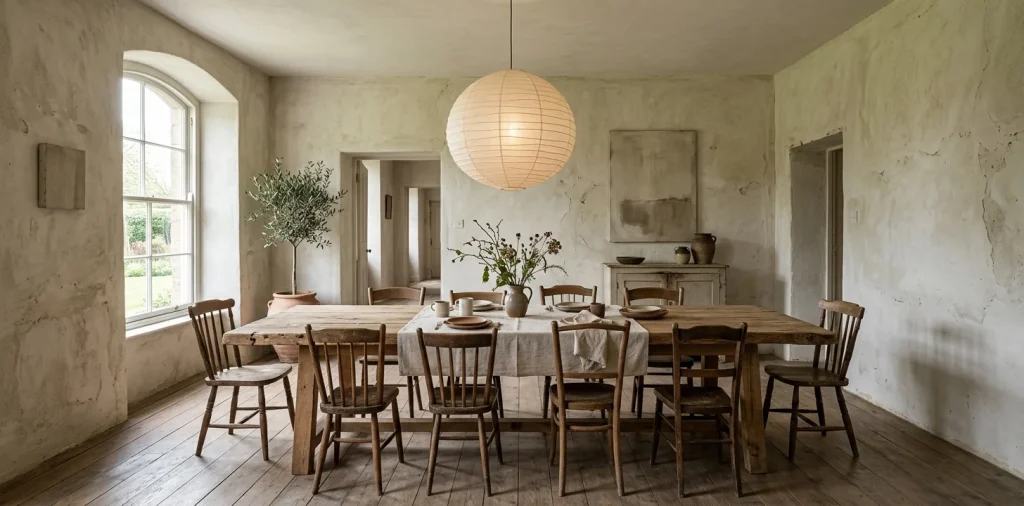

Tired of dining rooms that feel like sterile museum exhibits? I definitely am. Let’s ditch the obsession with flawless finishes and embrace Wabi-Sabi, the Japanese art of finding absolute beauty in imperfection. This design philosophy transforms rigid spaces into deeply comforting sanctuaries. Ready to bring some raw, authentic charm into your home?
1. Live-Edge Wooden Tables
Nothing screams Wabi-Sabi louder than a massive, chunky live-edge wooden table. I replaced my glossy glass table with a deeply grained walnut slab last year, and it completely changed the room’s energy. You literally see the tree’s natural history in every knot and curve. Why settle for factory-perfect edges when nature does it better? 🌿 This bold anchor piece sets an immediate earthy tone, daring anyone to worry about a tiny scratch or water ring. Embrace those little dings; they simply add character to your space!

2. Asymmetrical Ceramic Centerpieces
Ditch the perfectly symmetrical crystal vases immediately.
Instead, hunt down some genuinely wonky, hand-thrown ceramics for your dining table. I adore pottery that clearly shows the artist’s thumbprints or features a slightly lopsided glaze. These uneven vessels command attention because they feel wonderfully human and completely unique.
Group three vastly different vases together, and you suddenly create a dynamic, unpredictable focal point.
Handmade elements:
- Artisan clay bowls
- Speckled glaze pitchers
- Raw unglazed terracotta vases

3. Wrinkled Linen Table Linens
Do you secretly hate ironing as much as I do? Good news: Wabi-Sabi demands we skip the iron entirely. Toss a rumpled, pure linen tablecloth over your dining surface and call it a day. The natural creases catch the light beautifully, adding instant texture and a relaxed, lived-in vibe.
Linen naturally softens with every wash, making it the ultimate low-maintenance luxury. Plus, an accidental wine spill somehow feels significantly less tragic on a beautifully imperfect, rustic fabric.

4. Mismatched Vintage Chairs
Let’s banish the matching dining set forever.
Curating a collection of different chairs brings massive personality to your dining room. I love hunting through flea markets for weathered oak stools, woven rattan chairs, and minimalist wooden benches.
Mix and match heights, eras, and textures. This intentional chaos creates a deeply welcoming environment where no one feels afraid to actually sit down and get comfortable.
If you need a little help visualizing how to pull off this eclectic seating arrangement without looking like a chaotic thrift store, check out this ultimate guide mixing matching dining room chairs.

5. Earthy and Muted Color Palettes
Bright, punchy colors completely kill the zen vibe we want here. Instead, envelop your walls in grounded, nature-inspired shades like warm taupe, muted sage, and soft terracotta. These colors reflect the fading hues of autumn leaves or dry clay. Whenever I walk into a softly toned dining room, my heart rate genuinely drops a few beats. Keep the contrasts incredibly low and let the natural materials speak the loudest. It makes the entire dining experience feel incredibly grounding, peaceful, and delightfully calm.

6. Textured Plaster Wall Finishes
Flat, eggshell-painted drywall feels a bit soulless, IMO.
Applying a limewash or Roman clay finish transforms a basic wall into a breathing, textured masterpiece. The subtle variations in the plaster catch the morning sunlight, creating shifting shadows throughout the day. You can practically feel the raw earthiness just by looking at it.
Essential finishes:
- Matte limewash paint
- Venetian plaster kits
- Heavy texture application trowels

7. Weathered Wood Sideboards
Your storage furniture should tell a rich story.
A heavily distressed sideboard or vintage credenza anchors the room with profound history. Look for peeling paint, exposed wood grain, and deeply oxidized metal hardware. I actually prefer buying secondhand pieces that survived decades of rough use because you simply cannot fake that authentic patina.
Store your extra plates and linens inside, but let the battered exterior serve as a proud testament to the beauty of aging. Those scratches are literal badges of honor.

8. Paper Lantern Pendants
Heavy crystal chandeliers have zero place in a Wabi-Sabi sanctuary. Swap out those glitzy fixtures for oversized paper lanterns, specifically those iconic Noguchi-style shades. FYI, the thin paper diffuses light into a soft, ambient glow that flatters everyone at the table (a massive bonus for dinner parties!). They sway gently with the breeze, adding a delicate, ephemeral quality to the room. It instantly lowers the visual weight of the space while keeping things effortlessly chic.

9. Dried Floral Arrangements
Fresh flowers are lovely, but they die so quickly.
Dried botanicals lean heavily into the Wabi-Sabi appreciation for the passing of time. I love filling a heavy stone vase with dried thistle, bleached branches, and faded pampas grass.
These arrangements require zero water and look incredibly sculptural on your table. They celebrate the undeniable beauty of decay and fragility.
Next time you take a nature walk, forage for some interesting twigs or seed pods to build your own beautifully stark centerpiece.

10. Exposed Structural Beams
Why hide the bones of your beautiful house? If you have ceiling beams, strip away the pristine white paint and expose the raw wood beneath. The structural honesty perfectly aligns with this rustic, imperfect aesthetic.
Even if you lack authentic structural beams, you can easily install reclaimed wood faux beams to fake the look. The rough, splintered textures draw the eye upward and make the dining area feel like an ancient, sheltering cabin.

11. Hand-Poured Beeswax Candles
Atmosphere heavily relies on the absolute right lighting.
Stock up on chunky, unrefined beeswax candles that drip naturally over their holders. The rich, golden color and irregular shapes add immediate warmth to your dining table. Plus, they smell faintly of real honey, which beats those overpowering artificial vanilla candles any day.
Candle setup essentials:
- Raw brass candleholders
- Thick beeswax pillars
- Organic shape tapers

12. Stone and Concrete Elements
Bringing raw stone or concrete into the dining space adds fantastic visual weight. Think about a cast concrete dining table or a rugged stone pedestal bowl sitting quietly in the corner. I added a heavy, chipped concrete planter to my dining room last month, and it contrasts perfectly with the softer linens. These materials proudly display their porous textures and deeply uneven coloring. They anchor the room in a very primal, grounded way.

13. Minimalist Floating Shelves
Clutter causes severe visual stress, so keep your display spaces highly curated. Install a single, thick plank of reclaimed wood as a minimalist floating shelf.
Display just three or four cherished items: a favorite tea bowl, a smooth river rock, or a small stack of linen napkins. Negative space plays a massive role in Wabi-Sabi design. Give your beautiful objects the breathing room they deserve so you can truly appreciate their unique, imperfect forms.

14. Distressed Wabi-Sabi Flooring
Don’t stress over a scratched floor ever again.
Whether you have wide-plank oak or natural stone tiles, let them proudly show their wear. The scuff marks from shifting dining chairs only add to the narrative of a well-loved home.
If you want to add a rug, choose a faded, vintage kilim or a chunky, un-dyed wool piece with frayed edges.
Let the floor remain a rugged foundation. If you love this earthy, grounded approach, you might also want to explore some warm japandi coffee bar ideas zen mornings to carry that tranquil vibe directly into your kitchen.

15. Bare Windows and Natural Light
Heavy drapes instantly suffocate a room’s natural energy. Strip the window treatments back completely if your privacy allows it, or hang incredibly sheer, unbleached linen panels. We want the changing daylight to wash over all those beautiful textures we just added. Watching the afternoon sun cast long, uneven shadows across a raw wood table provides the ultimate Wabi-Sabi experience. It reminds us that everything changes constantly, and that fleeting beauty makes it all the more special.

Conclusion
Designing a Wabi-Sabi dining room removes the intense pressure of maintaining a flawless home. You finally get to relax, embrace the raw textures, and let your furniture age gracefully. These imperfect spaces feel incredibly authentic, deeply peaceful, and endlessly welcoming. So, which of these beautifully wonky ideas are you trying first? Let me know in the comments!
Related posts
See All15 Vintage Circus Inspired Details for Playful Kids Bedroom Decor
Bring the magic of the big top home! Discover 15 playful, vintage circus-inspired decor details that will transform your kid's …
Read moreThe Complete Guide to Styling a Dining Room Credenza for Everyday Elegance
Give your dining room credenza the ultimate glow-up. Discover easy, elegant styling tips that balance everyday function with show-stopping design.
Read more15 Dried Citrus and Cinnamon Garlands for a Naturally Cozy Kitchen
Forget mass-produced decorations. Transform your kitchen into a naturally cozy, aromatic sanctuary with these 15 beautiful dried citrus and cinnamon …
Read moreThe Dog-Friendly Camper: Designing a Van Interior for Your Pets
Transform your camper van into the ultimate dog-friendly adventure mobile! Discover clever interior design hacks, durable materials, and cozy setups …
Read more