












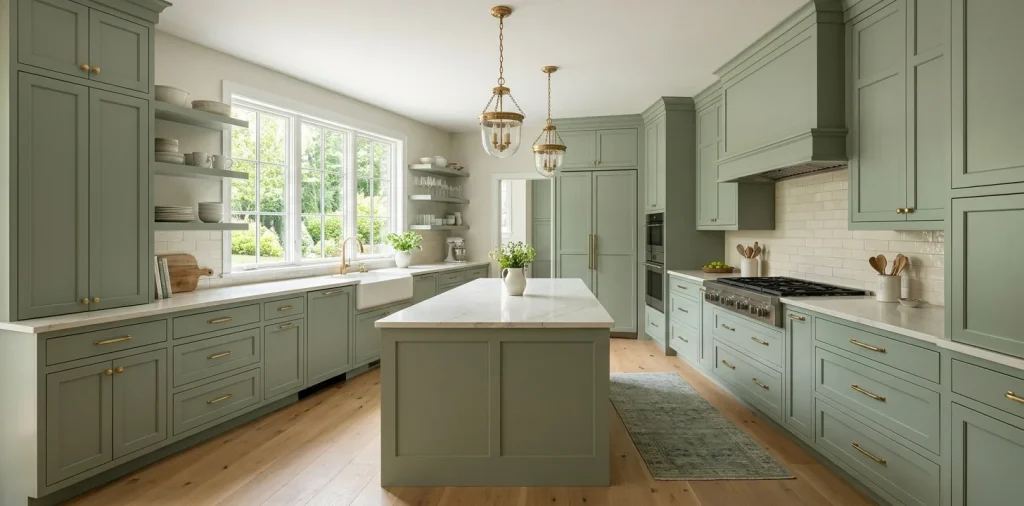

Ready to ditch those tired, builder-grade cabinets? Sage green is having a massive moment, and frankly, I’m fully here for it. It brings the outdoors in without making your cooking space look like a murky swamp. But choosing the exact right shade? That’s where things get dicey. Let’s figure out how to nail that perfect earthy vibe effortlessly.
The Magic of Sneaky Undertones
Ever slapped a gorgeous paint swatch on the wall and realized it looks weirdly blue? Yeah, undertones are sneaky little devils that ruin your best-laid plans. Sage green isn’t just plain green; it’s a delicate dance of gray, yellow, and sometimes blue pigments mixed together.
If you want a cozy, historic feel, aim for yellow-based sage. Craving a crisp, modern aesthetic? Gray undertones are your absolute best friend. Always check your swatches against a pure white piece of paper to reveal their true nature.

Lighting Changes Literally Everything
Let me save you a ton of heartache right now. The paint color you loved in the hardware store’s aggressive fluorescent glare will look entirely different in your dim, north-facing kitchen. Natural light pulls out the true green pigment, while warm artificial bulbs amplify yellow undertones and make it look muddy. Test your samples at 8 AM, 2 PM, and 8 PM to avoid nasty surprises. You literally can’t skip this step if you want flawless results! 😅

Pairing Sage with the Right Hardware
Let’s talk jewelry for your cabinets, shall we? Hardware genuinely makes or breaks the entire sage green aesthetic in your kitchen.
If you want to lean into a classic, high-end look, unlacquered brass is practically mandatory. It warms up the cool tones of the paint and adds that lived-in luxury vibe we all secretly want for our homes.
Not a gold fan? I hear you. Matte black provides a punchy, modern contrast that grounds the airy green perfectly and hides greasy fingerprints like an absolute charm.

The Two-Tone Cabinet Dilemma
Afraid of drowning your entire kitchen in too much green? I totally get it, nobody wants to cook in a space that feels like a crowded terrarium.
Enter the two-tone cabinet strategy. It’s the ultimate compromise for the commitment-phobic designer.
Paint your lower cabinets a rich, grounding sage, and keep the uppers a creamy, soft white. This clever trick instantly makes your ceiling look taller and keeps the room feeling incredibly light and breezy.
Want more inspiration for mixing cabinet finishes seamlessly? Check out our guide to the best two-tone cabinet color combinations.

Selecting the Perfect Countertop
Sage green plays incredibly well with others, especially natural textures. If you’re going for a rustic, cozy farmhouse vibe, chunky butcher block countertops bring an unbeatable warmth that perfectly complements the earthy green. Prefer something sleeker and more durable? Crisp white quartz with subtle gray veining offers a clean, sophisticated contrast. Just avoid heavily busy granites, as their chaotic patterns will fight the soft elegance of your newly painted cabinets and create massive visual clutter.

Please Don’t Ignore the Finish
Glossy green cabinets? No thanks, we aren’t designing a retro 1950s diner here. The finish you choose for your paint matters just as much as the actual pigment.
You absolutely want to secure a satin or eggshell finish. These options provide enough durability to easily wipe away inevitable pasta sauce splatters while maintaining a soft, velvety look. Matte looks absolutely stunning on Pinterest, but it’s a total nightmare to keep clean in a real-life cooking space. FYI, grease stains on matte paint are practically permanent!

Wood Accents and Open Shelving
Need to break up a massive, imposing wall of green cabinets? Open shelving is the hero you probably didn’t know you needed.
Floating shelves crafted in raw white oak or warm walnut look absolutely breathtaking against a sage backdrop. They add organic texture and give you a dedicated spot to display your fancy coffee gear 🌿.
Design elements to incorporate for a styled look:
- Warm wood floating shelves
- Textured ceramic dinnerware
- Trailing pothos plants

The Classic English Shaker Vibe
If you really want to maximize the impact of your chosen sage green, pair it with classic Shaker-style cabinet doors. The recessed panels create subtle, shifting shadows that make the color look significantly richer and more dynamic throughout the day. It’s a timeless, fail-proof pairing that instantly elevates your space without ever feeling overly trendy or dated. Seriously, if you’re remodeling on a tight dime, this specific combination is pure magic. Read our classic English shaker kitchen budget guide for more genius tips.

Wrapping Up Your Kitchen Glow-Up
Choosing the perfect shade of sage green shouldn’t feel like a high-stakes guessing game. By mastering tricky undertones, respecting your room’s natural lighting, and picking the right complementary hardware, you’ll create a kitchen that feels effortlessly chic and inviting. Which hardware finish are you grabbing first to match your new green cabinets? Let me know in the comments below!
Related posts
See All15 Vintage Circus Inspired Details for Playful Kids Bedroom Decor
Bring the magic of the big top home! Discover 15 playful, vintage circus-inspired decor details that will transform your kid's …
Read moreThe Complete Guide to Styling a Dining Room Credenza for Everyday Elegance
Give your dining room credenza the ultimate glow-up. Discover easy, elegant styling tips that balance everyday function with show-stopping design.
Read more15 Dried Citrus and Cinnamon Garlands for a Naturally Cozy Kitchen
Forget mass-produced decorations. Transform your kitchen into a naturally cozy, aromatic sanctuary with these 15 beautiful dried citrus and cinnamon …
Read moreThe Dog-Friendly Camper: Designing a Van Interior for Your Pets
Transform your camper van into the ultimate dog-friendly adventure mobile! Discover clever interior design hacks, durable materials, and cozy setups …
Read more