












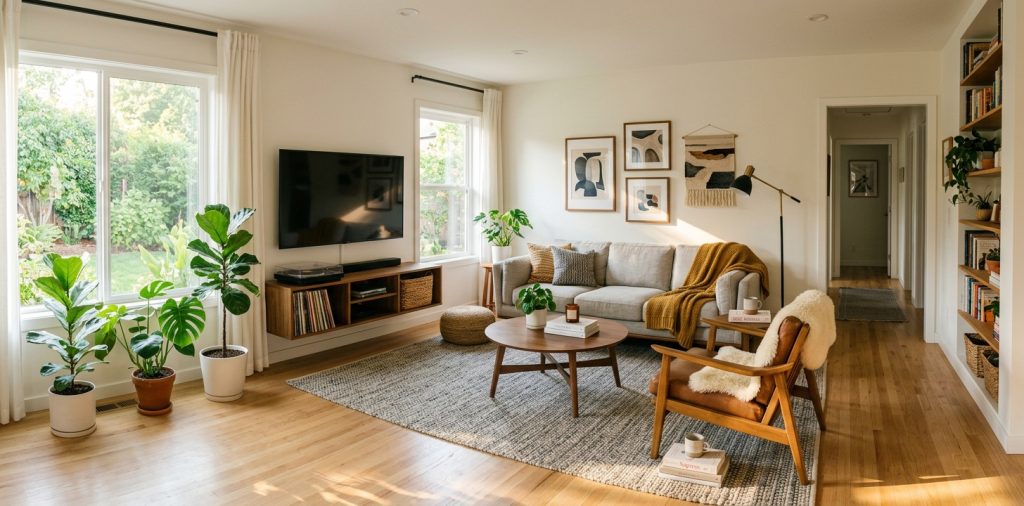

Ever stared at your tiny living room and felt like the walls were closing in? Pushing everything against the edges is a rookie mistake that actually shrinks your space. I used to do this until I realized my sofa wasn’t glued to the baseboards! Floating your furniture pulls pieces toward the center, creating breathing room and an incredibly cozy vibe. Let’s fix that layout today.
Why Wall-Hugging is Ruining Your Vibe
Think your living room feels bigger with everything mashed against the edges? Think again.
Creating a void in the middle of the room actually highlights exactly how small the space is. It turns your cozy gathering area into an awkward waiting room where everyone shouts across a vast expanse of rug. By floating your pieces, you instantly establish a dedicated zone that feels completely purposeful. I know it sounds counterintuitive, but pulling the sofa just a few inches forward works magic. You immediately gain a sense of flow that transforms the entire room dynamics.

Finding the Anchor Piece
Every successful room layout needs a strong boss, and in most living rooms, that is your sofa. Position this heavy hitter first to establish the primary conversation zone. You certainly do not need a massive sprawling sectional; a sleek loveseat works perfectly in tight spaces. Once the sofa floats gracefully facing your main focal point—like a fireplace or a chic media console—everything else effortlessly falls into place. Seriously, nail this single step and the rest of your interior styling becomes an absolute breeze. Your room finds its anchor instantly.

Defining the Zone with a Rug
A floating arrangement desperately needs clear boundaries.
Without a solid area rug, your chairs and tables will look like they are drifting aimlessly at sea. The rug acts as a visual anchor, tying the disparate furniture elements together into one cohesive, stylish island.
Make sure the front legs of every seating piece touch the rug.
If you use a tiny postage stamp of a rug, the whole spatial illusion shatters instantly. Go big to make the room feel expansive and luxurious! If you want to master this trick, read this guide to layering vintage rugs in small spaces.

Leaving Traffic Lanes Open
Nobody enjoys doing parkour just to reach the kitchen for a midnight snack. When you pull furniture into the center, you inherently create pathways behind and around your main seating area. Give people at least three feet of walking space if possible, though in a tiny apartment, you can totally cheat that down to a couple of feet. The trick is making sure the movement flows naturally rather than feeling forced or cramped. Clear outer paths trick the brain into perceiving more square footage than you actually have, which is the ultimate goal IMO. Smooth navigation equals a much happier home.

Backing Up the Sofa
Does the back of your couch look a little naked fully exposed to the room? We can easily fix that awkward situation.
Placing a slim console table directly behind a floated sofa is my absolute favorite designer hack. It provides an excellent excuse to add tall lamps, drop your keys, or display a few curated coffee table books.
Best console features for behind a sofa:
- Narrow depth under 12 inches
- Built-in outlets for charging devices
- Open shelving to prevent visual blockage
This simple addition makes the floating layout look completely intentional and highly polished.

Using See-Through Elements
Heavy, blocky furniture crushes a small room faster than you can say claustrophobia.
To keep the floating arrangement feeling light and airy, you must incorporate pieces with visual transparency. Think wire-frame chairs, glass-topped coffee tables, or mid-century pieces with exposed, slender wooden legs. When your eyes can travel freely under and through the furniture, the room maintains an open, highly breathable atmosphere. It is the ultimate visual trick for maximizing perceived space. Speaking of transparent tricks, clear acrylic furniture is amazing for small spaces.

Lighting Your New Layout
Moving furniture away from the walls means you suddenly lose easy access to your electrical outlets. Don’t panic! Floor outlets remain the absolute dream scenario, but if you rent, just run a heavy-duty extension cord safely under your anchor rug. Alternatively, embrace the freedom of battery-operated LED bulbs in your table lamps or invest in stylish rechargeable cordless lamps. Good ambient lighting draws attention inward, brilliantly highlighting the cozy island you just designed. You get all the glow with absolutely none of the tripping hazards.

Creating Balance with Accent Chairs
An isolated sofa often looks lonely and somewhat incomplete in the center of a room.
Introduce one or two accent chairs directly opposite the couch to form a welcoming conversational circle. They definitely do not need to be massive oversized recliners; small, low-profile armchairs work beautifully to balance the visual weight of the sofa. FYI, swapping bulky chairs for sleek ones saves serious floor space. 😉
Angle them slightly inward to invite conversation and keep the room’s energy focused tightly in the center.

Conclusion
Floating furniture in a tiny living room might feel scary at first, but it genuinely transforms how your space looks and functions. By pulling pieces inward, you ditch the awkward waiting-room vibe and create an intimate, stylish sanctuary. Ready to slide that sofa a few inches away from the wall? Which piece are you moving first? Let me know in the comments!
Related posts
See All15 Vintage Circus Inspired Details for Playful Kids Bedroom Decor
Bring the magic of the big top home! Discover 15 playful, vintage circus-inspired decor details that will transform your kid's …
Read moreThe Complete Guide to Styling a Dining Room Credenza for Everyday Elegance
Give your dining room credenza the ultimate glow-up. Discover easy, elegant styling tips that balance everyday function with show-stopping design.
Read more15 Dried Citrus and Cinnamon Garlands for a Naturally Cozy Kitchen
Forget mass-produced decorations. Transform your kitchen into a naturally cozy, aromatic sanctuary with these 15 beautiful dried citrus and cinnamon …
Read moreThe Dog-Friendly Camper: Designing a Van Interior for Your Pets
Transform your camper van into the ultimate dog-friendly adventure mobile! Discover clever interior design hacks, durable materials, and cozy setups …
Read more