












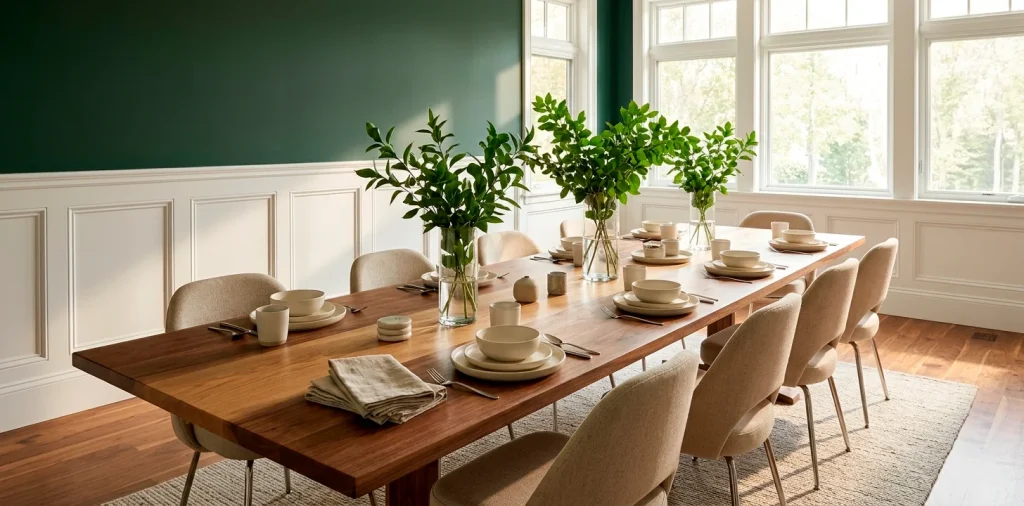

So, you finally painted your dining room a gorgeous shade of green, but now your existing table looks completely out of place? Don’t panic. Green walls breathe incredible life into a space, but choosing the wrong lumber can instantly tank the vibe. I recently helped my brother fix his swamp-monster-looking room, so I know the struggle. Let’s find your perfect wood match. 😉
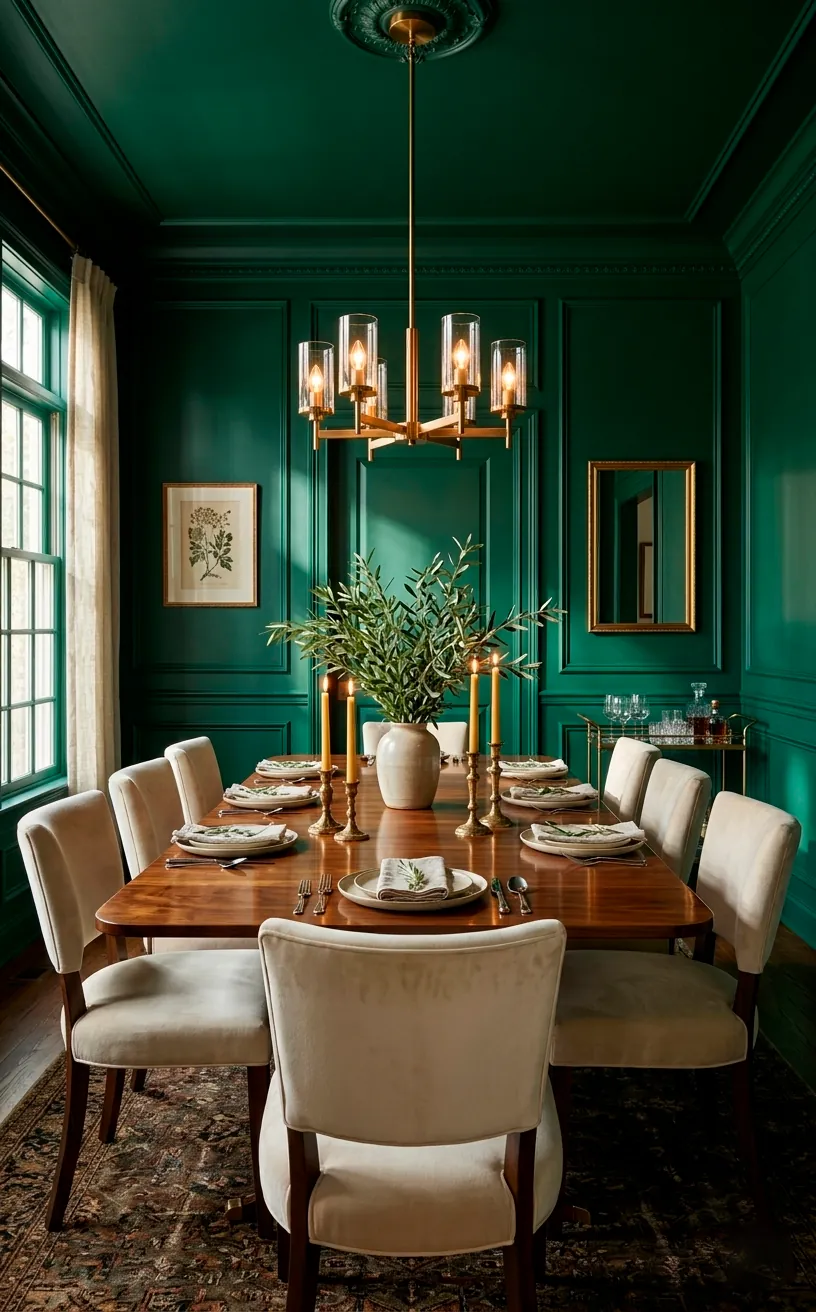
Rich Walnut
I absolutely adore rich walnut next to green walls, especially deep forest greens. The heavy, dark brown undertones of walnut contrast beautifully with cool green hues, creating an instantly upscale, moody sanctuary. Who doesn’t want their guests to feel like they are dining in a high-end historic manor?
This combo anchors the entire room with zero effort. Just pair a walnut table with some brass candlesticks, and you have pure design magic. Trust me, your dining space will look incredibly expensive.
Natural White Oak
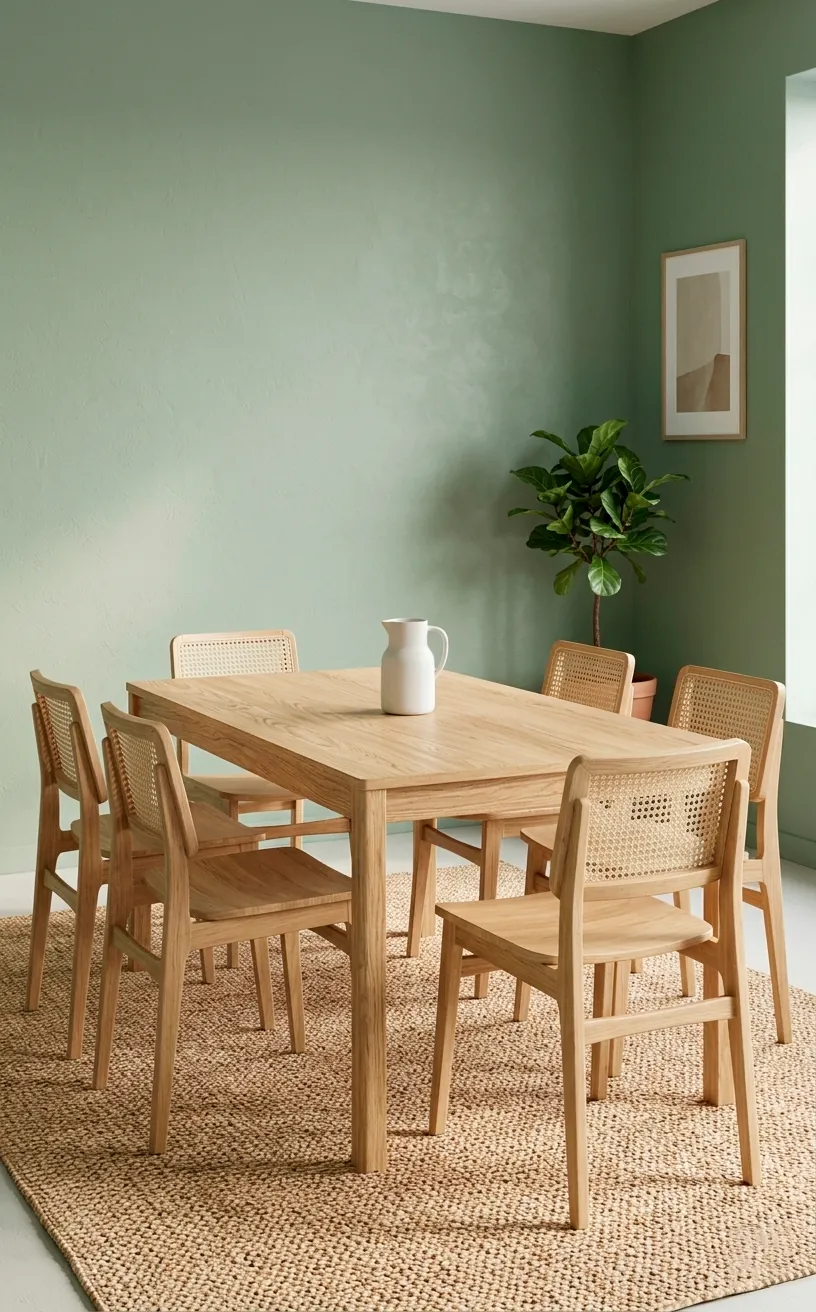
If you prefer a bright, airy aesthetic, natural white oak offers the perfect solution. The cool, neutral undertones of white oak temper the intensity of vibrant sage or olive greens without clashing. I love how this pairing brings a fresh, organic modern energy into a home. It keeps the space feeling light, clean, and completely unpretentious. Grab an oak table with clean lines, throw in some linen placemats, and enjoy your new breezy sanctuary. To enhance this organic vibe, explore these layered rug ideas for a cozy dining room to anchor your oak furniture perfectly.
Warm Cherry
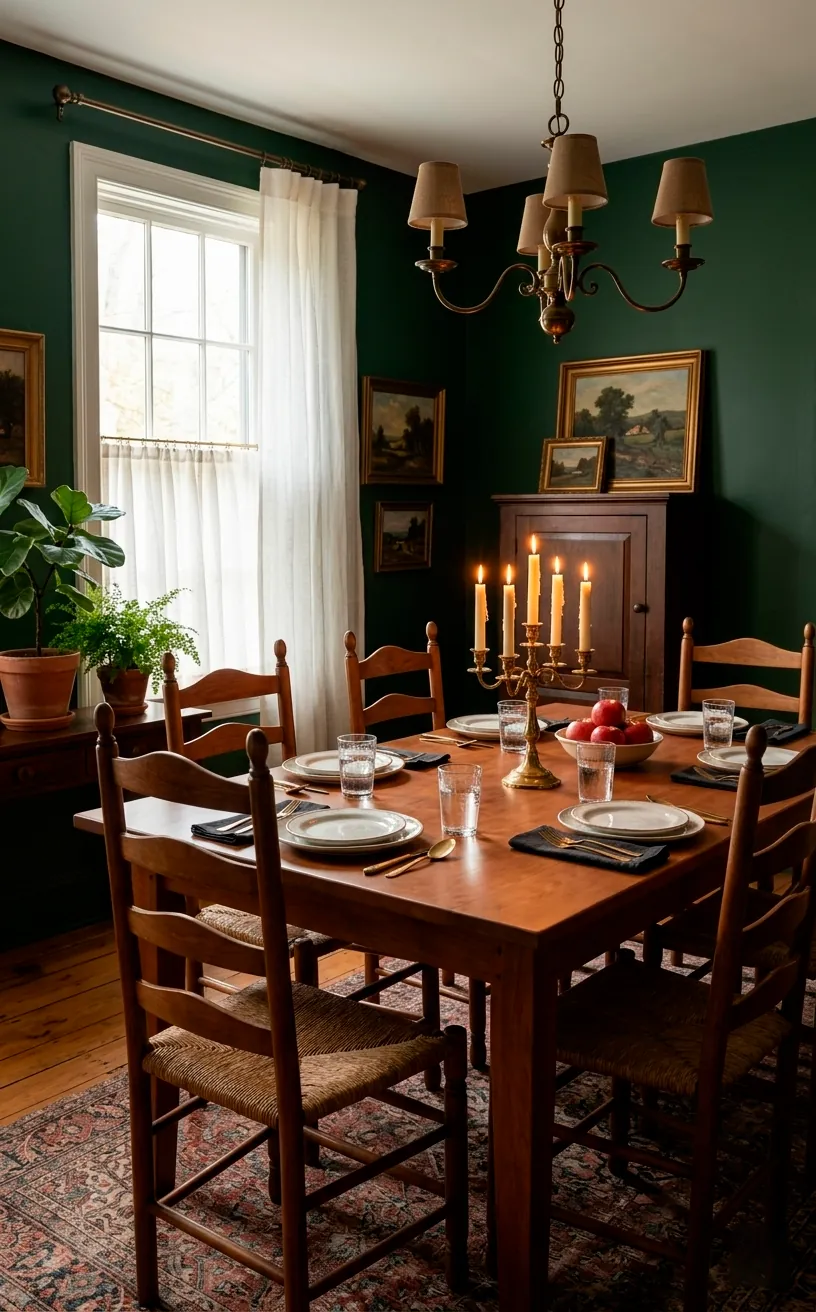
Hear me out before you run away. I am not talking about that plastic-looking, high-gloss orange cherry furniture from your grandmother’s 1990s house. Warm cherry wood with a subtle, modern matte finish looks absolutely stunning against olive or hunter green.
The natural red and reddish-brown tones of cherry act as a complementary contrast to green on the color wheel. This natural opposition creates a vibrant, energetic balance that makes both colors pop.
IMO, this combination delivers an incredibly cozy, traditional-yet-fresh atmosphere. You just need to ensure you avoid ultra-shiny finishes to keep it looking contemporary.
Reclaimed Barnwood
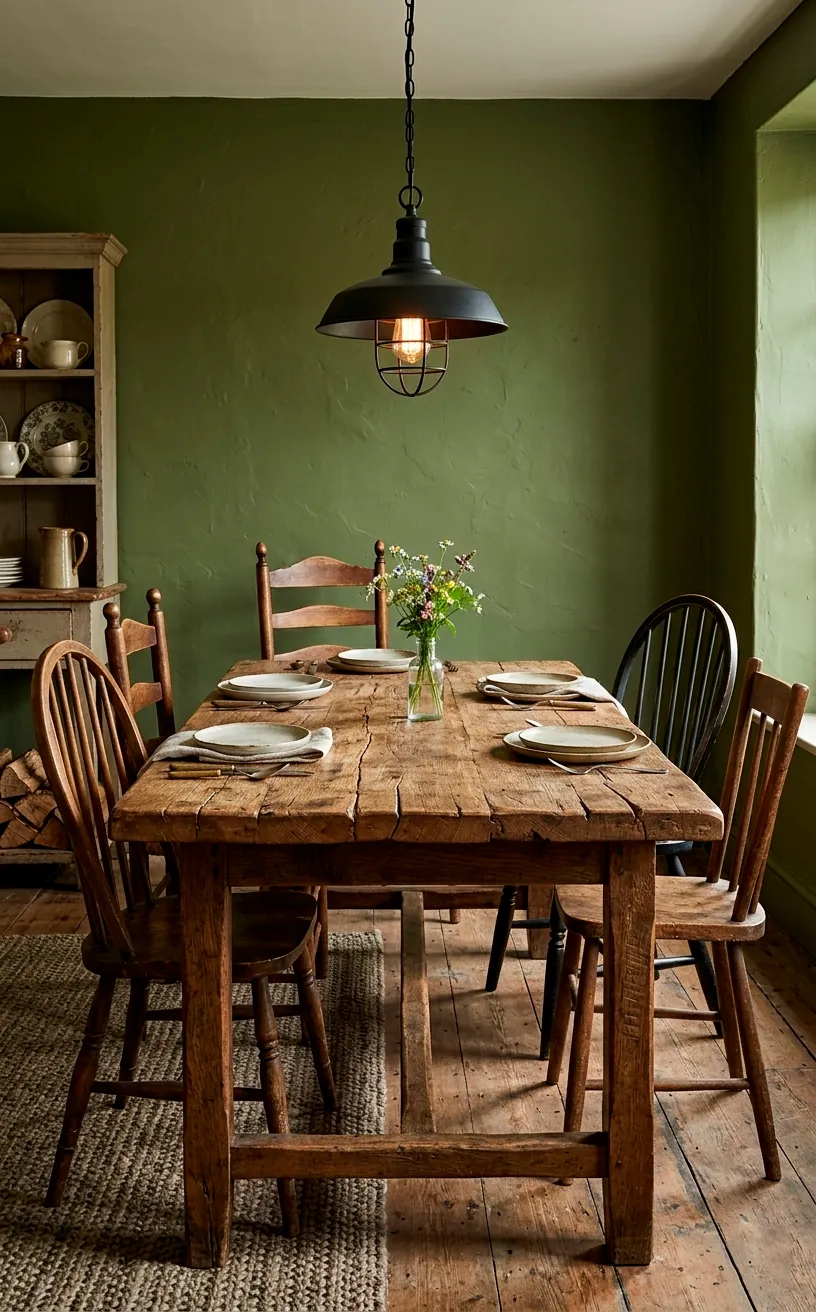
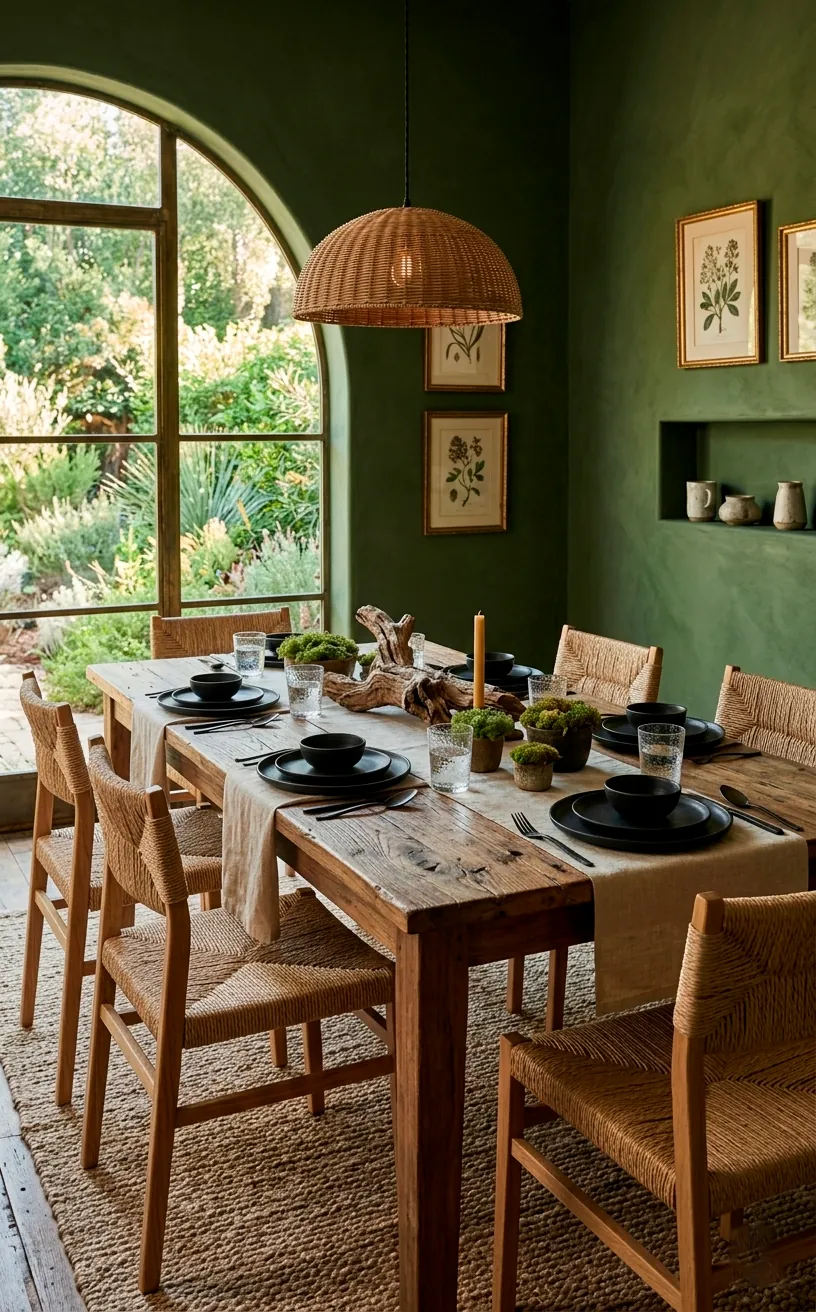
Do you want your dining space to feel relaxed and full of history? Reclaimed barnwood brings tons of texture and rustic charm that grounds a bold green dining room beautifully. The weathered grey and brown tones of old wood soften the starkness of dark green paint, giving the room a lived-in, comfortable character. I always recommend this option for anyone who hates the stiff, ‘don’t touch anything’ vibe of formal spaces. It tells your guests that they can kick back, spill a little wine, and actually enjoy their dinner.
Classic Honey Maple
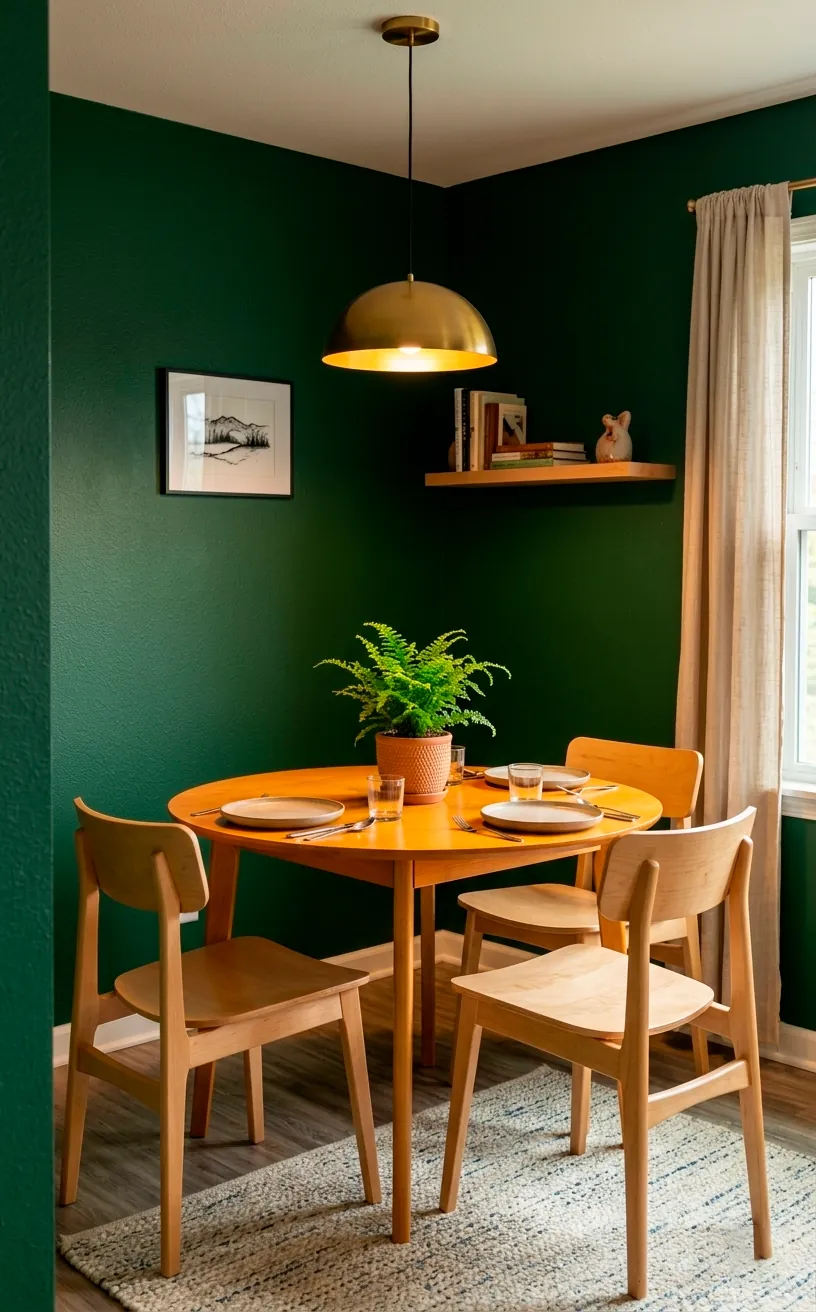
For a warm, inviting glow that doesn’t feel overly heavy, try classic honey maple. The golden, buttery undertones of maple bounce light around the room, which perfectly counters the inherently cool nature of deep forest or teal green walls.
This tone injects an instant sense of cheerfulness. I notice that honey maple works exceptionally well in smaller dining rooms where you want to use green but fear turning the space into a dark, gloomy cave.
Luxurious Mahogany
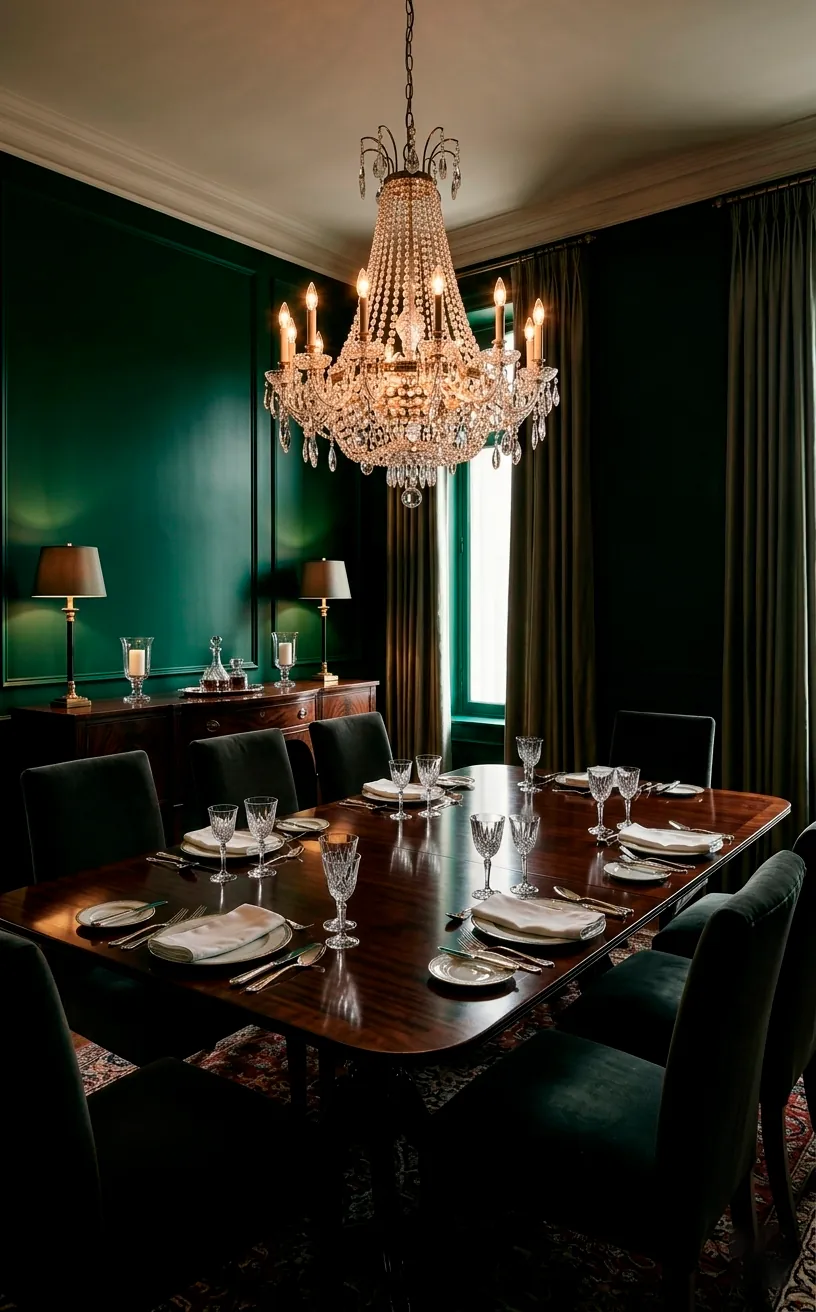
If high drama and old-world elegance call your name, look straight toward luxurious mahogany. This deep, reddish-brown wood pairs exquisitely with dark emerald green to create a regal, cinematic atmosphere.
Is it dramatic? Absolutely. But that is exactly the point.
Mahogany demands attention. The deep wood grain and rich color profiles elevate the green backdrop from simple paint to a curated design choice.
To balance the heavy weight of mahogany, add some lighter accents. For instance, consider these creative napkin folds for your thanksgiving table to introduce crisp linen textures that break up the deep tones.
Pale Ash Wood
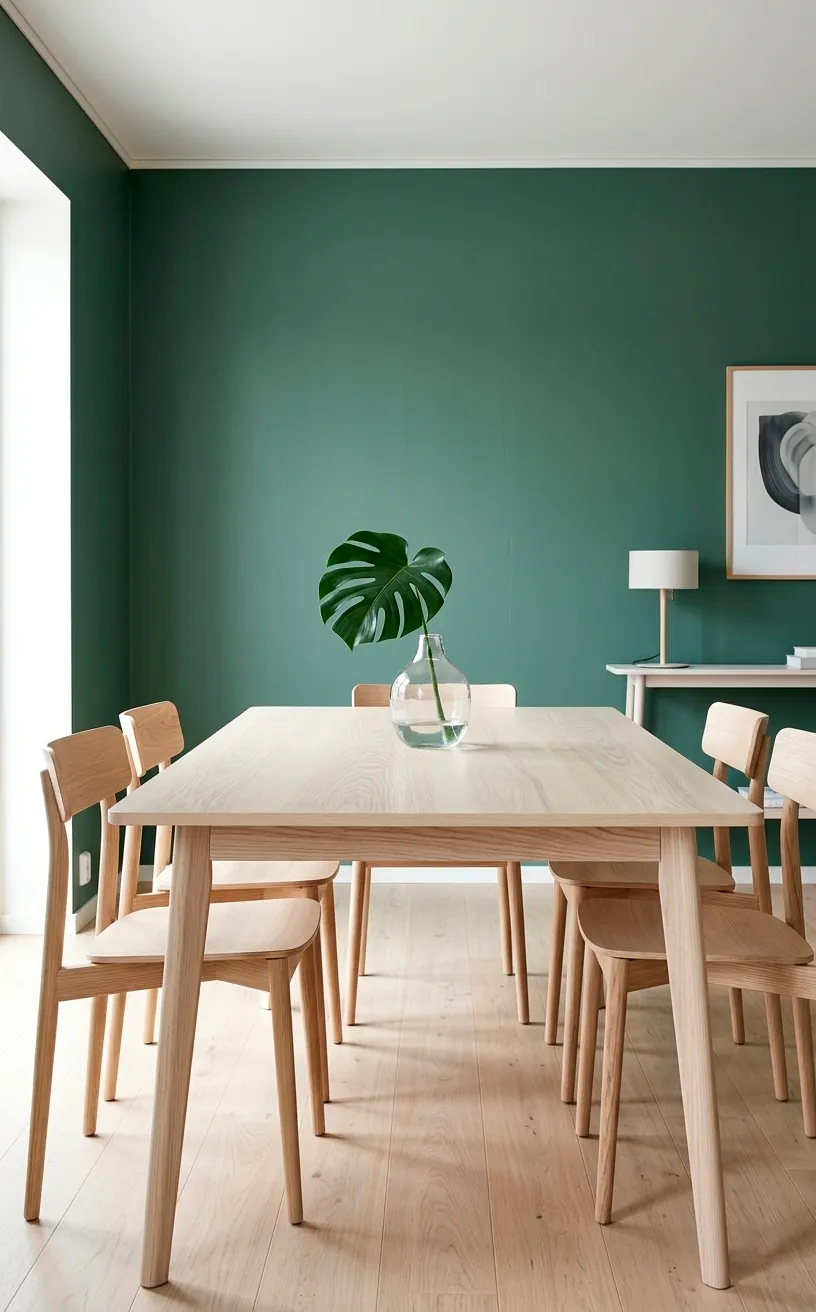
Let’s flip the script and look at something light and crisp. Pale ash wood features stunning, prominent grain patterns and a very light, almost white-blonde tone. When you place ash wood against a saturated green like olive or juniper, you get a clean, Scandinavian-inspired contrast that looks incredibly sharp. The light wood lifts the entire room, ensuring your bold color choice takes center stage without making the space feel cramped or chaotic. It is a brilliant option for minimalist design lovers.
Weathered Teak
Who says teak belongs exclusively on the patio? Weathered teak brings an effortless, globetrotting texture indoors that works beautifully with earthy green tones like moss or sage.
Teak possesses a natural, matte warmth and unique grain variations that prevent a green room from looking too sterile or flat. It gives your dining room an organic, collected-over-time character that instantly puts people at ease.
Dramatic Ebony
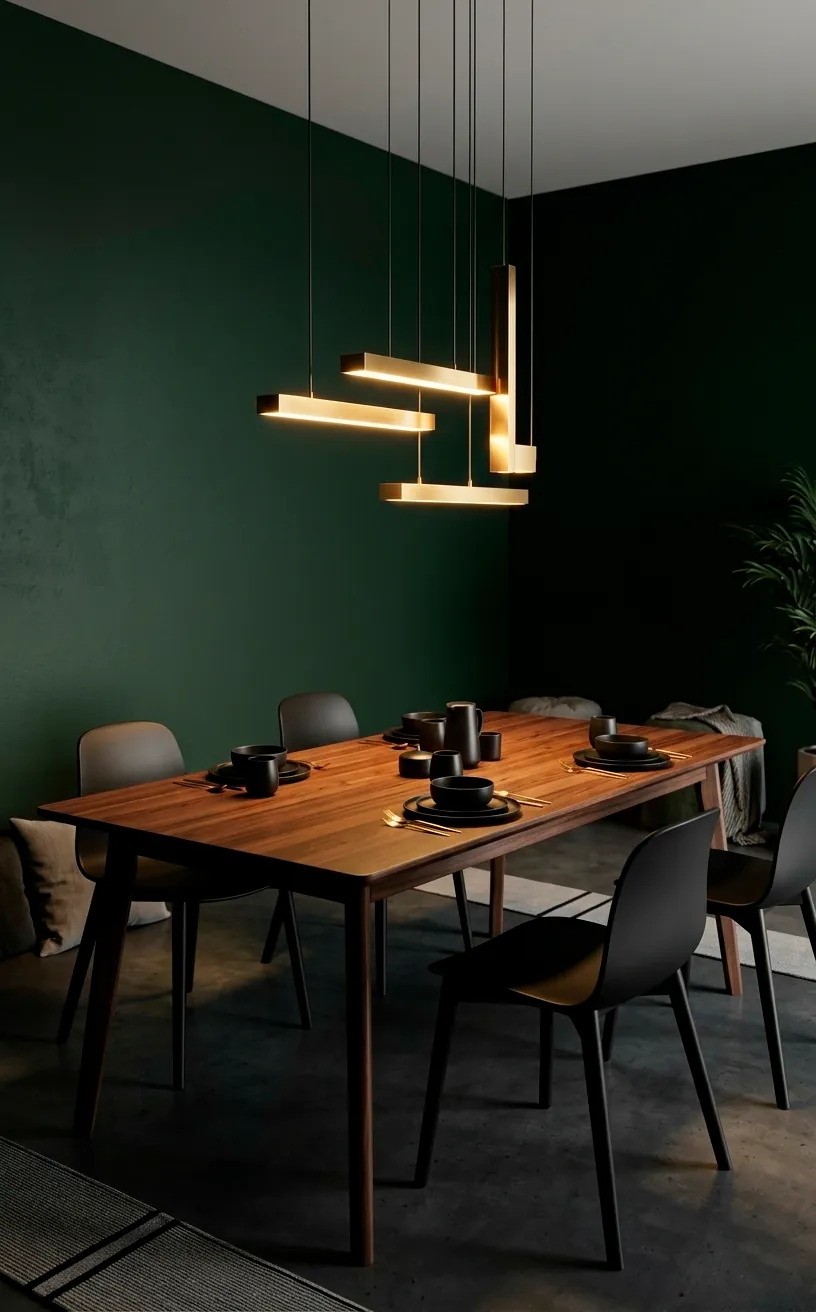
Maybe you want to lean entirely into the dark side. In that case, choose dramatic ebony or black walnut to complement your green walls.
This combination screams modern sophistication and high-contrast luxury. Dark charcoal or black wood tones against a rich, deep green background create a seamless, ultra-moody environment that feels exclusive and intimate.
FYI, this look requires excellent lighting so your dining room doesn’t feel like a literal cave. Throw in some sleek metal fixtures and metallic accents to bounce light across the dark surfaces and make the space truly sing.
Scandinavian Birch
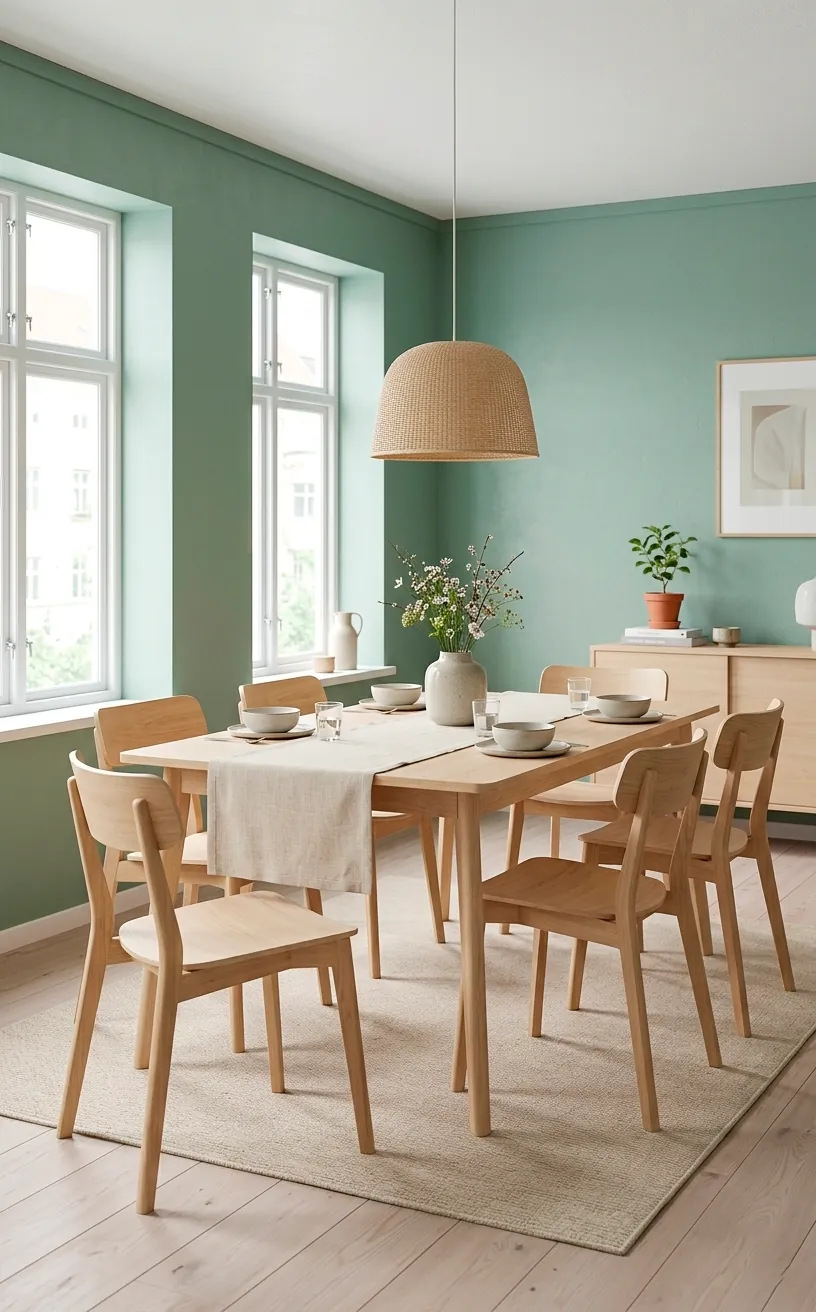
Finally, we have Scandinavian birch, which offers a smooth, uniform texture and a pleasant pale-yellow warmth. Birch wood softens the impact of cooler greens like mint or spruce, creating a balanced, harmonious atmosphere that feels light and approachable. Its clean, unassuming appearance allows your green walls to do the heavy lifting while providing a steady, reliable foundation for your daily meals. It is simple, functional design at its finest, proving that you don’t always need high-drama lumber to make a huge statement.
Conclusion
Choosing the right lumber transforms your green dining room from a bold experiment into a cohesive masterpiece. Whether you crave the rich drama of walnut or the clean serenity of pale ash, your perfect match exists. Go check your space, trust your design instincts, and select the timber that speaks to your personal style. Which wood tone are you grabbing first? Let me know in the comments below!
Related posts
See All15 Vintage Circus Inspired Details for Playful Kids Bedroom Decor
Bring the magic of the big top home! Discover 15 playful, vintage circus-inspired decor details that will transform your kid's …
Read moreThe Complete Guide to Styling a Dining Room Credenza for Everyday Elegance
Give your dining room credenza the ultimate glow-up. Discover easy, elegant styling tips that balance everyday function with show-stopping design.
Read more15 Dried Citrus and Cinnamon Garlands for a Naturally Cozy Kitchen
Forget mass-produced decorations. Transform your kitchen into a naturally cozy, aromatic sanctuary with these 15 beautiful dried citrus and cinnamon …
Read moreThe Dog-Friendly Camper: Designing a Van Interior for Your Pets
Transform your camper van into the ultimate dog-friendly adventure mobile! Discover clever interior design hacks, durable materials, and cozy setups …
Read more