











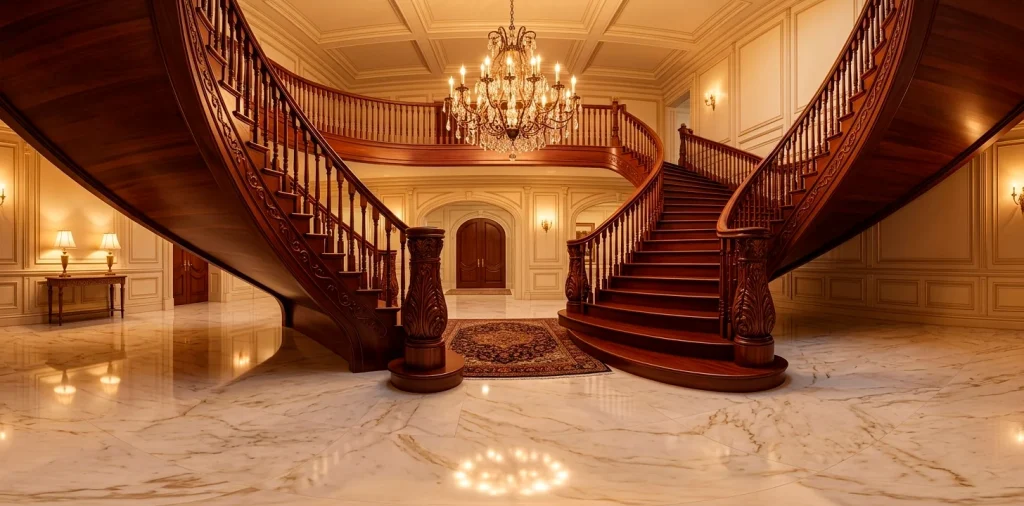

Your staircase basically acts as the spine of your home, so why let it look like a pile of generic lumber? I firmly believe that hand-carved details elevate a home from ‘standard suburban’ to ‘stately manor’ faster than any coat of paint ever could. If you want a home that tells a story through craftsmanship, you need to look at these wood ideas. Honestly, life is too short for boring banisters, right? 🪵✨
Timeless Acanthus Leaf Newel Posts
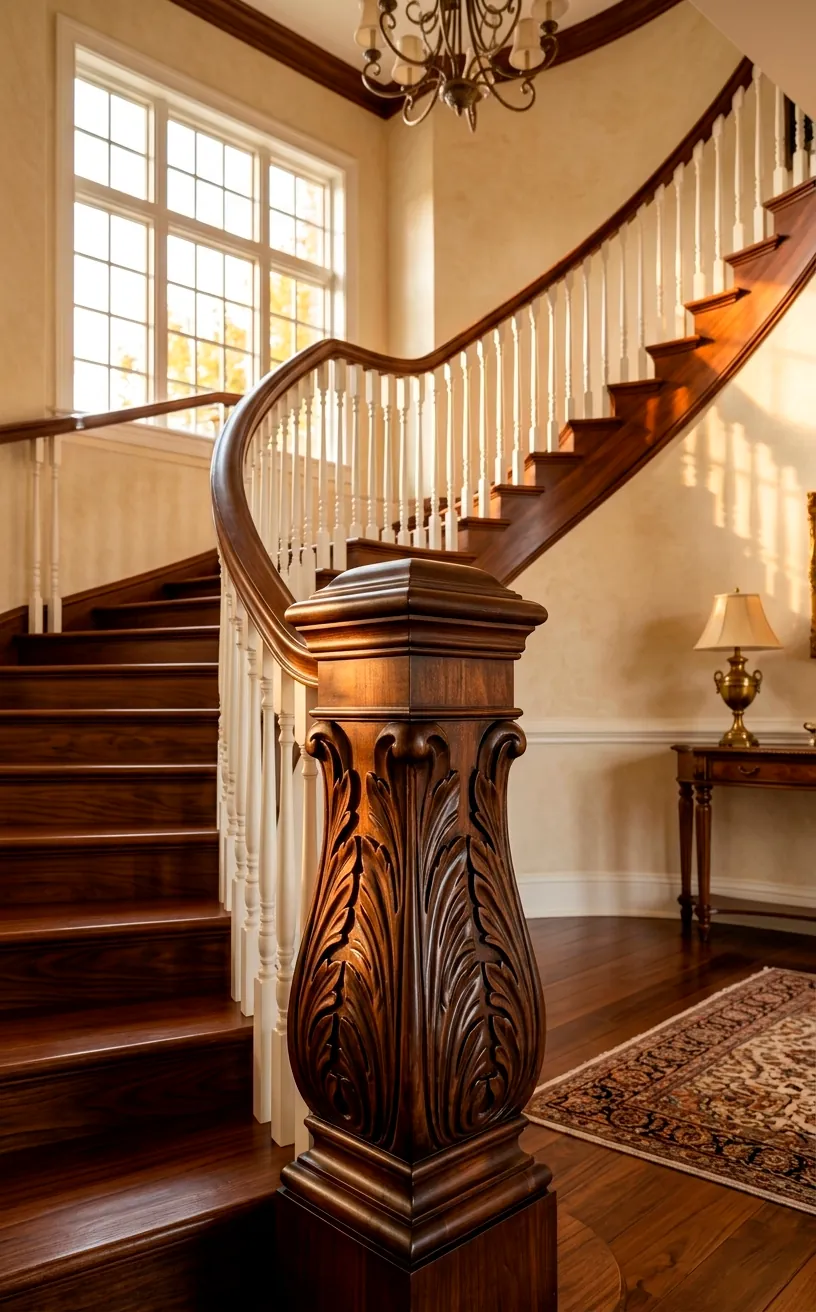
The acanthus leaf design remains the undisputed heavyweight champion of traditional wood carving. I see this pattern everywhere from ancient Greek columns to high-end Victorian estates, and it still feels incredibly fresh today. The way the leaves curl around a massive newel post adds a layer of organic texture that softens the hard lines of a staircase. It’s sophisticated without trying too hard, which is exactly the vibe we want.
Carpenters spend hours chiseling these delicate curves into solid oak or walnut to create that deep, 3D effect. You get a piece of functional art that greets you every time you walk through the front door. Isn’t that better than a plain, square post that offers zero personality? This detail alone sets the tone for the entire house, signaling that you actually care about quality and history. IMO, it’s the ultimate ‘old money’ flex for your entryway.
Majestic Animal Figures
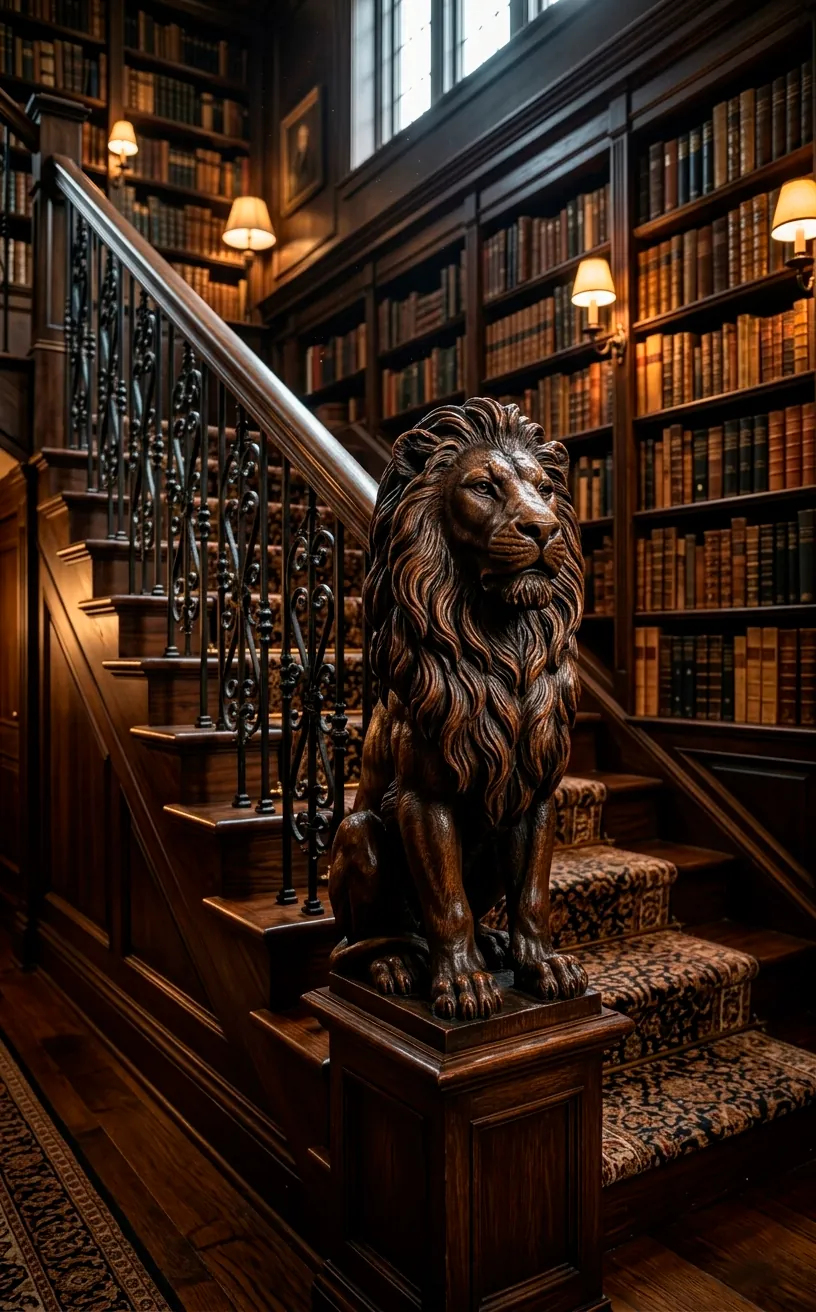
Why settle for a wooden ball when you can have a majestic lion or a wise owl guarding your stairs? I personally love the whimsy that animal carvings bring to a serious traditional home. It adds a touch of ‘haunted mansion’ or ‘royal library’ that keeps the space from feeling too stuffy. Plus, imagine the look on your guests’ faces when they see a hand-carved eagle gripping the banister! 🦁 You just need to choose a creature that matches your personality—maybe a loyal hound for the dog lovers or a fierce dragon if you’re feeling spicy. These carvings act as a mascot for your home, providing a unique focal point that literally nobody else in the neighborhood will have.
Gothic Tracery on Stringers
The stringer is that long board running along the side of the steps, and most people completely ignore it. Huge mistake! I recommend adding Gothic tracery—those beautiful, arched window-like patterns—to give the staircase some architectural weight. It creates a stunning shadow play when the hall lights hit it at night.
Have you ever noticed how Gothic details make a room feel taller? The verticality of the carved arches draws the eye upward, making your foyer feel much more expansive than it actually is. It’s like magic, but with wood.
You don’t need a cathedral to pull this off. A subtle, shallow relief carving works wonders in a standard hallway without overwhelming the space. It’s the perfect way to sneak in some drama without going full ‘Dracula’s Castle’—unless that’s what you’re into, of course.
I find that dark stains work best for these patterns. The deep tones emphasize the recesses of the carving, making the geometry pop. Check out these moody staircase wall ideas to finish the look.

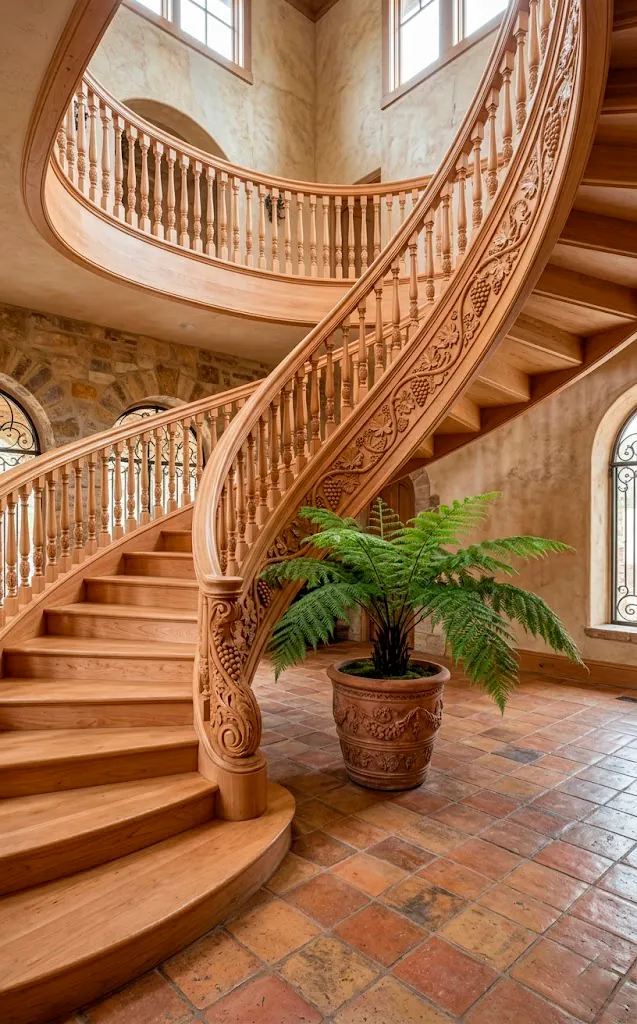
Flowing Grapevine Bas-Relief
If you want something that feels a bit more Mediterranean or rustic, grapevine carvings are your best friend. I adore the way the vines seem to ‘grow’ up the stairs, following the natural incline. It creates a flow that guides your eye toward the upper floor effortlessly.
The level of detail here can be insane. You can have tiny, individual grapes and textured leaves that practically beg to be touched as you walk by. It adds a tactile element to the wood that flat surfaces just can’t match.
I suggest keeping the finish natural or lightly oiled. You want to see the organic beauty of the wood grain working in harmony with the carved vines. It’s a very grounding design choice that brings a bit of nature inside, but in a very classy, structured way. FYI, this looks incredible on a curved staircase!
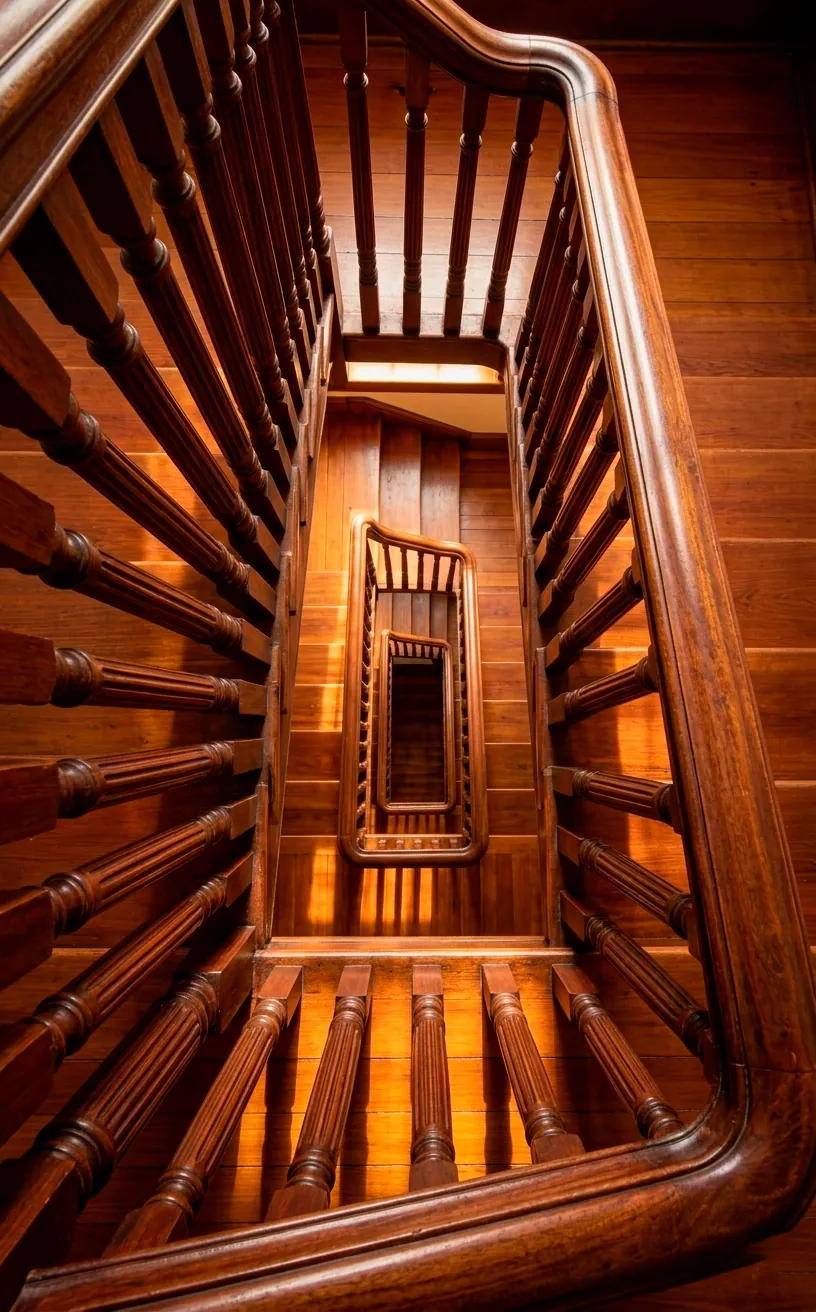
Victorian Fluted Balusters
Sometimes, the magic lies in the repetitive details of the spindles, or balusters if you want to be fancy. Instead of those skinny, toothpick-like rods, I love seeing thick, fluted balusters with hand-carved rings. It gives the railing a sense of rhythm and strength that defines the traditional aesthetic.
You can even mix and match. I’ve seen designers alternate between a simple fluted spindle and one with a carved twist or ‘barley sugar’ design. It keeps the eye moving and prevents the staircase from looking like a uniform factory product. Hand-carving ensures that every single spindle has its own slight variation, which is where the real charm lives. If you like this orderly but rich look, you might enjoy these Shaker style entryway ideas for a more balanced home layout.
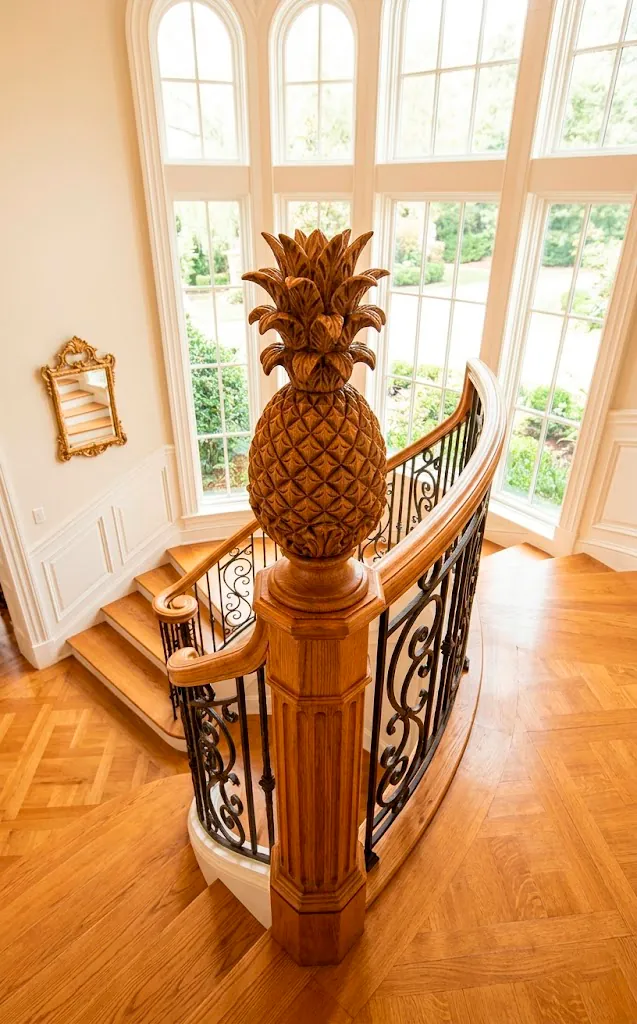
The Symbolic Pineapple Finial
Ever wonder why people put pineapples on their stairs? In the 18th century, the pineapple was the ultimate symbol of hospitality. I think it’s a genius way to welcome guests into your home. A hand-carved pineapple finial sitting atop your newel post says, ‘Welcome, sit down, have a drink’ without you having to open your mouth. It’s the perfect blend of tradition and quirky symbolism. The texture of the pineapple’s ‘skin’ provides a fantastic opportunity for a carver to show off their skills with sharp, geometric cuts. It’s tactile, meaningful, and looks undeniably expensive.
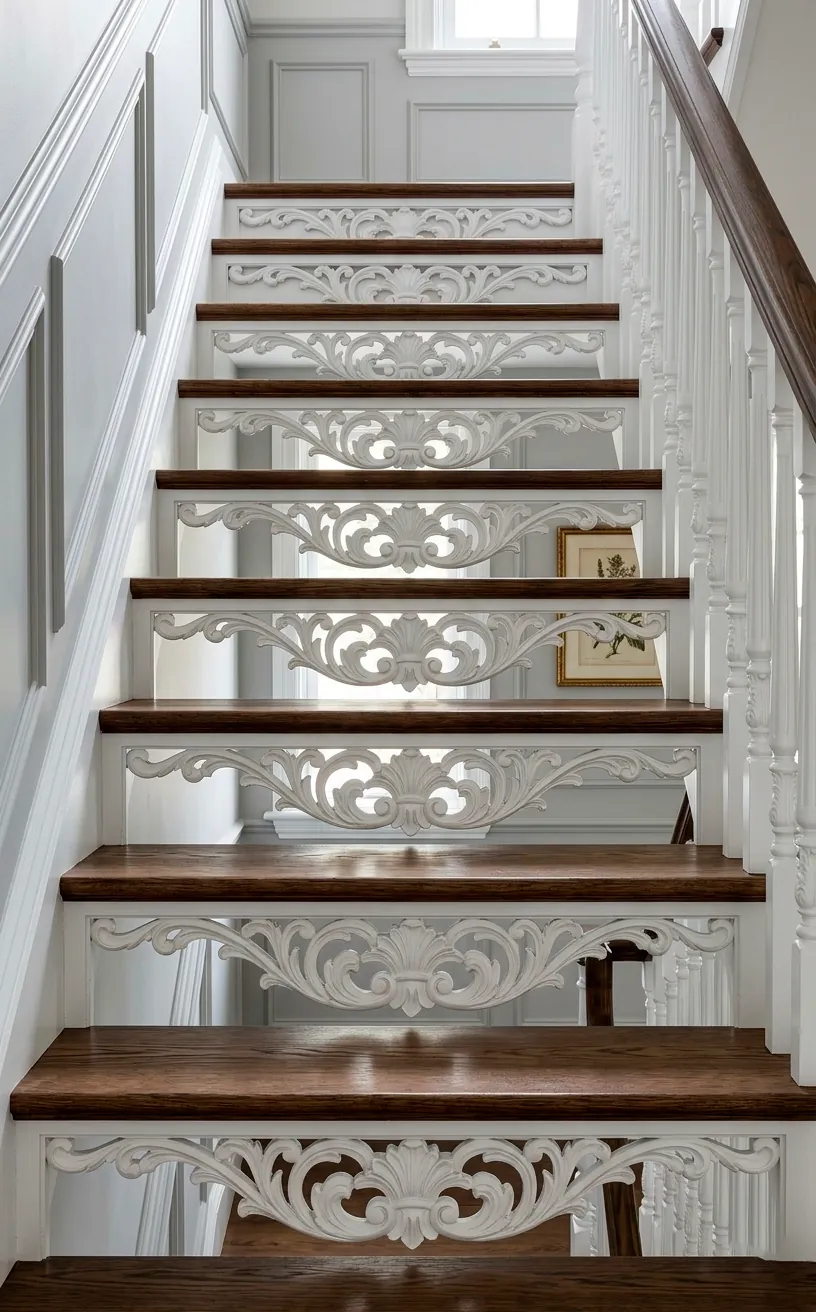
Scrollwork Brackets Under the Steps
If you really want to impress people, look under the steps. Adding carved scrollwork brackets to the side of each tread is the secret sauce of high-end staircases. I find that these little ‘S’ curves provide a soft, lace-like edge to the otherwise heavy structure of the wood.
It’s a detail that often goes unnoticed at first glance, but once you see it, you can’t look away. It fills that awkward triangular gap between the step and the wall with something beautiful.
Think of it as the jewelry for your stairs. You wouldn’t wear a tuxedo without cufflinks, so why have a grand staircase without brackets? It’s these small, intentional touches that transform a house into a home with soul. Plus, it makes the staircase look lighter and more graceful as it climbs toward the ceiling.
Artistic Celtic Knotwork
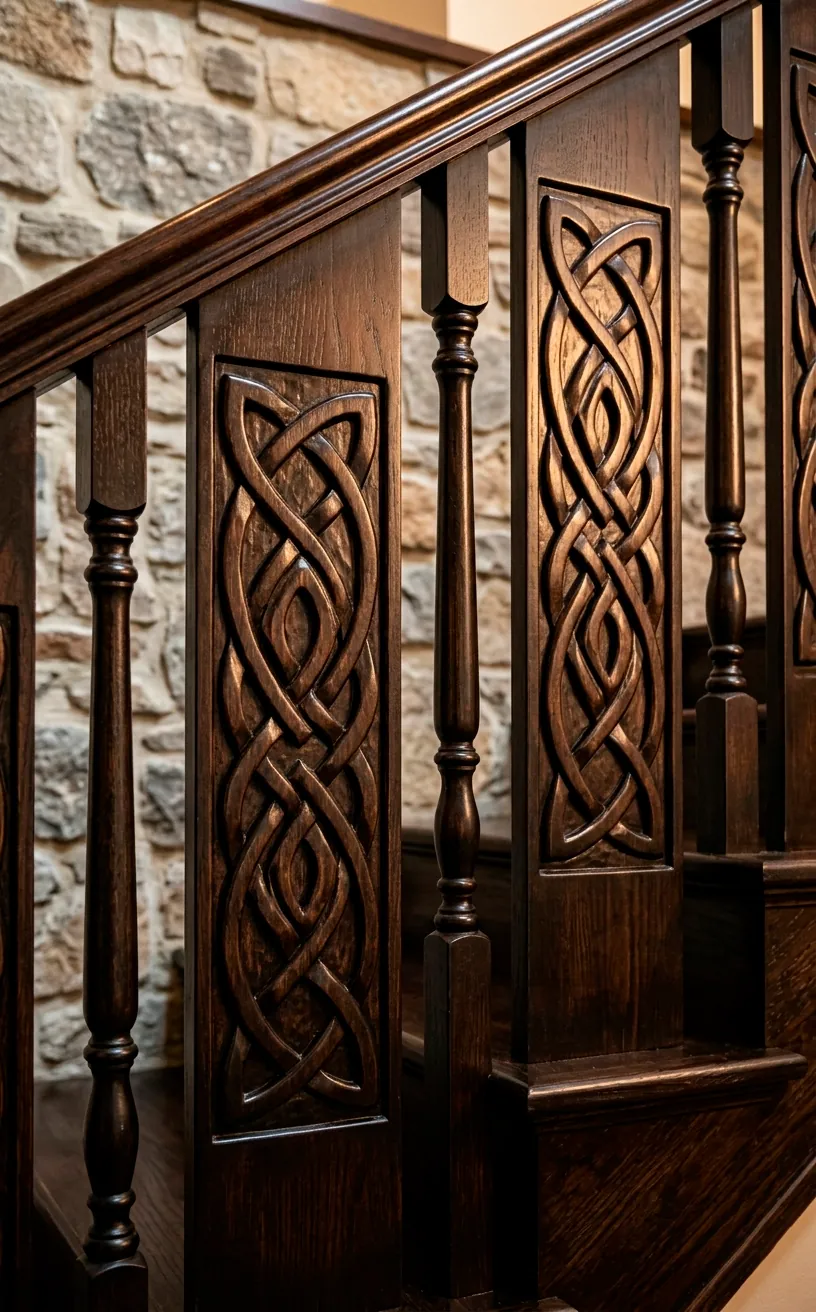
For those with Irish or Scottish heritage—or just a love for complex geometry—Celtic knots are a total vibe. Carving these interlocking loops into the handrail or the side panels adds a layer of ancient mystery. I love how the lines never seem to end, creating a visual puzzle that keeps your eyes busy. It’s a departure from the usual floral patterns and feels a bit more masculine and sturdy. You just have to ensure the carving isn’t too shallow; you want to feel those ridges when you run your hand down the railing. It’s incredibly satisfying, trust me.
Custom Family Crests
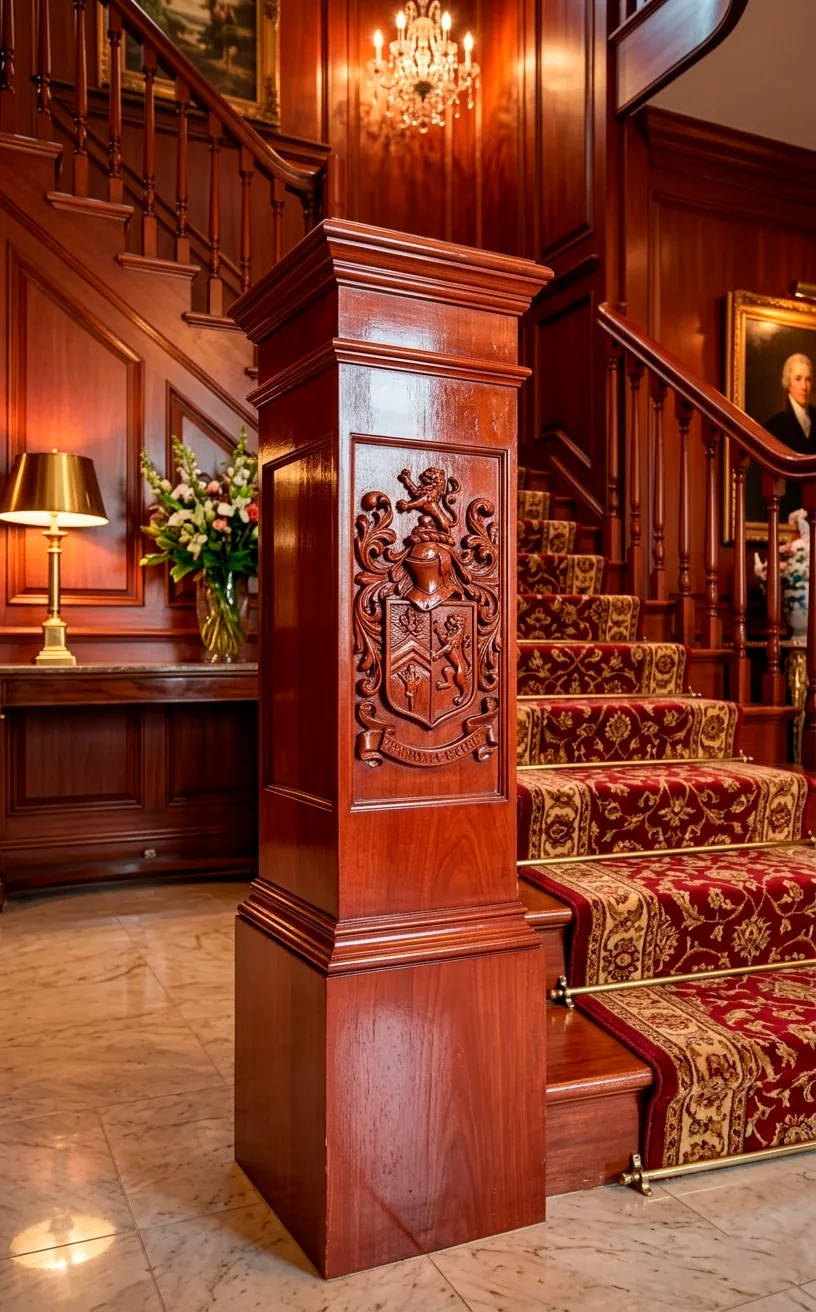
Okay, let’s talk about a real legacy move: the family crest. If you have a coat of arms, carving it into the center of the main newel post is a power play of the highest order. It turns your staircase into a piece of family history that will stay with the house for generations. Even if you don’t have a centuries-old crest, you can design a custom monogram that represents your current family. It’s incredibly personal and makes the space feel truly yours. I’ve seen this done in dark cherry wood, and it looks like something straight out of an old-world estate. It’s definitely a conversation starter!
Ribbon and Reed Accents
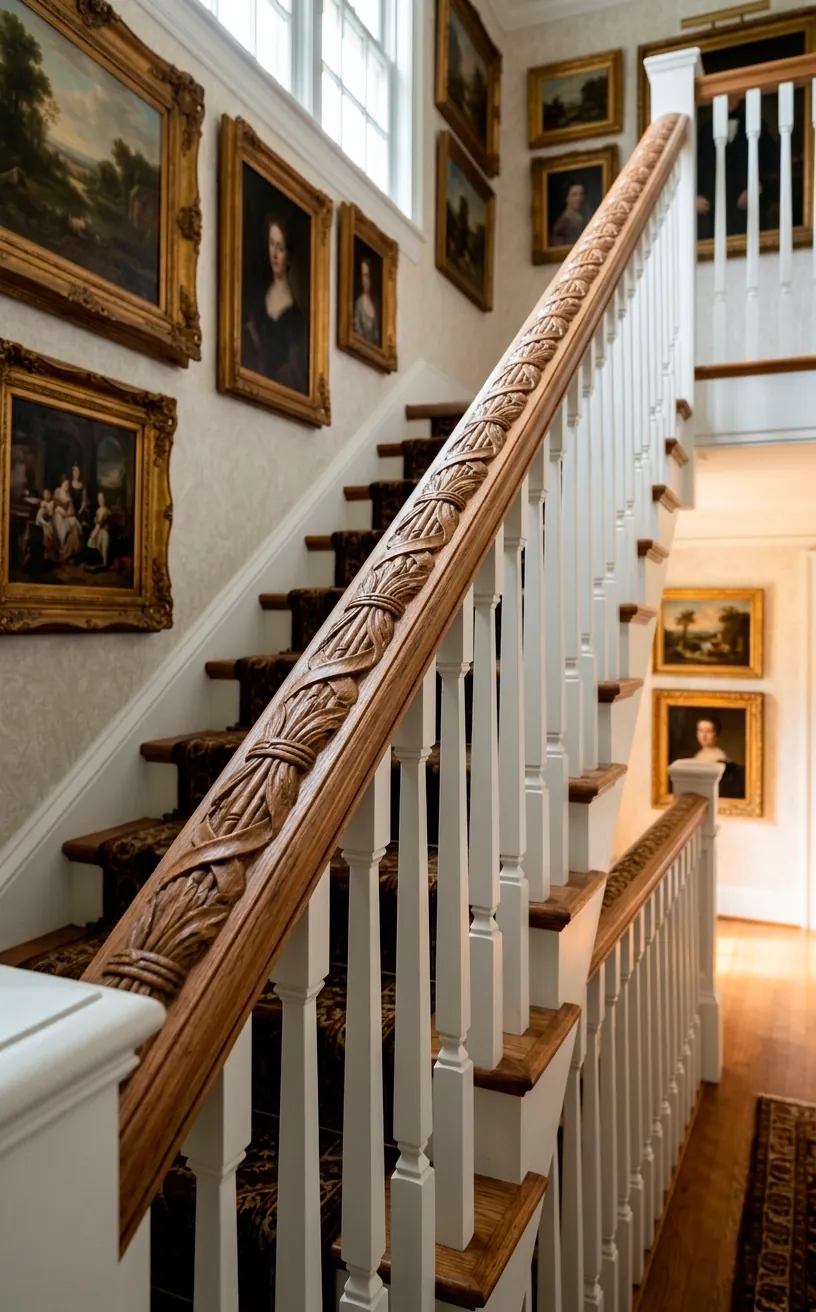
The ribbon and reed design is a classic neoclassical motif that feels very light and breezy. It consists of a series of ‘reeds’ (basically thin vertical lines) tied together by a carved wooden ‘ribbon.’ I find this works exceptionally well on the handrail itself or on the face of the steps.
It’s subtle, but it adds a level of refinement that plain wood just can’t touch. It’s the kind of detail that makes people say, ‘I don’t know why, but this staircase looks really expensive.’
I love how the ribbon carvings break up the repetition of the reeds. It’s a rhythmic design that feels very balanced and harmonious. If you’re going for a ‘Federal style’ or ‘Regency’ look, this is your go-to move.
You can even carry this theme onto your fireplace mantel or door frames to create a cohesive look throughout the floor. Consistency is key when you’re playing with traditional architectural details. It makes the house feel like it was designed as one complete thought rather than a bunch of random rooms stuck together.
Doesn’t that sound much more peaceful than a hodgepodge of styles?
Wrap It Up in Wood
A hand-carved staircase isn’t just about getting from floor to floor; it’s about celebrating the art of the home. Whether you go for a massive lion newel post or subtle acanthus leaves, you’re investing in a legacy of beauty. Which of these styles are you grabbing for your next remodel? Let me know in the comments, and go get carving! 🪵👋
Related posts
See All15 Vintage Circus Inspired Details for Playful Kids Bedroom Decor
Bring the magic of the big top home! Discover 15 playful, vintage circus-inspired decor details that will transform your kid's …
Read moreThe Complete Guide to Styling a Dining Room Credenza for Everyday Elegance
Give your dining room credenza the ultimate glow-up. Discover easy, elegant styling tips that balance everyday function with show-stopping design.
Read more15 Dried Citrus and Cinnamon Garlands for a Naturally Cozy Kitchen
Forget mass-produced decorations. Transform your kitchen into a naturally cozy, aromatic sanctuary with these 15 beautiful dried citrus and cinnamon …
Read moreThe Dog-Friendly Camper: Designing a Van Interior for Your Pets
Transform your camper van into the ultimate dog-friendly adventure mobile! Discover clever interior design hacks, durable materials, and cozy setups …
Read more