












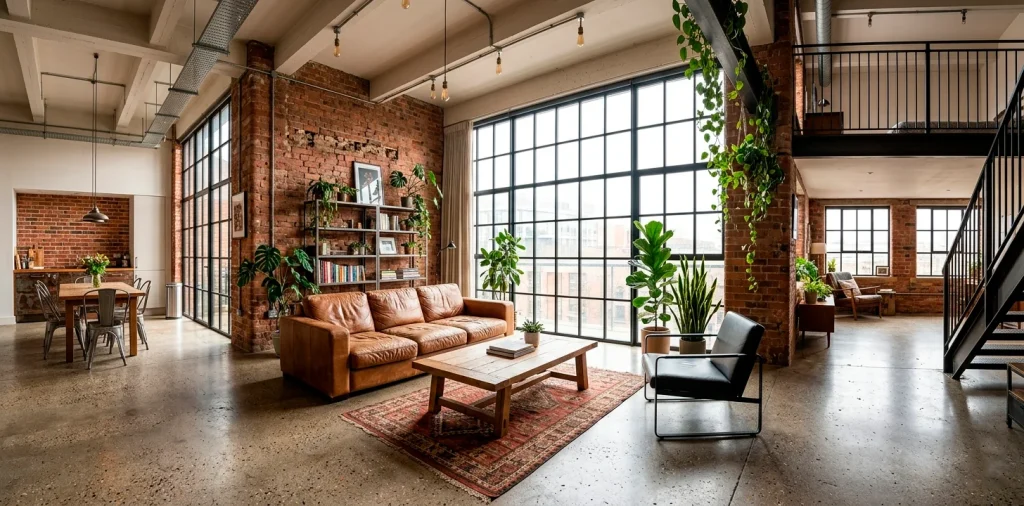

Ever walked into a converted warehouse and instantly envied that effortlessly cool, raw aesthetic? I definitely have! Nailing the industrial loft look is all about embracing imperfections and mixing rugged materials. Ready to transform your space into an edgy, urban sanctuary without actually living in a literal factory? Let’s get to work! 🛠️
The Magic of Exposed Brick Walls
Let’s start with the absolute holy grail of industrial design. Exposed brick walls instantly anchor a room, providing that authentic, gritty texture we all crave. I remember ripping off outdated drywall in my first apartment just praying to find decent brick underneath.
If you aren’t blessed with original masonry, don’t panic. High-quality brick veneers or textured wallpapers look incredibly realistic today. The key is balancing that heavy red or orange tone with bright natural light or crisp white ceilings. Do you really want boring painted drywall when you could have this architectural masterpiece?

Polished Concrete Floors for Raw Edge
Who decided floors needed plush carpets anyway? Embracing raw concrete floors brings an undeniably cool, utilitarian foundation to your warehouse loft look. I absolutely love how a polished concrete surface bounces light around a room while hiding scuffs and dust like a champion. You easily soften this hard surface by tossing down a massive, textured rug. It creates the ultimate contrast between cold industrial elements and cozy home comforts. Think of concrete as your blank, indestructible canvas. Need more ideas for this rugged vibe? Check out this guide on concrete chic spaces.

Flaunting Visible Ductwork and Pipes
Hide the plumbing? Absolutely not! 🛑 Leaving your ductwork and structural pipes completely exposed celebrates the skeleton of your building.
It screams authenticity. I totally suggest painting massive ceiling ducts a bold matte black or letting raw galvanized steel shine directly above your head.
Industrial pipes also double as fantastic functional decor. Ever considered building custom bookshelves out of basic plumbing hardware? Repurposed iron pipes easily transform into heavy-duty clothing racks or floating shelf brackets. It turns ordinary utility into absolute art.

The Charm of Distressed Leather Furniture
Nothing grounds an industrial space quite like a distressed, buttery leather sofa. The rich, worn-in patina tells a story and adds much-needed warmth to an otherwise cold aesthetic.
I always gravitate toward cognac or saddle brown leather because it perfectly offsets dark metals and concrete. A slightly scuffed leather armchair just begs you to sit down with a good book and a strong coffee. Plus, let’s be honest, leather just looks better as it ages. Why buy something pristine that you’ll constantly stress over ruining? A little scratch here or there just adds to the rugged character we want.

Matte Black Metal Accents Everywhere
Matte black metal acts as the eyeliner of industrial interior design.
It defines edges, highlights features, and adds instant drama. You can easily sprinkle this element throughout your entire home. Essential matte black accents:
- Cabinet pulls for a quick kitchen upgrade
- Black iron stair railings for structural drama
- Sleek matte black faucets to replace builder-grade chrome
Black steel window frames and dark metal light fixtures tie the whole warehouse vibe together. Have you noticed how instantly a room upgrades when you ditch shiny chrome for mysterious matte black?

Warming Up With Reclaimed Wood
Industrial design risks feeling a bit like a sterile dungeon if you forget to add organic textures. Reclaimed wood elements swoop in to save the day, injecting serious warmth and history into your room. I absolutely love hunting down old barn wood or factory floorboards to use as floating shelves or striking accent walls. The deep grooves, old nail holes, and uneven grain bring an undeniable soul to the space. You pair that rugged timber with dark metal, and you instantly achieve interior design perfection. Need some dining inspiration? Take a peek at this chunky reclaimed wood dining table guide.

Statement Edison Bulb Lighting
You simply cannot master the warehouse loft look with basic fluorescent tubes or generic recessed cans. Lighting dictates the entire mood.
Enter the iconic Edison bulb. Those glowing, amber-tinted filaments instantly transport your room back to the 1920s. They cast the coziest, warmest light imaginable, turning a sterile space into an inviting retreat.
Hang a cluster of Edison bulbs from black cords over your kitchen island, or enclose them in heavy wire cages. Isn’t it crazy how swapping a simple lightbulb completely changes the atmosphere of your apartment overnight?

Emulating Massive Crittall Windows
Massive, black-framed grid windows—often called Crittall windows—define the classic factory aesthetic. They flood the space with light while maintaining a strong, structural presence. I’d argue they are the most recognizable feature of an authentic warehouse conversion.
Obviously, replacing all your exterior windows costs a small fortune. But you can fake it! Use black grid mirrors or install black-framed glass room dividers to mimic the look indoors. It gives you that gorgeous graphic punch without destroying your renovation budget. Who doesn’t love a clever design hack?

The Power of Open Floor Plans
Old manufacturing plants didn’t have cozy little partitioned rooms, and neither should your industrial loft. Tearing down non-load-bearing walls creates that massive, airy expanse that truly authenticates the warehouse vibe. You delineate different “zones” using strategic rug placement, lighting clusters, or open shelving units instead of actual walls. This open flow encourages a brilliant social atmosphere where you can cook, lounge, and work all in one shared, cohesive space. Plus, it makes shouting across the house to your partner so much easier, right? IMO, open layouts are just better for entertaining.

Vintage Industrial Art & Signage
Bare brick walls sometimes need a little extra personality.
Authentic vintage factory signage brings an incredible graphic element to your decor.
I love scouring flea markets for old enameled metal letters, rusty advertising signs, or faded blueprints.
These quirky art pieces act as massive conversation starters and inject a playful nostalgia into the room. Hang a giant rusted ampersand above your sofa and watch how quickly it transforms the entire wall. Why settle for generic department store prints anyway when you can hang actual history on your walls?

Utilitarian Pipe and Wood Shelving
Ditch the flimsy particleboard bookcases immediately. Authentic warehouse styling demands heavy-duty storage solutions that look like they could hold a ton of steel bolts. Open shelving built from dark iron plumbing pipes and thick, stained wood planks hits the mark perfectly.
You get incredibly sturdy storage while showcasing your books, plants, and vintage trinkets in the open. I actually built my own pipe shelves a few years ago, and they remain the toughest piece of furniture I own. It’s a super rewarding DIY project if you feel handy!

Moody, Neutral Color Palettes
Bright neon colors usually kill the industrial vibe instantly. You want to stick to a grounded, moody color palette derived directly from natural building materials. Think about the colors of a construction site: charcoal grays, rusty terracotta, warm chestnut browns, and deep oxidized greens. You use these muted tones to create a sophisticated, masculine energy that feels incredibly relaxing. I highly recommend painting an accent wall in a dark, stormy gray to make your cognac leather and brass accents pop violently against it. FYI, charcoal looks ten times better than standard white here.

Repurposing Factory Carts as Furniture
Upcycling lies at the very heart of the warehouse loft look. You take something meant for hard labor and invite it into your living room.
Vintage factory carts with heavy cast-iron wheels make the most spectacular, rustic coffee tables.
Their low profile and battered wood tops provide an instant centerpiece that guests always ask about. I love the industrial irony of resting a delicate glass of wine on a cart that probably hauled heavy machinery seventy years ago. You just add a glass or wood top, and suddenly you have an heirloom piece. It’s sustainable, functional, and undeniably cool.

Mastering the Mix of Raw Textures
A successful industrial space never relies on just one material. If you use too much metal, the room feels like a commercial kitchen. If you use too much wood, it turns into a rural farmhouse. Favorite texture combinations:
- Cold stainless steel paired with warm distressed leather
- Rough concrete floors softened by plush wool rugs
- Reclaimed timber shelves supported by black iron pipes
The absolute secret sauce involves layering contrasting textures. Pair a sleek, cold stainless steel kitchen island with warm, rugged bar stools made of distressed leather and raw timber. Introduce soft textiles like wool throws to break up the hard lines. Doesn’t your space feel infinitely more inviting when it offers a feast for the senses?

Large-Scale Minimalist Art
Finally, let’s talk about dressing those massive empty walls. Gallery walls with tiny frames often get completely lost in a large, open-concept loft. Instead, you need bold, large-scale artwork to command the space. Opt for oversized abstract canvases featuring heavy textures, moody charcoal sketches, or massive black-and-white architectural photography. A single giant piece leaning casually against an exposed brick wall creates an effortless, gallery-like sophistication. It anchors the room without cluttering your beautiful raw materials. Ready to start decorating?

Conclusion
There you have it—the ultimate blueprint for pulling off that coveted warehouse loft look! You just need to embrace raw textures, ditch the pristine drywall, and let your home’s structural bones do the talking. Which industrial trend are you definitely trying out first? Let me know in the comments below!
Related posts
See All15 Vintage Circus Inspired Details for Playful Kids Bedroom Decor
Bring the magic of the big top home! Discover 15 playful, vintage circus-inspired decor details that will transform your kid's …
Read moreThe Complete Guide to Styling a Dining Room Credenza for Everyday Elegance
Give your dining room credenza the ultimate glow-up. Discover easy, elegant styling tips that balance everyday function with show-stopping design.
Read more15 Dried Citrus and Cinnamon Garlands for a Naturally Cozy Kitchen
Forget mass-produced decorations. Transform your kitchen into a naturally cozy, aromatic sanctuary with these 15 beautiful dried citrus and cinnamon …
Read moreThe Dog-Friendly Camper: Designing a Van Interior for Your Pets
Transform your camper van into the ultimate dog-friendly adventure mobile! Discover clever interior design hacks, durable materials, and cozy setups …
Read more