












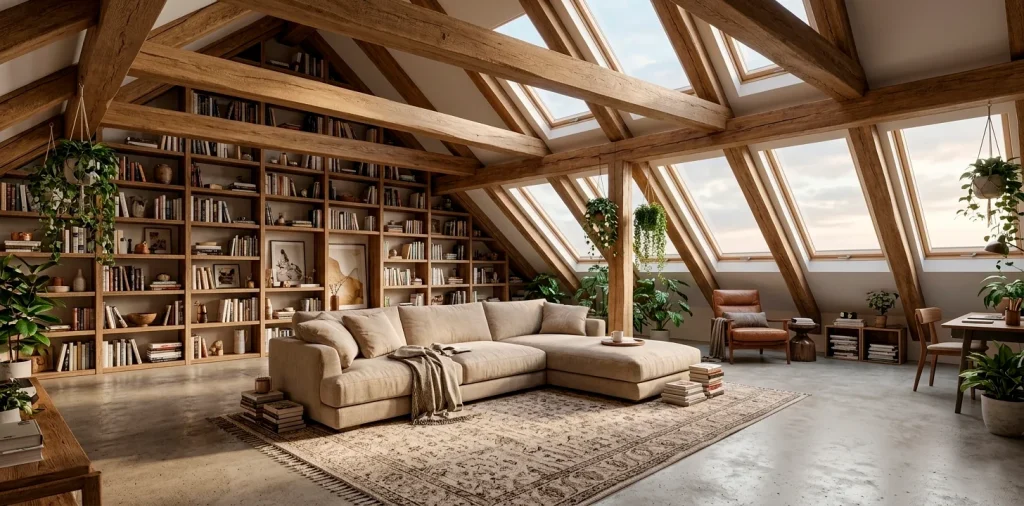

Stop letting your attic collect dust and spiders! Let’s turn that forgotten zone into a stunning, eco-friendly loft using reclaimed materials. Whether you want a cozy reading nook or a productive home office, I’ve got 15 ideas that’ll make your neighbors jealous while saving the planet. Ready to transform your rafters into a masterpiece? Let’s get to work!
Exposed Reclaimed Timber Beams
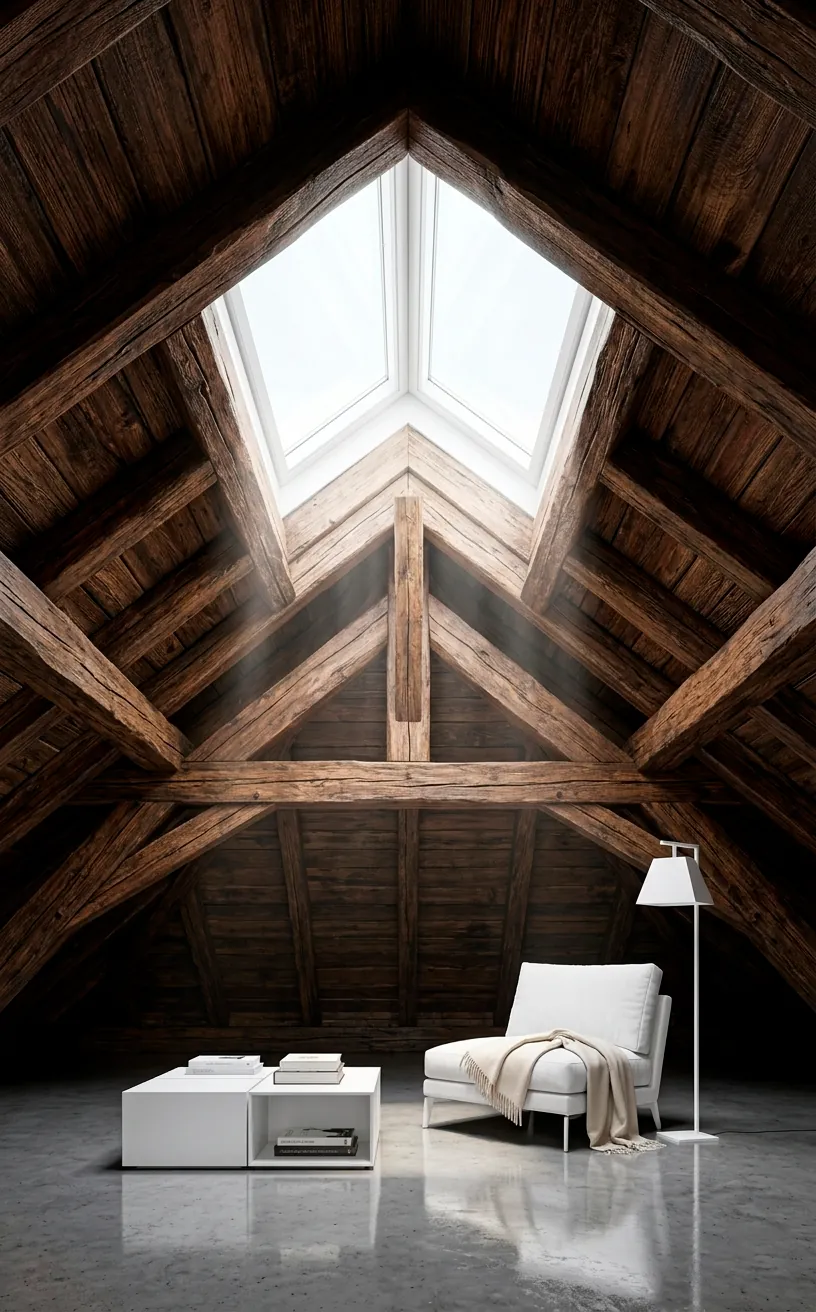
Nothing says ‘intentional design’ like massive, weathered timber beams stretching across your ceiling. I love how these old structural pieces tell a story through their knots and grain. You don’t even need them to hold the roof up; decorative non-structural beams provide that rustic architectural weight without the heavy lifting. Ever noticed how a room feels instantly grounded when you add a bit of history overhead?
Scour local architectural salvage yards for high-quality oak or pine. These pieces often come from demolished barns or old factories, giving them a durability modern lumber just can’t match. Reclaimed timber effectively anchors the entire loft aesthetic. Just make sure you treat the wood for pests before hauling it up those narrow attic stairs. Trust me, you don’t want to invite uninvited wood-boring guests to your housewarming party!
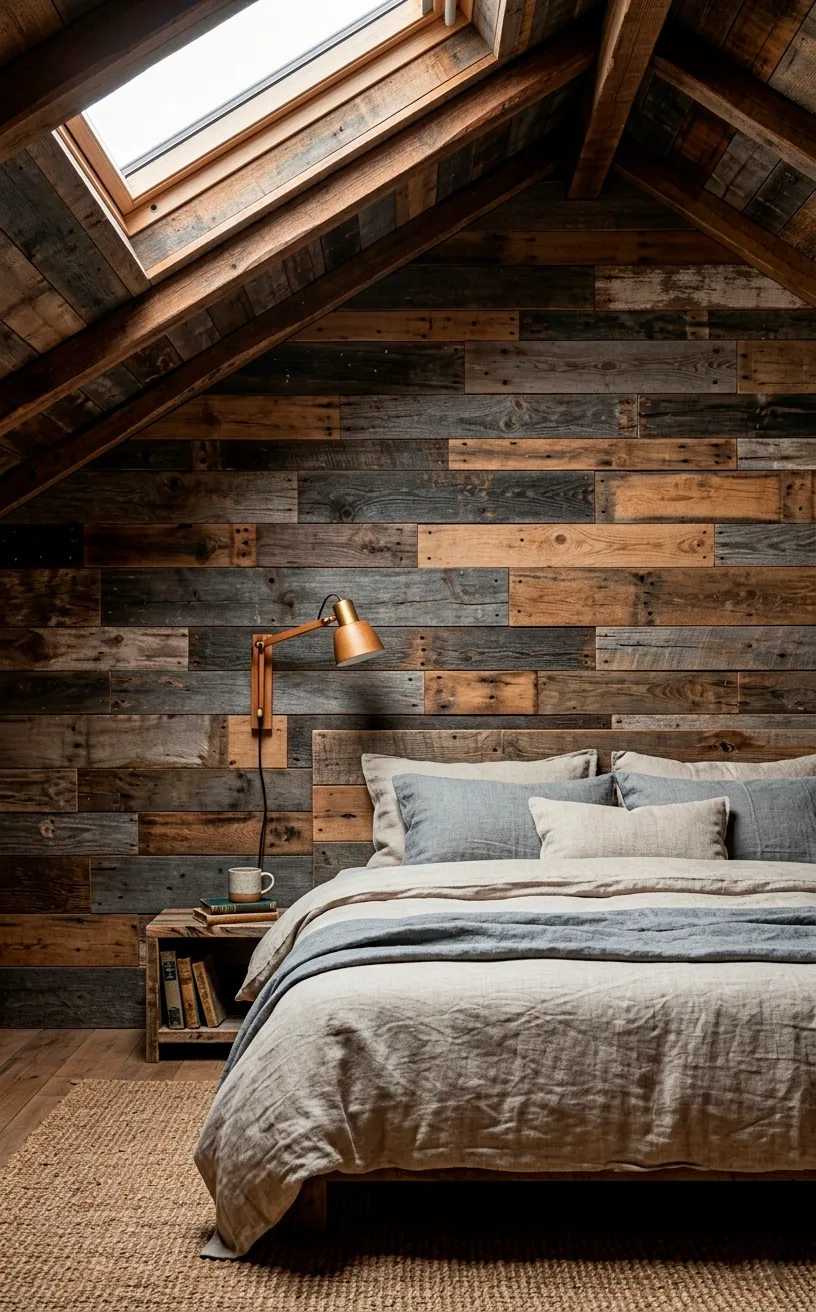
Pallet Wood Feature Walls
Pallets are the ultimate DIY goldmine, but please, pick the ones marked with ‘HT’ for heat-treated. You definitely want to avoid the chemical-soaked ones if you plan on breathing in your new loft. I find that stripping these crates provides a gorgeous variety of wood tones that create a textured, 3D effect on a flat attic wall. It hides imperfections in the drywall perfectly, too. If your walls are a bit wonky (and let’s be real, most attics are), this textured camouflage is your best friend. Reclaimed pallet walls offer a budget-friendly way to achieve a high-end accent look without the boutique price tag. Just sand them down unless you enjoy getting splinters every time you lean back! 😉
Vintage Window Partitions
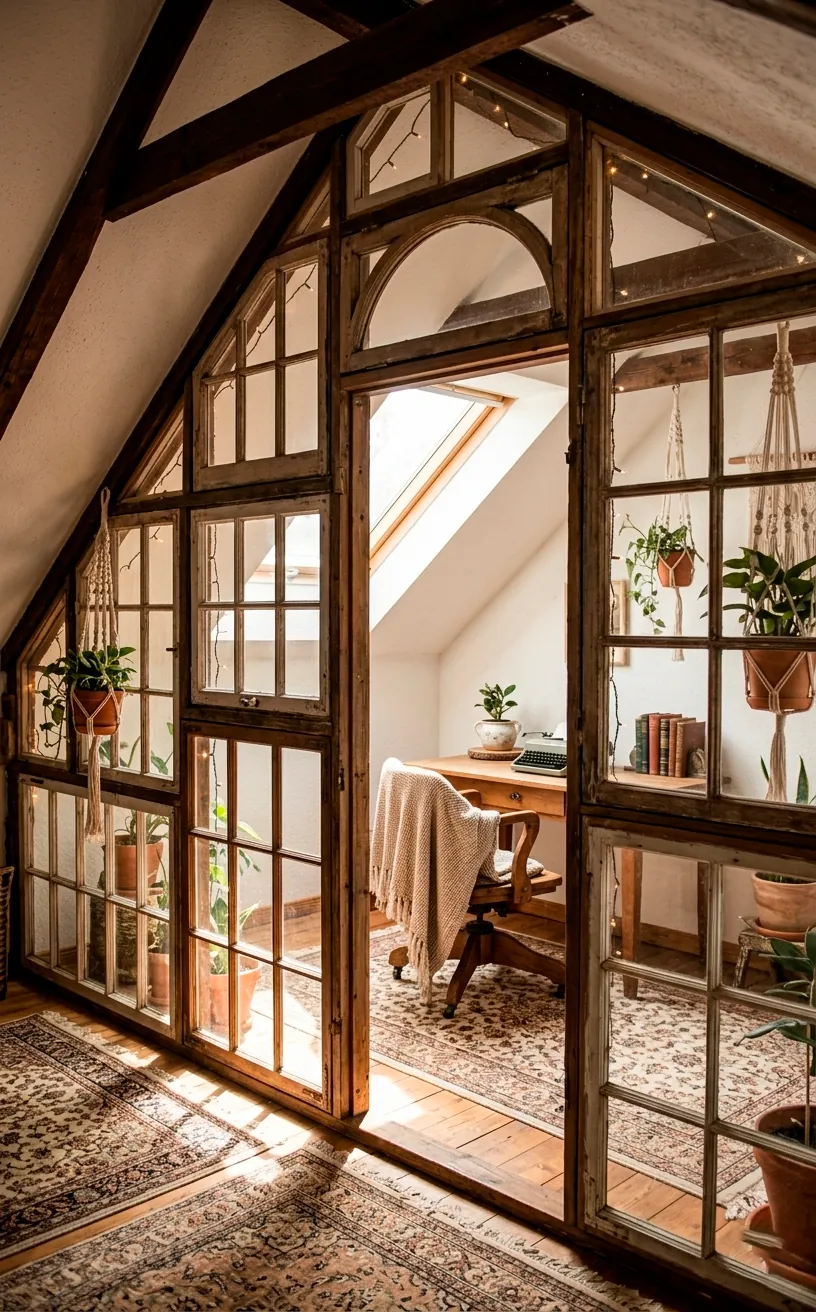
Attics usually struggle with light, so why block it with solid walls? I suggest using old glass window frames to divide your sleeping area from your workspace. It keeps the floor plan open while technically creating ‘rooms.’
I once found a set of six matching Victorian frames at a flea market that changed my entire perspective on partitions. They allow the sun to travel across the whole loft throughout the day. Salvaged window dividers add a whimsical, almost greenhouse-like vibe to the space.
Plus, you can paint the frames a bold black for an industrial look or leave them chippy for a farmhouse feel. Do you prefer a clean finish or that ‘found object’ grit? Either way, you’re saving glass from a landfill. If you need more inspiration for this style, you should check out these authentic farmhouse decor ideas.
Reclaimed Brick Accent Pillars
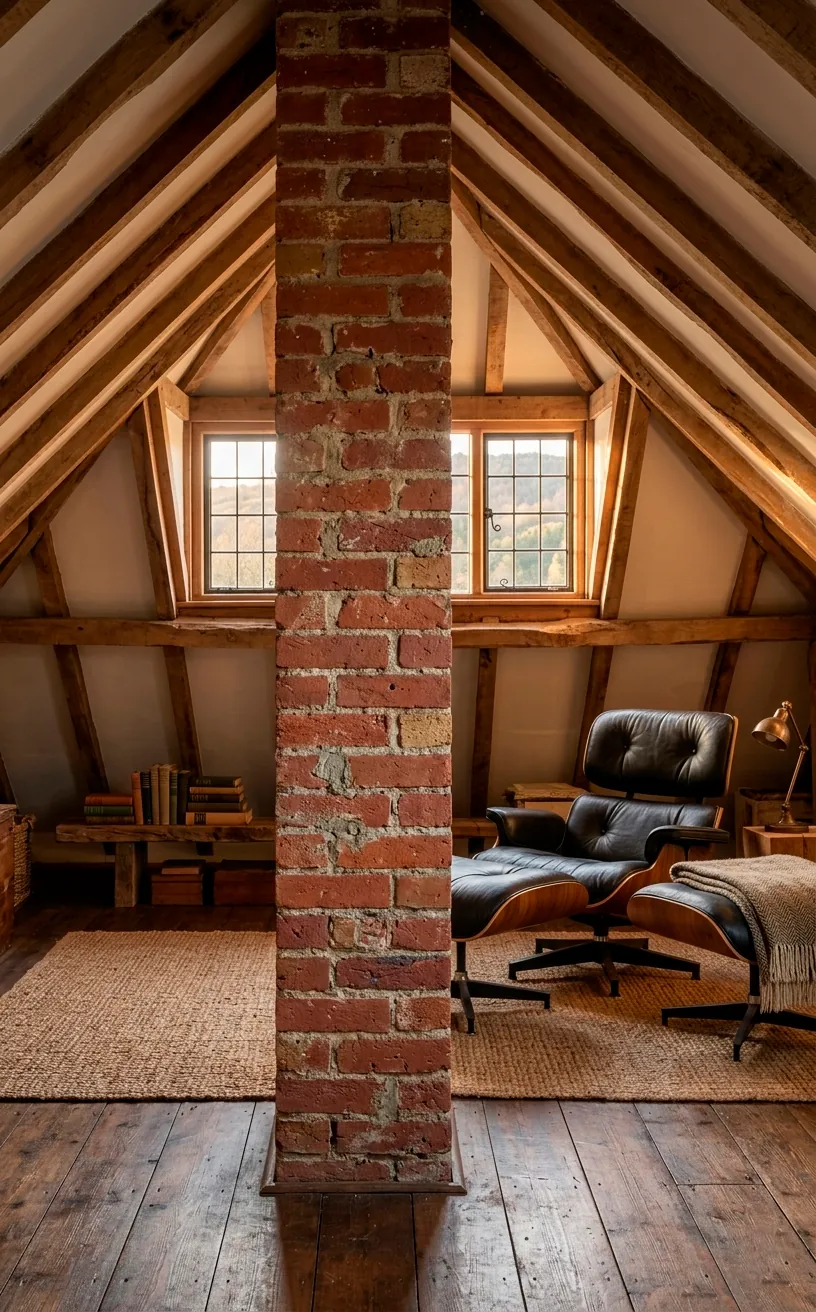
If your attic has an existing chimney breast, don’t cover it up with boring plaster! Strip it back to the original brick or use thin-set reclaimed brick veneers. This adds an instant urban loft feel that reminds me of those fancy downtown Brooklyn apartments. Real reclaimed brick offers variations in color and texture that new bricks simply can’t mimic.
I recommend sealing the brick to prevent that annoying ‘brick dust’ from settling on your furniture. It’s a bit of a messy job, but the visual payoff is massive. Have you ever seen a loft that didn’t look better with a bit of exposed masonry? It provides a cool, tactile contrast to the warmth of wood beams.
Scavenged School Desks
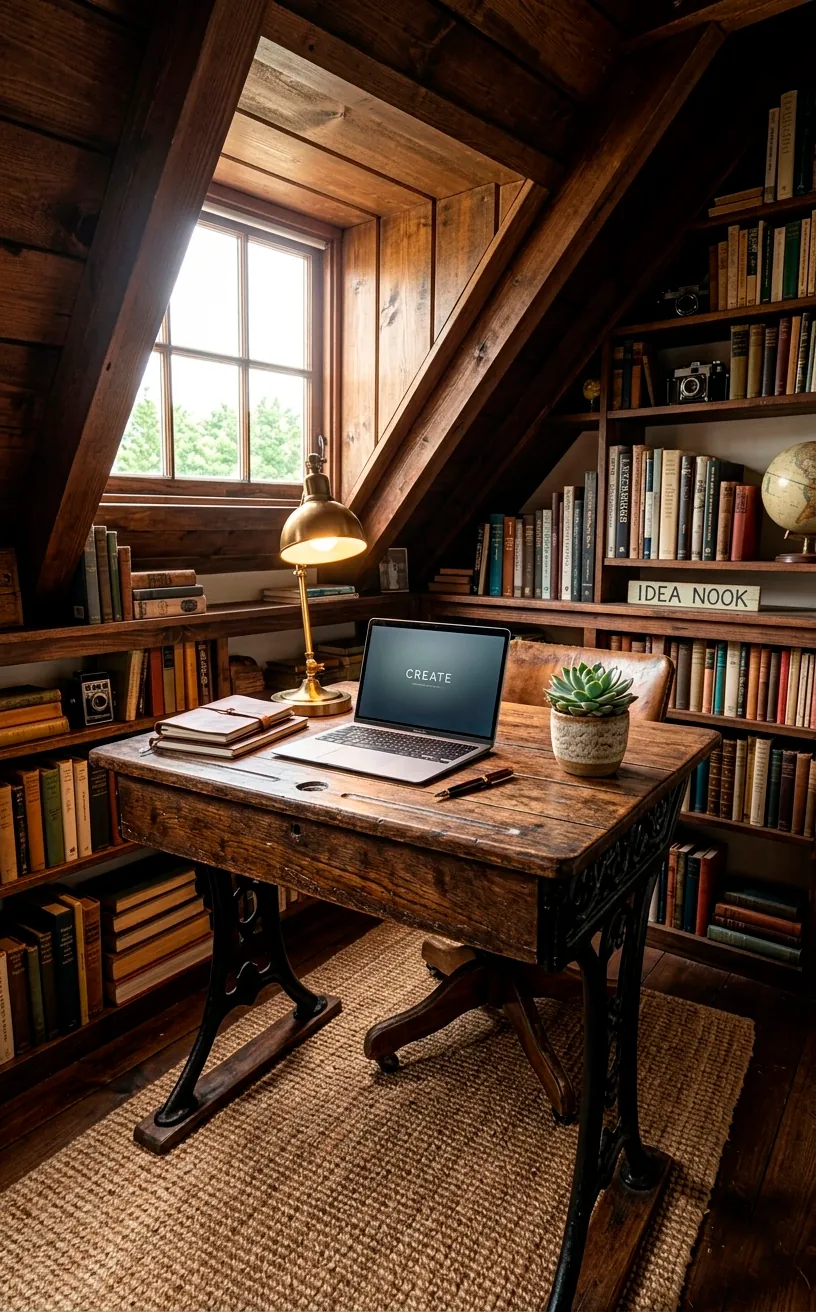
Building a home office in the eaves? Look for old school desks with solid wood tops and metal frames. They usually have a compact footprint, which is perfect for those tight attic corners where a standard desk won’t fit.
I find these at estate sales or school auctions all the time for next to nothing. The metal legs often have a great patina that works perfectly with the industrial vibe.
Repurposed school desks offer a built-in sense of nostalgia and focus. I’ve used one for years and the solid oak top handles a heavy monitor without any wobble.
Don’t worry about the scratches or initials carved into the wood. IMO, those little marks just add to the character and history of your workspace. Why buy a flimsy flat-pack desk when you can have something that survived three decades of teenagers?
Repurposed Ladder Shelving
Old wooden ladders make the best bookshelves because they naturally follow the slope of an attic roof. Simply lean a tall ladder against the wall and secure it, or hang it horizontally to create a floating shelf unit. Ladder shelving units save floor space while providing plenty of room for your favorite reads and plants. I always look for ladders with splashes of old paint on them; it’s like a built-in art piece. Just ensure you anchor them properly so your book collection doesn’t come crashing down in the middle of the night!

Barn Door Room Dividers
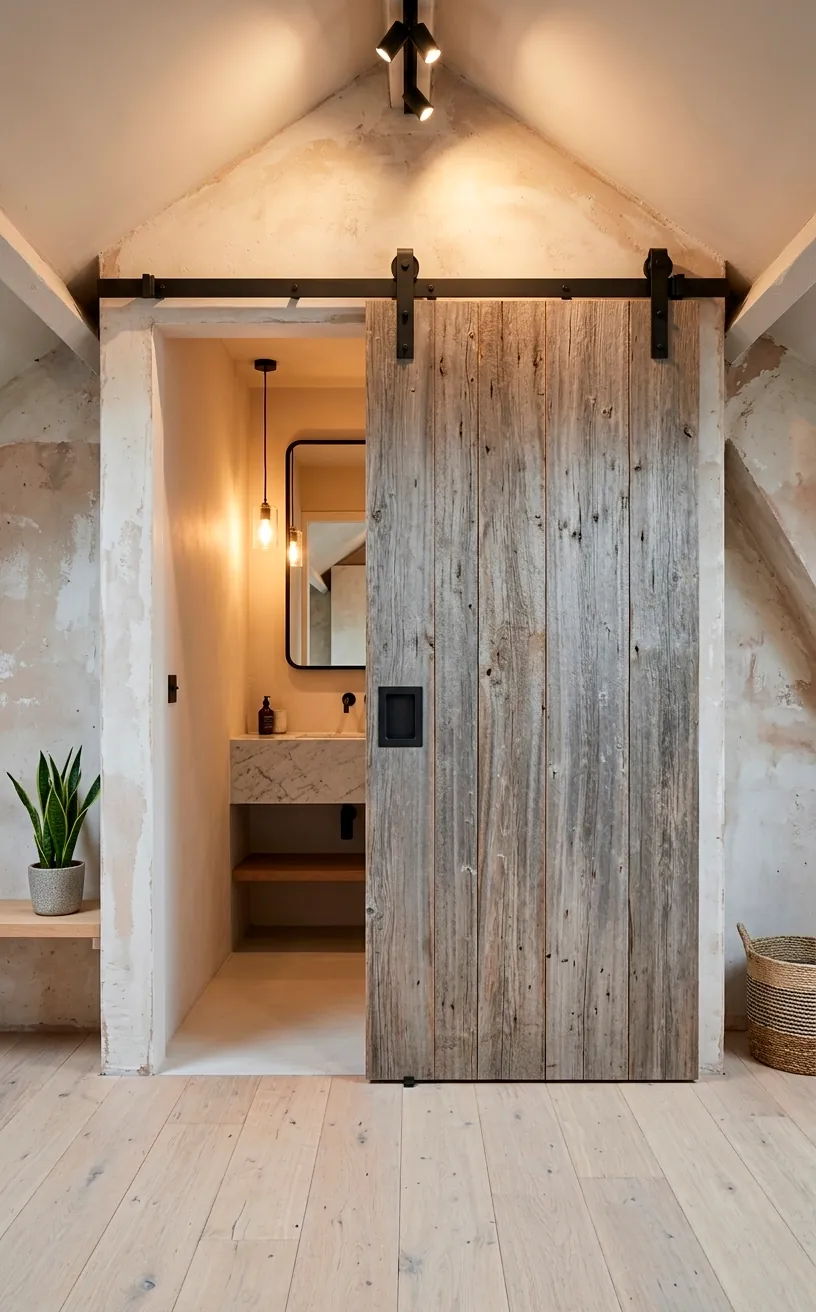
Standard doors are a nightmare in small attics because they need a wide swing radius. Sliding barn doors made from reclaimed wood are the genius solution here. They slide flat against the wall, saving you precious square footage while adding a huge dose of style.
I prefer using wood from old fences or siding for these doors. The gray, sun-bleached look of old cedar provides a beautiful, muted palette that works with almost any decor.
Custom reclaimed barn doors turn a boring entrance into a major design feature. They feel heavy, solid, and incredibly satisfying to slide shut at the end of a long day.
Corrugated Metal Ceiling Accents
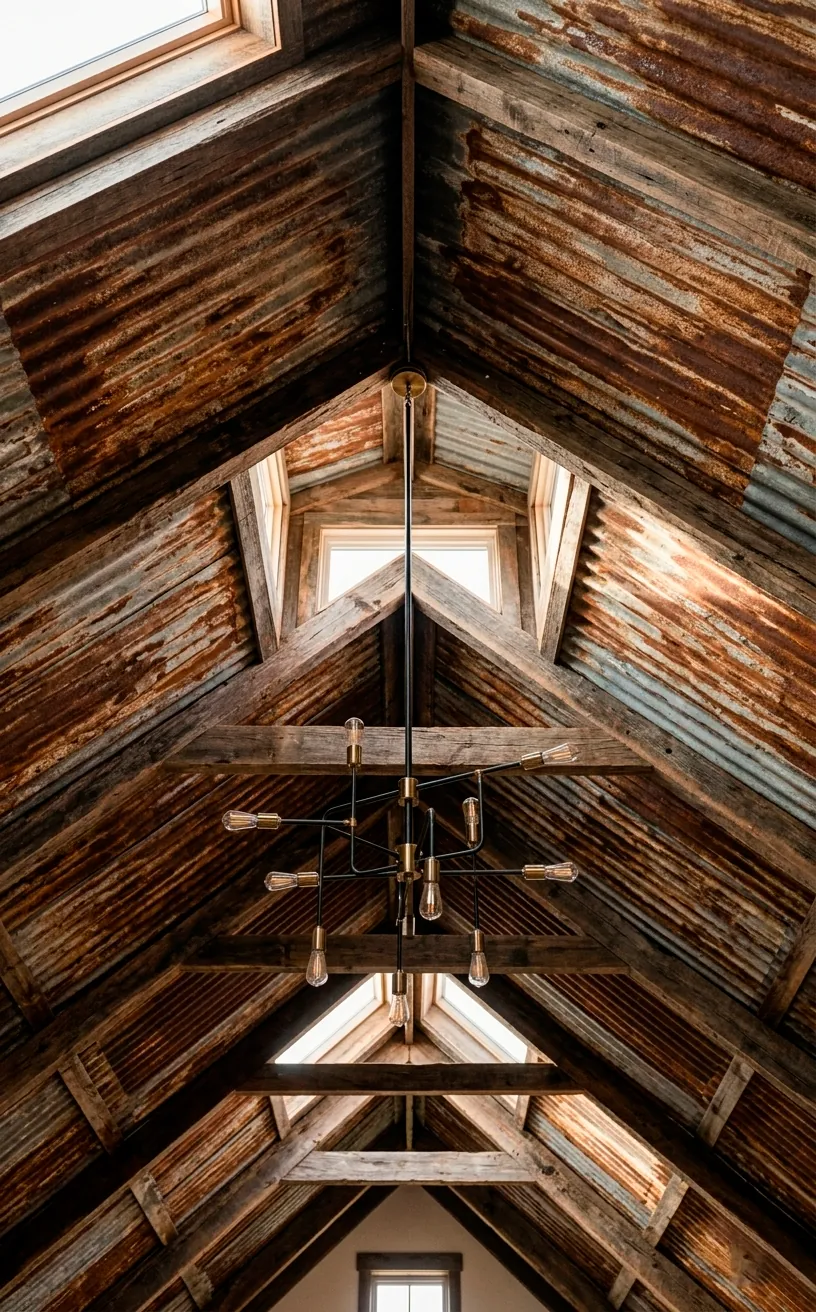
Want to lean into that industrial look? Try using reclaimed corrugated metal sheets for parts of your ceiling. It reflects light in a unique way and adds an edgy, warehouse feel to the highest point of your home.
I see this often in modern farmhouses and it looks incredible when paired with warm wood. The metal prevents the attic from feeling too ‘closed in’ by bouncing light around the rafters.
Just be mindful of acoustics—metal can make a room sound a bit echoey if you don’t balance it with soft textiles like rugs and curtains. It’s a bold choice, but isn’t that why we’re doing this? High-risk, high-reward design is where the magic happens.
Wine Crate Storage Solutions
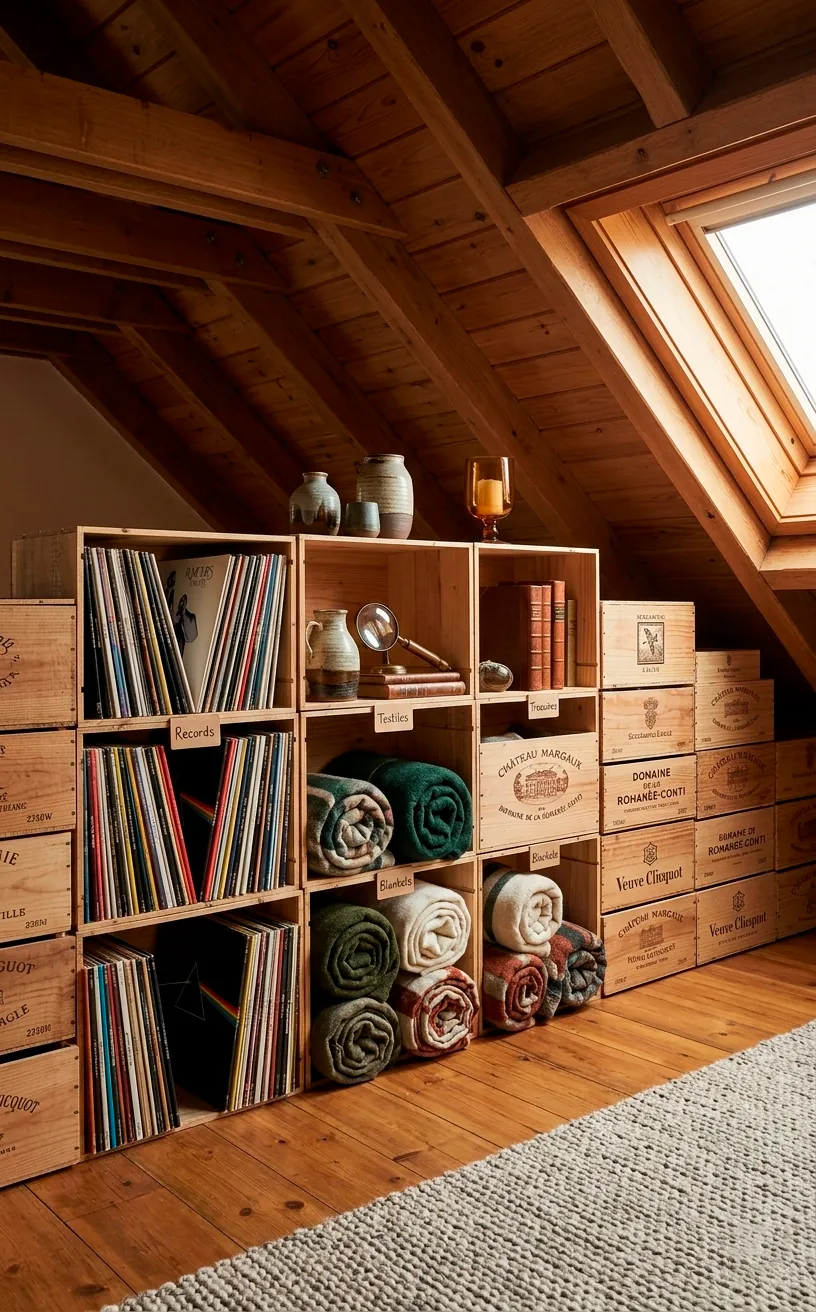
Modular storage is essential when you’re dealing with awkward eaves. I collect old wooden wine crates and stack them to create custom shelving that fits perfectly into the shortest parts of the room. Stacked wine crate shelves give you a flexible storage system that you can rearrange whenever you get bored. They usually have cool branding or typography burned into the wood, which looks much better than a generic plastic bin. FYI, you can often get these for free if you ask nicely at your local high-end liquor store or vineyard!
Driftwood Lighting Fixtures
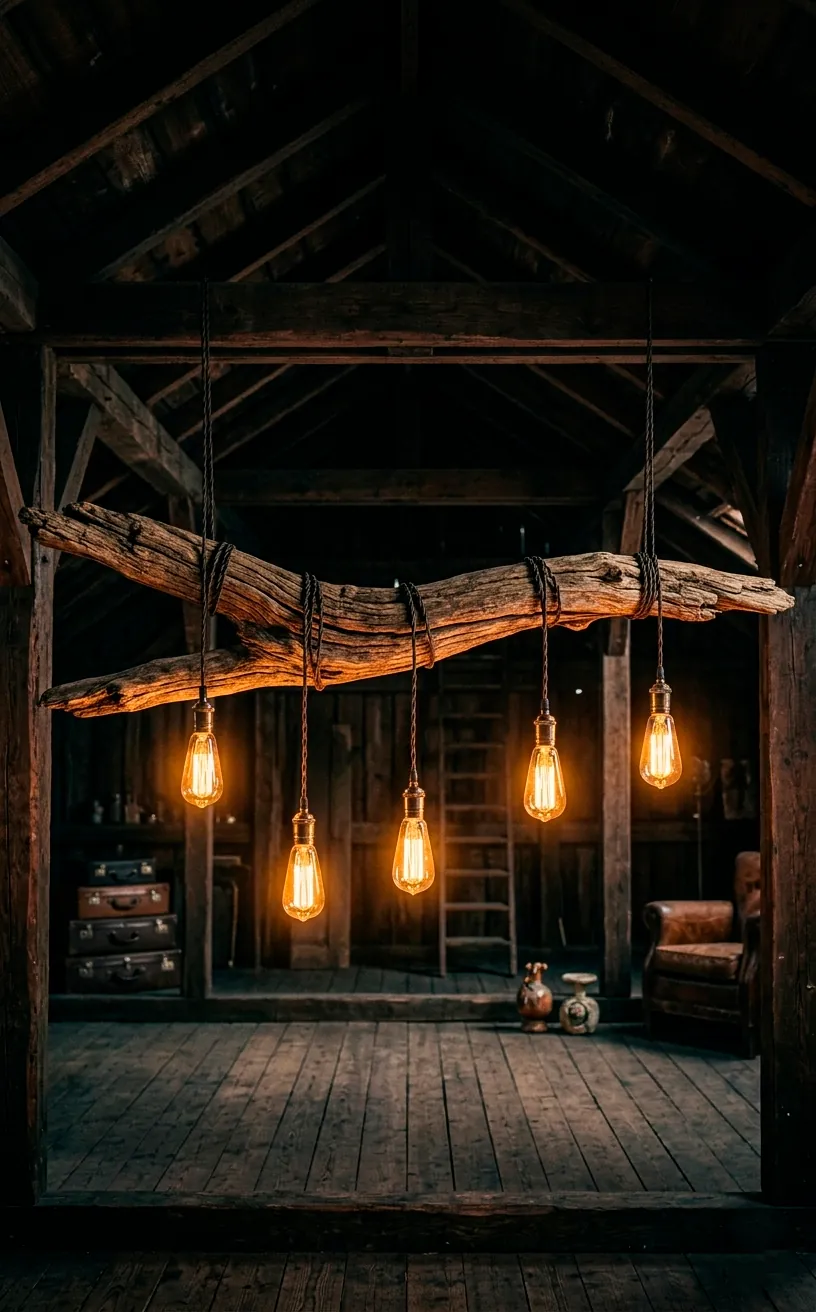
If you’ve ever spent a day at the beach, you know driftwood is basically nature’s sculpture. I like to find a large, sturdy branch and wire it with Edison bulbs to create a one-of-a-kind chandelier.
This adds an organic, flowing shape to the often angular lines of an attic loft. Driftwood pendant lights serve as a conversation starter and a soft light source.
I suggest using jute-wrapped cords to keep the whole look cohesive and natural. It’s an easy DIY project that brings a bit of the outdoors into your secluded rooftop sanctuary. Plus, it weighs much less than a traditional metal fixture, which your attic ceiling will appreciate!
Every time I look at my driftwood light, I’m reminded of the ocean—even when I’m stuck at my desk answering emails.
Scrapped Metal Pipe Railings
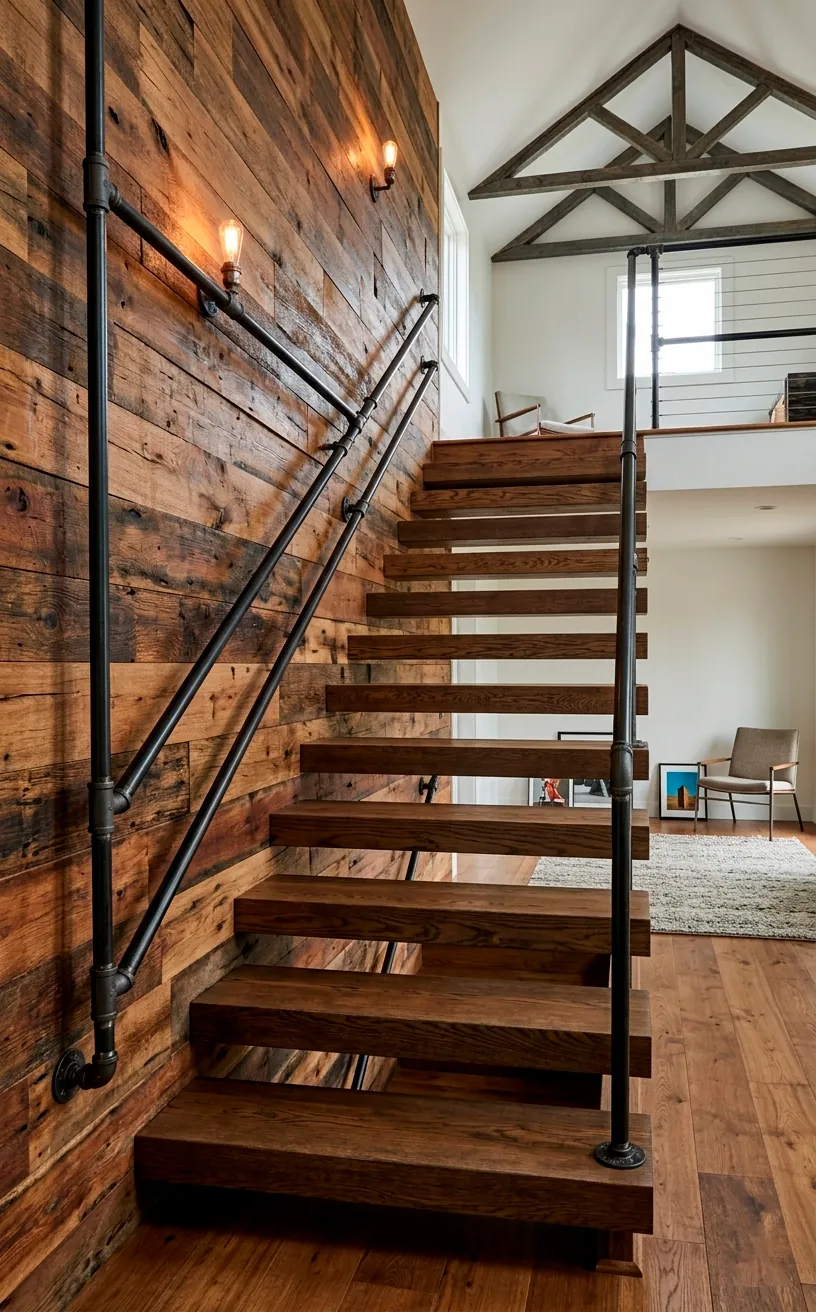
Safety first, but make it fashion. For your attic staircase or balcony, use reclaimed black iron pipes. They offer an incredible industrial look and are virtually indestructible.
I find that pipe railings feel much sturdier than those flimsy wooden spindles you see in suburban homes. You can buy the pipes and fittings at any hardware store, or better yet, salvage them from an old plumbing project.
Industrial pipe handrails contrast beautifully with warm wood stairs. If you’re curious about how this looks with other materials, check out these wood and iron staircase design trends.
You can even build a matching bookshelf using the same pipe system for a cohesive, ‘hard-hat’ aesthetic.
It’s surprisingly easy to assemble since everything just screws together. No welding required, which is a major win for those of us who prefer to keep our eyebrows intact!
Upcycled Doors as Tabletops
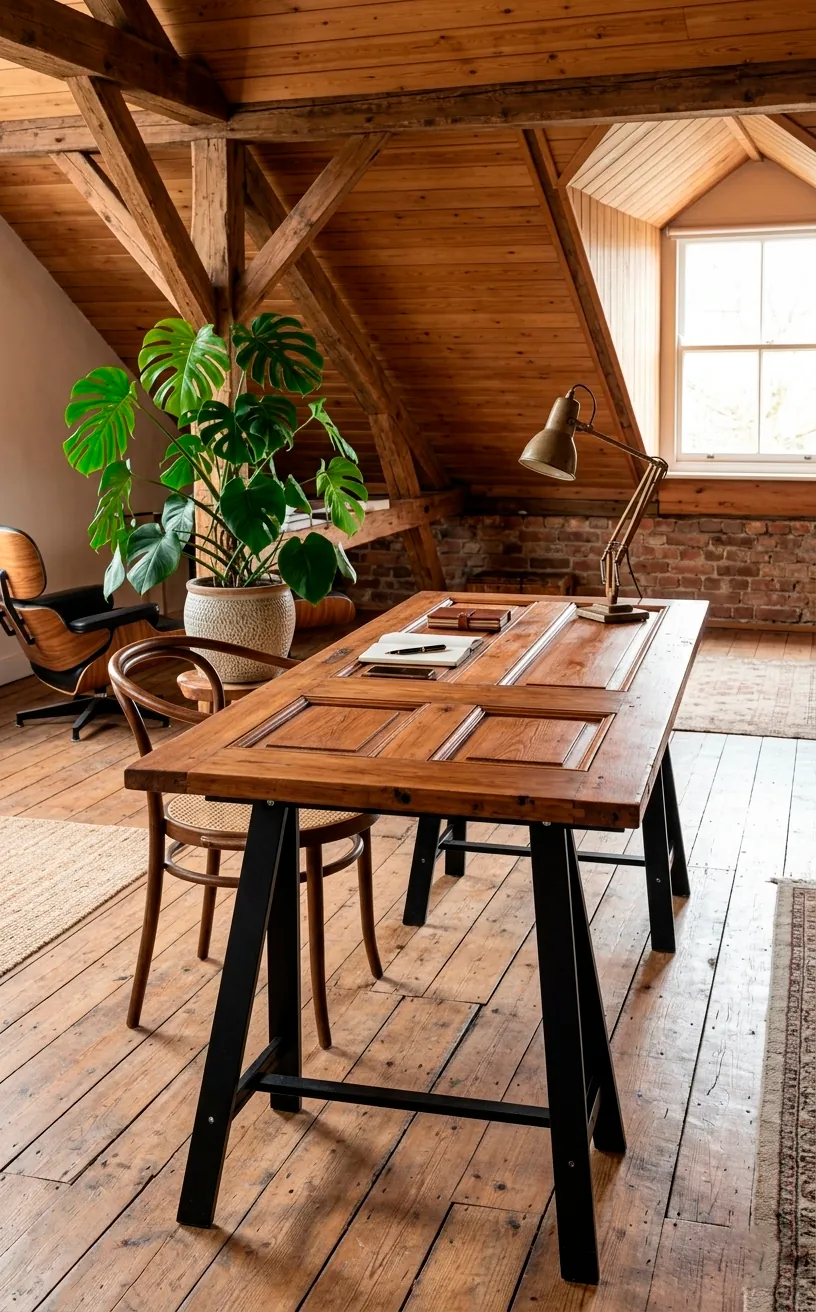
Don’t throw away that old solid-core door! A single door provides enough surface area for a massive dining table or a shared double desk. I love using reclaimed doors because they have a weight and presence that modern plywood desks lack.
If the door has panels, you can lay a piece of tempered glass over the top to create a perfectly flat work surface while still showing off the wood’s detail.
Repurposed door desks are a staple in my home office design. I simply sand the old paint down to reveal the original grain, then seal it with a clear coat. It’s a weekend project that yields a furniture piece you’ll keep for decades. Why pay for a veneer when you can have the real deal?
Vintage Suitcase Side Tables
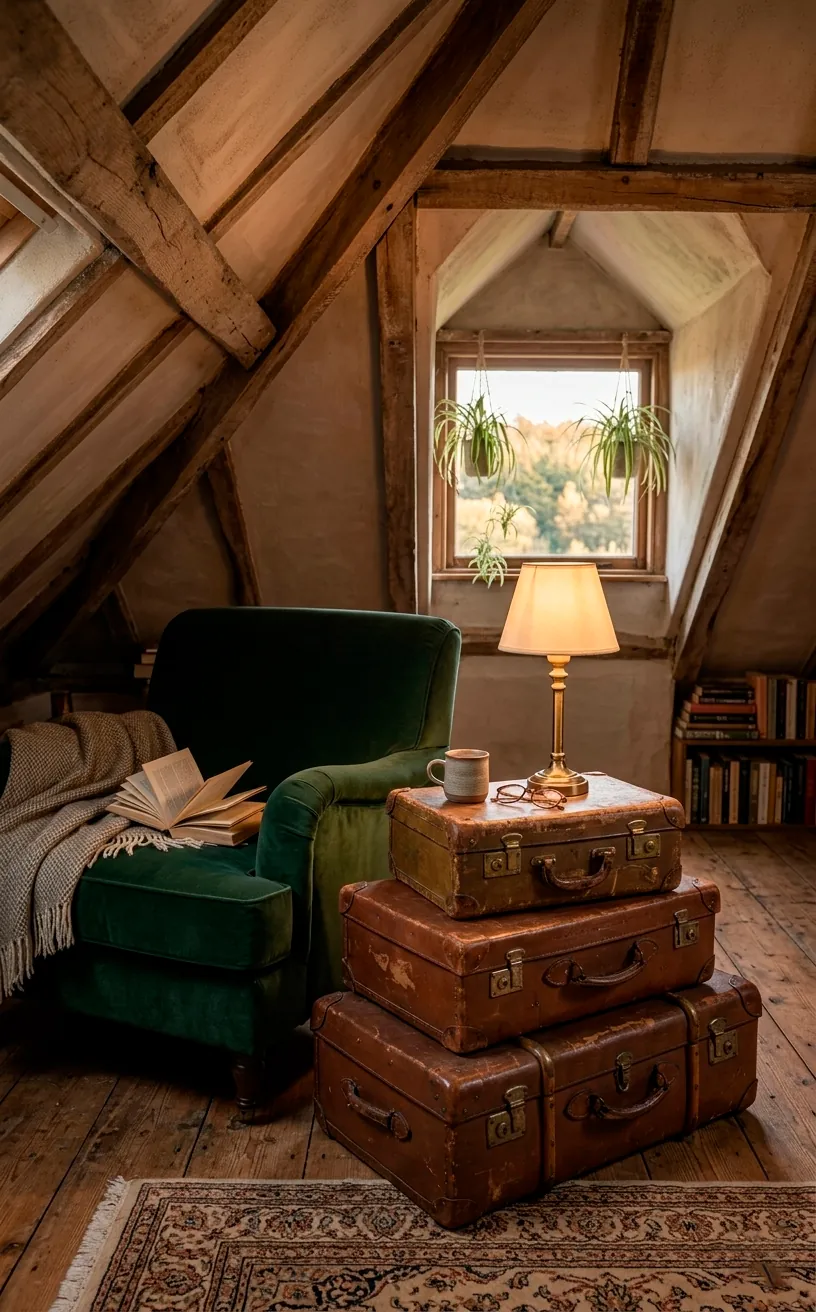
Got some old hard-shell suitcases gathering dust in the garage? Stack them up to create a quirky side table for your attic lounge. This isn’t just about the looks; it’s actually functional storage for things you don’t use every day, like winter gear or old photos. Stacked suitcase furniture adds a sense of adventure and worldliness to the loft. I think it looks best when you mix different colors and textures—leather, tweed, and metal. It’s the easiest furniture you’ll ever ‘build,’ and it looks like something straight out of a boutique hotel in Paris. IMO, it’s the perfect way to add personality without spending a dime.
Reclaimed Hardwood Flooring
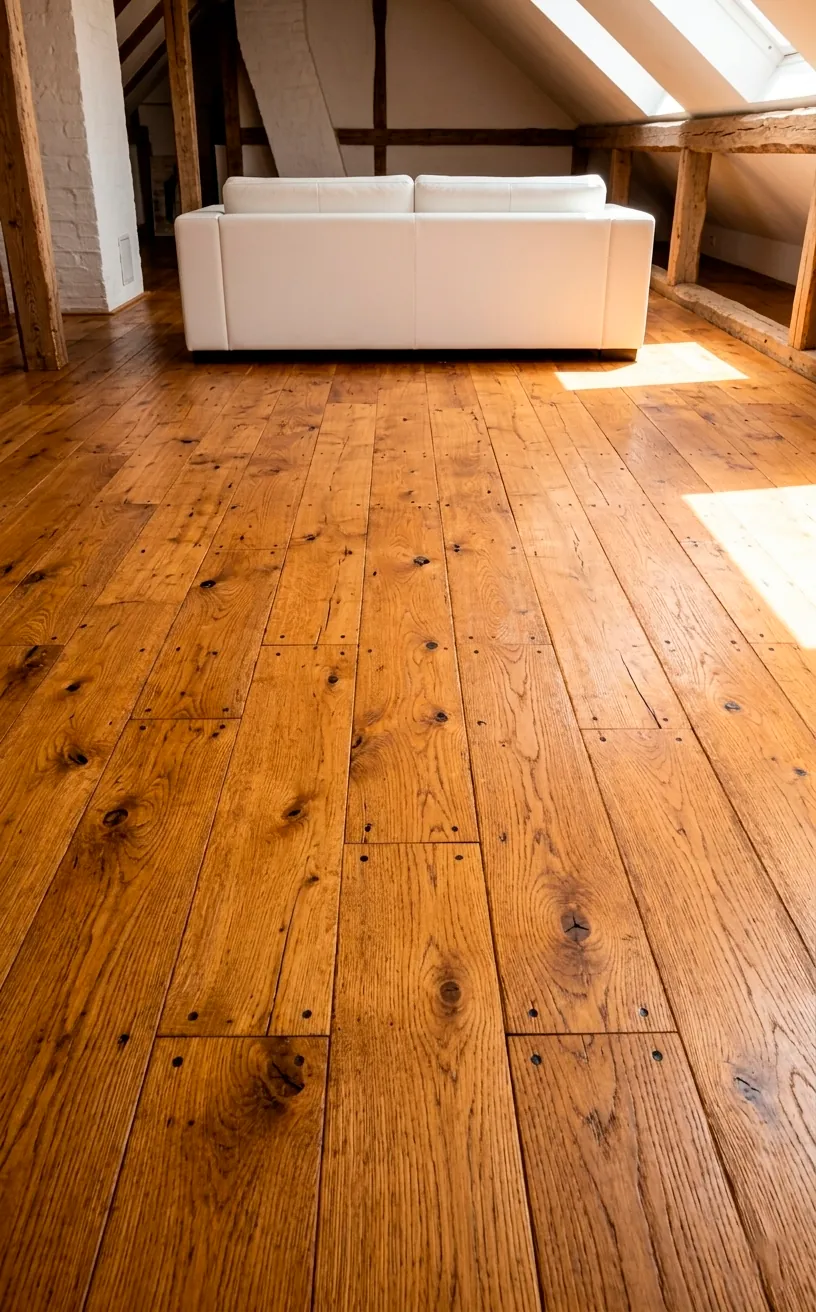
If you’re going to replace the floors, go for reclaimed hardwood instead of new laminate. You can find beautiful old maple or heart pine salvaged from gymnasiums or old houses.
The boards usually come in wider widths than modern flooring, which makes an attic space feel larger and more expansive. Reclaimed wood floors also have a pre-aged patina that hides new scratches perfectly—which is great if you have pets or kids.
It feels warmer underfoot and has a soul that new wood just hasn’t earned yet. Sand it lightly and use a natural oil finish to keep the wood breathable and eco-friendly. It’s an investment that significantly boosts your home’s value and aesthetic appeal.
I always tell people: the floor is the largest piece of furniture in the room. Why settle for something that looks like plastic?
Mason Jar Sconces
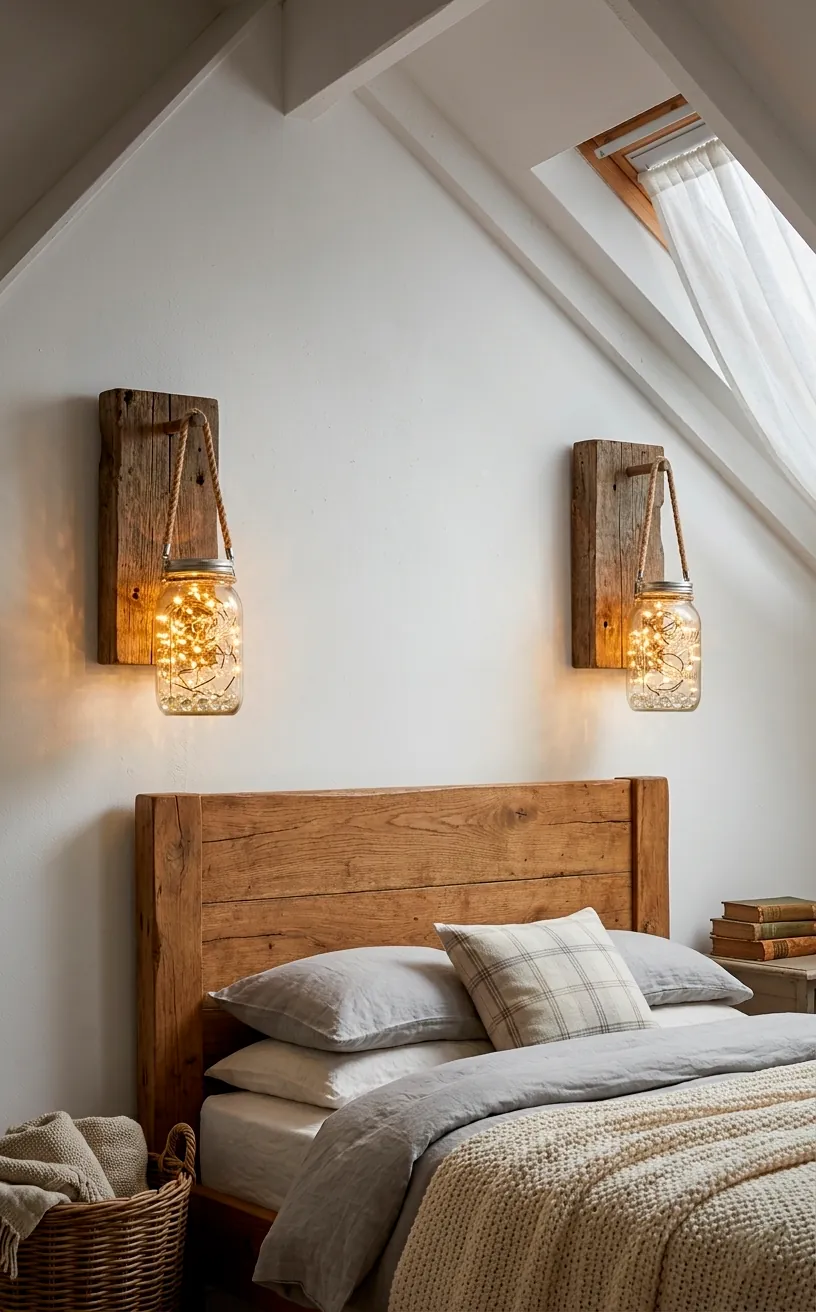
Lighting doesn’t have to be expensive to be beautiful. I use old mason jars to create custom wall sconces that provide a soft, ambient glow. You can mount them onto pieces of reclaimed wood to tie the whole ‘eco-attic’ theme together.
DIY mason jar lighting is incredibly versatile—you can fill the jars with fairy lights for a whimsical look or hard-wire them with small bulbs for something more permanent.
They look especially charming when placed on either side of a bed or a mirror. It’s a simple, sustainable way to light up those dark attic corners without breaking the bank. Ever noticed how the simplest ideas often feel the most personal?
Conclusion
You now have 15 solid reasons to stop ignoring your attic and start building. Using reclaimed materials isn’t just about saving money; it’s about creating a space with a heartbeat and a history. Which of these ideas are you tackling first? I’m personally leaning toward those window partitions! Let me know in the comments. Now go find some wood and get creative!
Related posts
See All15 Vintage Circus Inspired Details for Playful Kids Bedroom Decor
Bring the magic of the big top home! Discover 15 playful, vintage circus-inspired decor details that will transform your kid's …
Read moreThe Complete Guide to Styling a Dining Room Credenza for Everyday Elegance
Give your dining room credenza the ultimate glow-up. Discover easy, elegant styling tips that balance everyday function with show-stopping design.
Read more15 Dried Citrus and Cinnamon Garlands for a Naturally Cozy Kitchen
Forget mass-produced decorations. Transform your kitchen into a naturally cozy, aromatic sanctuary with these 15 beautiful dried citrus and cinnamon …
Read moreThe Dog-Friendly Camper: Designing a Van Interior for Your Pets
Transform your camper van into the ultimate dog-friendly adventure mobile! Discover clever interior design hacks, durable materials, and cozy setups …
Read more