












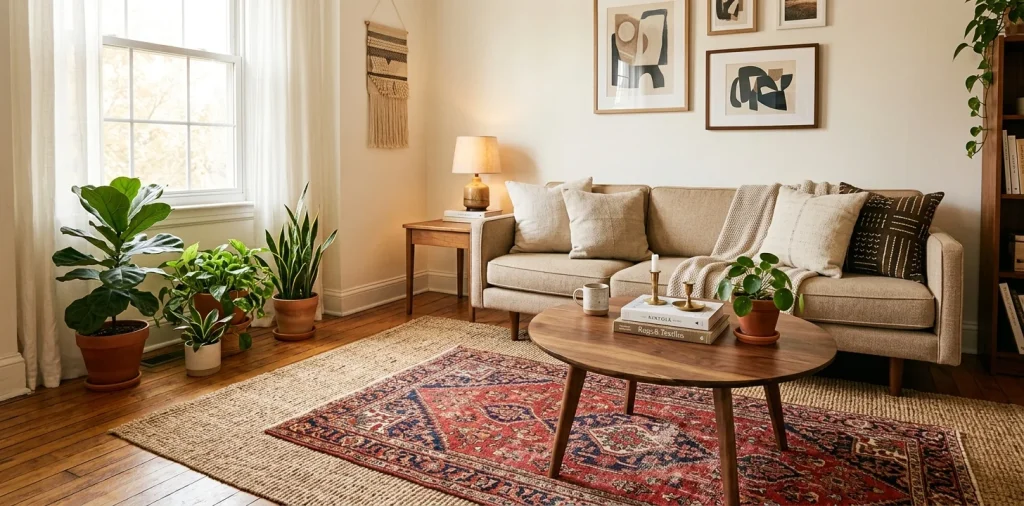

Ever walked into a tiny room and thought, wow, this needs more floor fabric? Me neither. But honestly, layering vintage rugs is my absolute favorite way to inject soul into a cramped apartment. It sounds counterintuitive, but stacking rugs actually grounds your furniture and makes small spaces feel intentionally cozy. Ready to master the stack?
The Trusty Base Layer Rule
If you skip a solid base, you are just asking for a messy, chaotic vibe. I always start my rug-stacking journey with a large, neutral foundation. Think chunky jute, smooth sisal, or even a flat-weave wool in a solid earthy tone. This base rug anchors the room and stretches right across the entire seating area, easily tricking the eye into thinking the floor plan is much bigger than it actually is.
Why does this work so well? Because genuine vintage rugs usually come in weird, non-standard sizes! Slapping a tiny antique piece in the exact center of your living room looks like a floating postage stamp. A massive natural rug underneath immediately solves that awkward proportion problem. If you love this foundational look, definitely check out these layered jute rug ideas.

Mixing Patterns Without the Clash
So, how exactly do you drop a vibrant, heavily patterned Oushak on top of another rug without triggering an instant migraine? The secret is a unified color palette. Pick one dominant color from your top vintage piece and ensure your base or surrounding decor whispers that exact same shade. IMO, throwing contrasting neon geometric prints over a faded traditional rug is a recipe for disaster. Stick to warm, earthy tones or muted blues to keep everything completely cohesive. You want the top piece to act as the room’s art, not its noisy neighbor.

Playing with Proportions
Let’s talk about the actual math of rug layering.
Don’t panic, it’s pretty easy. The top rug should be significantly smaller than the bottom one. If they are too close in size, it just looks like you accidentally dropped two carpets and completely gave up on decorating.
Essential sizing tips:
- Leave at least 12 to 18 inches of the base rug exposed on all four sides.
- Ensure the front legs of your main sofa rest comfortably on both rugs.
- Keep the top vintage rug perfectly centered under your coffee table for visual balance.
I once tried layering a 5×7 over a 6×9, and it looked absurdly chunky and swallowed the room. Stick to a smaller 4×6 or 5×8 over a large 8×10 to nail that effortless, highly curated aesthetic.

The Diagonal Drop Trick
Do you always have to place everything at perfectly rigid 90-degree angles? Absolutely not. If your small space feels a bit too boxy, try throwing your top vintage rug down on a slight diagonal. This angled placement breaks up harsh lines and naturally forces the eye to travel across the room, instantly making a tight corner feel much more dynamic and lived-in. It gives off that perfect “I just casually tossed this priceless heirloom right here” energy.

Textures That Actually Work Together
Texture is literally everything when you are dealing with a tiny footprint. If you layer a thick, high-pile shag over another thick shag, you basically create a lumpy mattress on your floor.
To avoid this massive tripping hazard, always mix high and low profiles. A flat-weave kilim looks absolutely stunning resting securely on a slightly thicker, braided jute. Conversely, if you have a very thin cotton base, a plush Moroccan Beni Ourain on top feels incredibly luxurious and grounding underfoot.
FYI, I totally ruined a gorgeous silk-blend runner once by layering it over a weirdly slippery synthetic carpet. Stick strictly to natural fibers—they grip each other beautifully and age like fine wine. Want to explore more cozy living room textures? Check out this awesome guide on layering wool and mohair in the living room.

Securing the Chaos
Nothing ruins the cozy apartment vibe faster than slipping on your beautifully styled vintage rug and face-planting directly into the coffee table. Small rooms mean high traffic in very concentrated zones. You absolutely need heavy-duty rug pads.
I use a thick felt pad under the main base rug for ultimate squishiness, and then I apply double-sided rug tape strictly between the base and the top vintage layer. This effectively locks the entire sandwich together. It keeps those fragile vintage edges from curling up and completely destroying your robot vacuum’s life. Trust me, secure edges are totally non-negotiable!

Conclusion
Layering vintage rugs isn’t just a passing interior design trend; it’s a brilliant strategy to add genuine warmth, history, and dimension to your coziest spaces. By starting with a solid natural base, mastering the sizing proportions, and playing with contrasting textures, you can transform a cramped room into a deeply curated sanctuary. Which vintage rug style are you grabbing first for your space? Let me know in the comments!
Related posts
See All15 Vintage Circus Inspired Details for Playful Kids Bedroom Decor
Bring the magic of the big top home! Discover 15 playful, vintage circus-inspired decor details that will transform your kid's …
Read moreThe Complete Guide to Styling a Dining Room Credenza for Everyday Elegance
Give your dining room credenza the ultimate glow-up. Discover easy, elegant styling tips that balance everyday function with show-stopping design.
Read more15 Dried Citrus and Cinnamon Garlands for a Naturally Cozy Kitchen
Forget mass-produced decorations. Transform your kitchen into a naturally cozy, aromatic sanctuary with these 15 beautiful dried citrus and cinnamon …
Read moreThe Dog-Friendly Camper: Designing a Van Interior for Your Pets
Transform your camper van into the ultimate dog-friendly adventure mobile! Discover clever interior design hacks, durable materials, and cozy setups …
Read more