












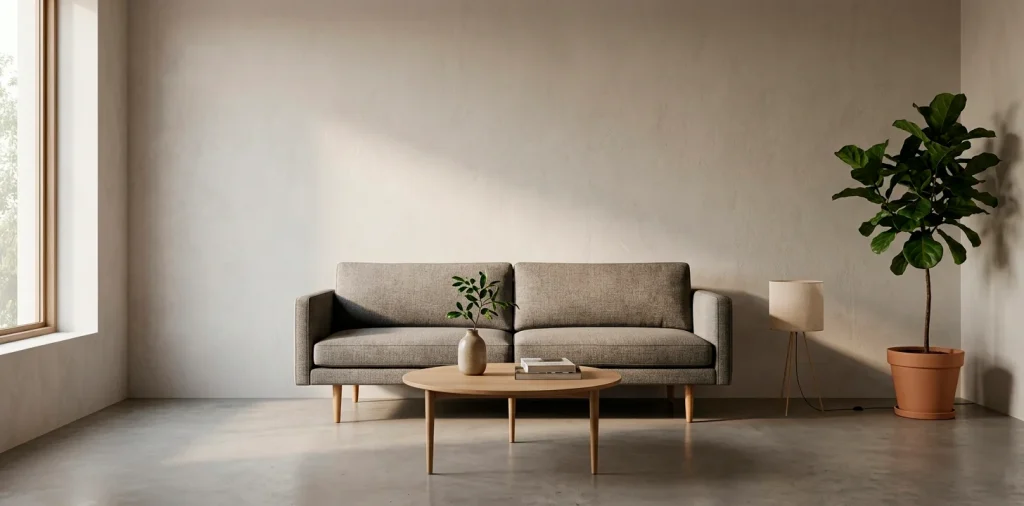

Ever looked at your tiny living room and felt instantly overwhelmed? I’ve totally been there. You buy one cute armchair, and suddenly your space feels like a claustrophobic storage unit. The secret to fixing this isn’t buying more organizing bins—it’s mastering negative space. Let’s make that room breathe again.
What Even Is Negative Space?
Let’s clear something up right away. Negative space isn’t just an empty void where you forgot to place a plant. It’s the intentional breathing room between your sofa, your walls, and that quirky lamp you love.
IMO, it’s the absolute most powerful tool in your interior design arsenal. When you deliberately leave an area completely bare, it instantly highlights the beautiful pieces you actually *did* choose to display. Think of it as a strategic pause in a juicy conversation. Without those quiet moments, everything just turns into chaotic, overwhelming noise.

The “Leggy” Furniture Rule
Heavy, chunky furniture is the ultimate enemy of a tiny room. If your sofa’s base drags directly on the floor, it visually eats up precious square footage.
Instead, opt for pieces raised on legs. Why does this work so well? Because you can physically see the floor continuing underneath the furniture. Your brain registers that extra visible floor area, tricking your eyes into believing the room is significantly larger than its actual footprint.
I swapped my bulky mid-century sectional for a sleek, peg-legged loveseat last year, and the difference was genuinely mind-blowing. Suddenly, my living room didn’t feel like a padded cell! Check out these fantastic tips for maximizing your layout in the ultimate guide to small space layouts and furniture.

Freeing Up the Walls
We all have that strong urge to hang a gallery wall on absolutely every blank surface. Resist that urge immediately. Covering every inch of your drywall makes a small space feel incredibly heavy and claustrophobic. Pick just one focal wall for your favorite artwork and leave the adjacent walls completely bare. This stark contrast makes your art pop brilliantly while giving your eyes a much-needed place to rest. Seriously, sometimes a crisp, blank white wall is the chicest design statement you can possibly make.

The Power of a Visible Floor
Let’s talk about rugs and floor real estate.
When you cover every single square inch of your floor with an oversized rug, you ironically shrink the room. You want to frame your seating area, not carpet the entire space wall-to-wall.
Floor framing basics:
- Keep at least 12 to 18 inches of bare floor exposed around the room’s perimeter.
- Let the front legs of your furniture rest gently on the rug.
- Choose a rug with a subtle pattern to avoid visual clutter.
This simple framing technique leaves a beautiful border of negative space around your room. It effortlessly defines your seating zone while still letting the architecture of your home breathe. 🛋️

Leaving Corners Alone
Empty corners terrify people. I constantly see folks stuffing fake ficus trees, awkward leaning shelves, or bulky floor lamps into every single corner of their living room. You really don’t need to do this!
Leaving a corner perfectly empty is a masterclass in modern restraint. That shadowy, quiet pocket of space pushes the focus back to the center of the room where the actual living happens. It stops the room from feeling like a crowded antique shop and adds a layer of intentional sophistication. Just let the corner be a corner.

Editing Your Coffee Table
Your coffee table does not need to house a small library, three candles, a tray, and a decorative wooden knot. That clutter completely destroys the negative space resting at the physical center of your room. Clear it off. Leave at least seventy percent of the table surface beautifully bare. A single art book and a tiny vase of fresh greens are honestly all you need. This massive expanse of flat, empty surface area acts like a calming oasis right in the middle of your seating arrangement, instantly making the whole room feel exponentially tidier.

Using Color to Create Distance
Negative space isn’t exclusively about physical distance; it’s highly visual, too. The colors you choose dictate how the space feels.
Dark, heavy colors advance toward you, making a small room feel cozy but tight. Light, airy shades recede, visually pushing the walls outward and expanding your negative space.
You don’t have to live in a clinical white box, though. Soft sages, pale terracottas, and warm creams work wonders. They blur the hard boundaries of your room, allowing your furniture to float beautifully within the space. For more on creating that perfect light, airy vibe, see how to style a sophisticated small living room.

Letting Light Flow Uninterrupted
Natural light is the best friend negative space will ever have. When sunshine pours across an empty stretch of floor or a bare wall, it physically highlights the openness of the room.
Ditch the heavy blackout drapes immediately. Swap them for sheer linen curtains or completely bare windows if privacy isn’t a concern. When you remove visual obstacles around your light sources, you create an uninterrupted flow that makes your room feel infinite. Plus, nobody likes a gloomy, blocked-off window!

Decluttering vs. Styling Empty Space
Let’s address the elephant in the room.
Empty space looks terribly sad if the rest of the room is just a chaotic mess. You have to edit your belongings before you can style the nothingness.
Essential editing checklist:
- Remove any furniture you haven’t used in the last month.
- Hide your messy charging cables out of sight.
- Limit your throw pillows to two or three max.
Once you remove the unintentional clutter, the empty areas you leave behind suddenly look highly deliberate. You transition from “I haven’t unpacked yet” to “I am a minimalist design genius.” It takes some brutal honesty, but the payoff is a profoundly peaceful living room.

Conclusion
Embracing negative space is about finding the beauty in what you leave out. By raising your furniture, clearing your walls, and letting your corners breathe, you transform a cramped box into a chic, airy retreat. It takes a little restraint, but trust me, your sanity will thank you. Which corner are you clearing out first? Let me know in the comments!
Related posts
See All15 Vintage Circus Inspired Details for Playful Kids Bedroom Decor
Bring the magic of the big top home! Discover 15 playful, vintage circus-inspired decor details that will transform your kid's …
Read moreThe Complete Guide to Styling a Dining Room Credenza for Everyday Elegance
Give your dining room credenza the ultimate glow-up. Discover easy, elegant styling tips that balance everyday function with show-stopping design.
Read more15 Dried Citrus and Cinnamon Garlands for a Naturally Cozy Kitchen
Forget mass-produced decorations. Transform your kitchen into a naturally cozy, aromatic sanctuary with these 15 beautiful dried citrus and cinnamon …
Read moreThe Dog-Friendly Camper: Designing a Van Interior for Your Pets
Transform your camper van into the ultimate dog-friendly adventure mobile! Discover clever interior design hacks, durable materials, and cozy setups …
Read more