












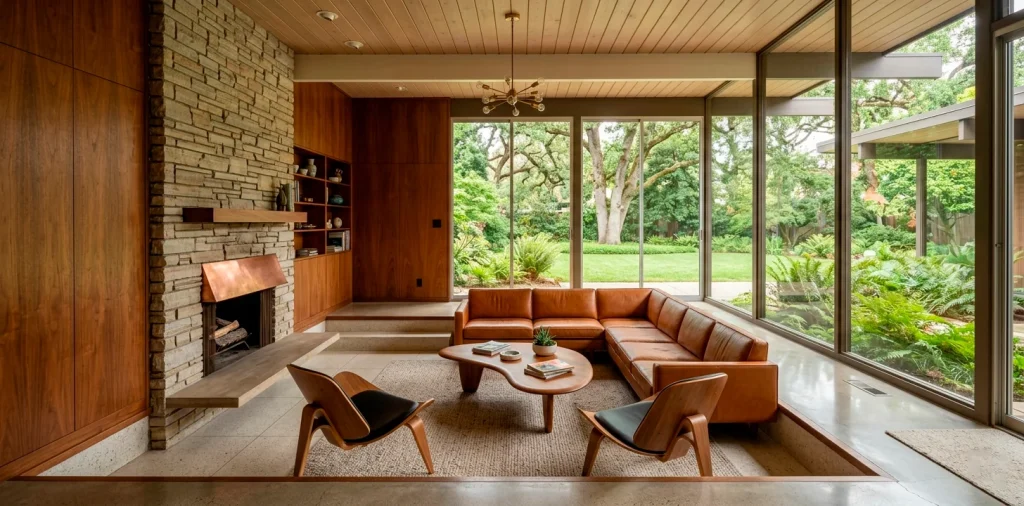

Ever walked into a room and instantly felt like you were living inside a classic retro movie set? That magical vibe usually comes down to two absolute powerhouse materials. I completely obsessed over my first mid-century home primarily because of its stunning raw walls. Today, we look closely at exactly why wood paneling and stone are the essential textures of MCM design. Grab your coffee, and let us get right into it!
The Raw Magic of Organic Materials
Mid-century modern design heavily relies on the harmony between natural elements. You simply cannot fake the authentic feel of real timber and rough-hewn rock living side by side. These textures anchor a space. They bring an earthy grounding that painted drywall just cannot match. Ever wonder why these spaces feel so effortlessly cool? It is because designers intentionally used materials that connect us to nature. I spent months searching for the perfect raw stone for my own renovation, and let me tell you, it completely changes the entire atmosphere of a home. Once you experience it, you never go back to boring, flat walls.

Walnut Paneling: The Heavyweight Champion
When you hear “wood paneling,” banish the thought of those cheap, flimsy 1970s basement boards. We are talking about rich, glorious walnut that wraps a room in pure warmth.
Walnut offers a deep, chocolatey grain that acts as the perfect backdrop for colorful retro furniture. It grounds the bright oranges and mustards so they pop brilliantly.
You instantly recognize a high-quality walnut wall when you see it. It commands respect without screaming for attention. Plus, it hides minor scuffs perfectly, which is a total lifesaver if you have kids or pets running around FYI.

Bringing the Outside In
The entire MCM philosophy revolves around blurring the lines between indoor and outdoor spaces. Large glass windows usually sit right next to an exposed stone wall that seemingly continues right through the glass into the backyard.
This continuous visual flow creates a brilliant illusion of infinite space. If you want to replicate this look, ensure your interior stone exactly matches your patio hardscaping. It is an absolute game changer for smaller homes because it tricks your brain into seeing one massive living area instead of two separate zones.

The Mighty Stacked Stone Fireplace
Let us talk about the absolute ultimate living room focal point for a second.
A massive, floor-to-ceiling stacked stone fireplace absolutely steals the show every single time.
I love how the uneven surface beautifully catches the light. It creates deep, moody shadows that make cozy evenings with a glass of wine infinitely better.
The rugged texture provides the ultimate contrast to sleek leather sofas. Essential fireplace elements:
- Irregular stone cuts: Adds authentic vintage appeal.
- Floating hearth: Keeps the massive structure feeling light.
- Asymmetrical layout: A classic mid-century design hallmark.

Balancing Warmth and Coolness
You cannot just throw random wood and stone into a room and hope for the best. The secret lies in achieving a careful balance between the warm undertones of the wood and the cool, harsh reality of the stone.
Too much stone feels like a medieval dungeon, while too much wood feels like a cramped, sweaty sauna. You must strategically place these textures so they complement rather than compete with each other. Try pairing a smooth wood paneled ceiling with a rugged slate floor to keep the eye moving gracefully around the room.

Teak Accents That Command Attention
If walnut is the moody older brother, teak is the vibrant, golden child of the mid-century aesthetic. Its natural oils give it a subtle sheen that looks incredibly striking against a rough stone backdrop. I absolutely adore placing a slender teak credenza directly in front of an exposed brick or stone wall. The contrast is mind-blowing. It feels simultaneously vintage and fiercely modern. Want to bring this exact vibe into your eating area? Check out these mid-century modern teak and walnut dining room ideas.

Tragic Faux Pas to Avoid
We need to discuss the bad stuff for a quick second. Mixing artificial stone veneers with high-end wood is a cardinal sin in the design world.
Your eyes immediately spot the fake repetition in cheap materials. Always invest in genuine textures or high-quality alternatives if budget is an issue. Authenticity matters deeply here.
Also, please never paint over beautiful, original mid-century brick or stone. Just writing that sentence makes my designer soul hurt a little bit 😭. Let natural materials breathe and show their age proudly.

Lighting These Textures Right
Good lighting absolutely makes or breaks your texture game. You absolutely must use directional lighting to highlight the grooves of the wood and the rugged, uneven surface of the stone.
Wall sconces and strategically placed floor lamps are your best friends here. They cast dynamic shadows that literally bring the walls to life at night. Never rely entirely on overhead lighting, as it flattens the space and washes out those beautiful, organic details you worked so hard to include.

Modernizing the Vintage Vibe
You definitely do not want your house looking like a stale museum exhibit.
The ultimate goal is to honor the retro era while keeping things fresh and livable for today.
Pairing these heavy, historical textures with bright, contemporary art is a brilliant move. It shakes off the dust, creates visual tension, and injects instant personality into the room.
You can also introduce deep, moody colors to effortlessly modernize the space. Discover exactly how beautifully this works in our comprehensive guide on how to pair rich woods with dark kitchens.

Slate Floors: The Unsung Hero
Massive stone walls often completely overshadow slate floors, but these natural stone tiles are absolutely crucial to the MCM look. The natural cleft of slate adds a subtle texture underfoot that complements vertical wood paneling perfectly.
It is incredibly durable and hides dirt like an absolute champion. If you want a seamless transition from your living room out to your patio, a continuous, dark slate floor is the ultimate mid-century flex. It unifies the spaces beautifully.

The Secret Acoustic Benefits
Beyond just looking totally stunning, real wood paneling offers fantastic acoustic properties. Have you ever noticed how unbelievably cozy and quiet a mid-century den feels? The wood absorbs harsh sound waves, preventing that awful, hollow echo you often get in ultra-modern, drywall-heavy homes. It actively improves the acoustics of your space, making your vintage vinyl collection sound even sweeter. IMO, this functional benefit is honestly just as important as the aesthetic appeal.

Mixing Woods Responsibly
Can you mix different wood tones in the same room? Absolutely, but you really need a solid strategy before you start buying furniture.
You must choose a dominant wood and let the others play a supporting role. If you have expansive walnut walls, maybe bring in a lighter ash or birch chair to provide a crisp contrast.
Matching everything perfectly looks terribly dated and flat. Embrace a bit of natural variation to give the room an organic, collected-over-time energy that feels effortlessly curated.

Conclusion
Wood paneling and stone represent the undisputed soul of mid-century modern design. They bring warmth, incredible texture, and an undeniable cool factor to any living space. By carefully balancing the rich tones of walnut or teak with the rugged honesty of stacked stone, you create a timeless sanctuary that never goes out of style. Which of these essential textures are you adding to your home first? Let me know in the comments!
Related posts
See All15 Vintage Circus Inspired Details for Playful Kids Bedroom Decor
Bring the magic of the big top home! Discover 15 playful, vintage circus-inspired decor details that will transform your kid's …
Read moreThe Complete Guide to Styling a Dining Room Credenza for Everyday Elegance
Give your dining room credenza the ultimate glow-up. Discover easy, elegant styling tips that balance everyday function with show-stopping design.
Read more15 Dried Citrus and Cinnamon Garlands for a Naturally Cozy Kitchen
Forget mass-produced decorations. Transform your kitchen into a naturally cozy, aromatic sanctuary with these 15 beautiful dried citrus and cinnamon …
Read moreThe Dog-Friendly Camper: Designing a Van Interior for Your Pets
Transform your camper van into the ultimate dog-friendly adventure mobile! Discover clever interior design hacks, durable materials, and cozy setups …
Read more