












Sick of staring at that bulky stainless steel monstrosity hanging over your stove? I hear you. The organic wabi-sabi aesthetic is completely taking over, and honestly, a handmade plaster range hood is the ultimate way to nail it. We are talking about soft curves, earthy textures, and that perfectly imperfect vibe. Let’s look at fifteen ideas to totally transform your kitchen.
The Classic Sweeping Bell Curve
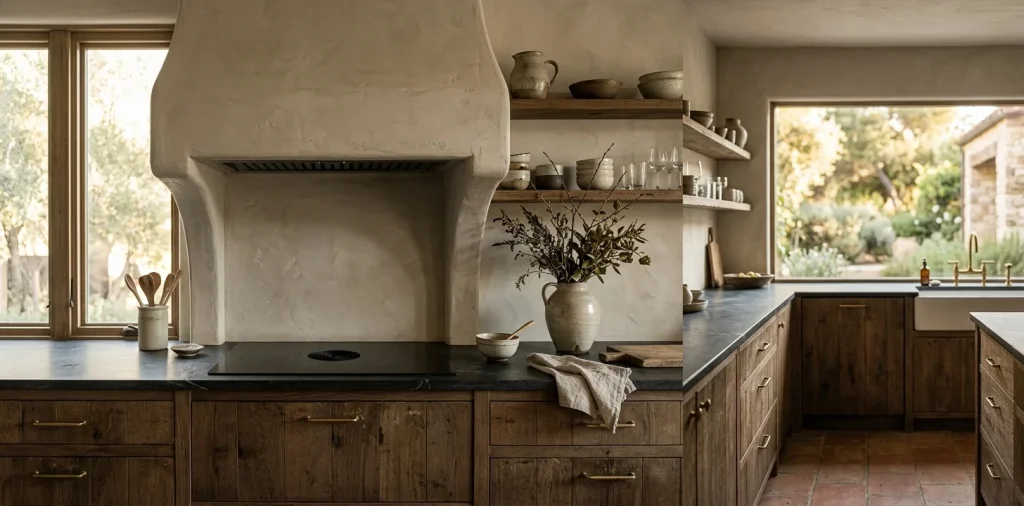
The sweeping bell curve is the undisputed king of organic kitchen design. I installed something similar in my last renovation, and it completely softened the harsh lines of the surrounding cabinetry. It flares out gently at the bottom, creating a smooth transition that feels incredibly natural.
Want to keep it extra grounded? Pair this shape with raw timber shelves and let the plaster texture do all the heavy lifting. Honestly, the subtle shadows it casts during golden hour are just chef’s kiss.

The Tapered Chimney Blend
Ever wondered why some kitchens just look effortlessly built-in?
The tapered chimney style literally merges your range hood right into the ceiling or wall.
You skip the harsh visual breaks entirely.
I highly recommend extending the exact same plaster finish across the adjacent wall to create an ultra-seamless, cave-like warmth. It makes the ceiling feel a mile high, TBH. Speaking of soothing vibes, you might also want to check out some relaxing green kitchen color psychology to pair with this earthy texture.

The Rough Roman Clay Finish
Let’s get real for a second—smooth is boring. If you truly want to embrace the wabi-sabi philosophy, you need to crank up the texture. Roman clay gives you that deeply mottled, slightly cloudy appearance that looks centuries old. You basically trowel it on with aggressive strokes to leave intentional imperfections. When the light hits those ridges, the entire kitchen feels alive. Seriously, who needs expensive artwork when your ventilation system looks this good?

The Integrated Arched Alcove
Why just build a hood when you can build an entire moment? ✨
Tucking your cooking zone into a plastered arched alcove feels incredibly luxurious and grounding. I saw this in a boutique hotel in Mallorca and instantly wanted to rip out my own kitchen to replicate it.
The arch frames the stove perfectly, turning a functional cooking spot into a cozy hearth. Add a tiny integrated niche for your olive oil and salt, and you are officially living the dream.

The Boxy Minimalist Block
Not every organic design needs to be a curvefest. A simple, squared-off block coated in warm greige plaster provides a stunning contrast to natural wood cabinets.
It strikes that perfect balance between modern minimalism and raw earthiness. You get the clean lines of contemporary design, but the tactile finish prevents it from looking like a sterile hospital room. Plus, it is arguably the easiest shape to build if you are attempting a DIY frame.

The Softened Sloped Trapezoid
This geometric beauty angles back toward the wall, but we round off the harsh corners to keep things mellow. The sloped trapezoid shape is fantastic for smaller kitchens because it physically leans away from your head, making the space feel much more open. You get maximum ventilation coverage without feeling like a giant concrete box is screaming at you while you flip pancakes. It is functional, stylish, and flawlessly channels that quiet luxury aesthetic.

Limewash Over Plaster
Want to add an extra layer of depth to your standard plaster?
Applying a limewash glaze over the cured plaster creates a mesmerizing, velvety patina. The brushstrokes from the limewash pool in the tiny plaster divots, highlighting every single handcrafted imperfection.
I love this technique because it gently ages the hood. It instantly transforms a brand-new build into a soulful architectural feature that looks like it has been standing for generations.

The Asymmetrical Freeform
If you want to absolutely nail the “perfectly imperfect” wabi-sabi ethos, ditch symmetry completely. An asymmetrical hood with a gentle organic lean looks beautifully sculptural.
You literally shape the frame so one side slopes slightly differently than the other. It takes a confident eye to pull off, but the result feels like a natural clay formation rather than a manufactured appliance.

The Bullnose Trim Hood
Details matter, my friends.
Adding a thick, rounded bullnose edge along the bottom of your plaster hood gives it substantial visual weight.
It mimics traditional adobe architecture and instantly grounds the space.
You can even run a hidden LED strip just behind this thick lip to cast a warm glow down onto your backsplash. Trust me, ambient lighting totally changes the mood of your evening cooking sessions.

Earthy Terracotta Tinted Plaster
Who says plaster has to be stark white or pale gray? Mixing a warm terracotta pigment directly into your plaster brings massive amounts of energy into the kitchen. This sunset hue pairs beautifully with unlacquered brass hardware and dark, moody soapstone countertops. It feels incredibly Mediterranean while still holding onto that rugged, organic simplicity we love. I am slightly obsessed with this look, FYI. If you love this warm, earthy aesthetic, it pairs beautifully with the tones found in 15 natural oak vanity ideas for a Japandi bathroom.

The Stepped Art Deco Revival
Okay, hear me out—what if we mix organic texture with vintage geometry?
A subtly stepped plaster hood introduces a whisper of Art Deco elegance without losing that earthy wabi-sabi charm. You build gentle, tiered layers into the frame before plastering over them.
The soft plaster smooths out the hard transitions, leaving you with a sophisticated, sculptural masterpiece. It is unexpected, slightly dramatic, and totally fabulous.

The Fluted Plaster Facade
Fluted details are everywhere right now, but executing them in raw plaster takes the trend to a whole new level. Carving gentle vertical ridges into the face of your hood creates a stunning play of light and shadow. 😅
Design details to try:
- Deep, wide scallops for a softer look
- Tight, narrow ridges for modern texture
- Faded fluting that smooths out near the top
It requires a very skilled hand to trowel those grooves, but the custom architectural payoff is absolutely worth the headache.

The Oversized Canopy
Sometimes, bigger really is better. An oversized plaster canopy that extends past your stovetop dominates the room in the best way possible. It anchors the kitchen and provides a massive canvas for that beautiful, hand-troweled texture. When you pair a massive hood with minimalist lower cabinets and no upper shelving, the hood becomes the undeniable star of the show. It feels incredibly grand yet completely unpretentious at the same time.

The Wood-Banded Plaster Hood
Need a way to tie your hood into your flooring or island?
Wrapping a band of reclaimed wood around the base of your plaster hood bridges the gap between cold stone and warm timber.
It acts as a visual anchor.
I love using deeply grained, unstained oak for this trim. It emphasizes the natural imperfections of the wood, which directly echoes the handmade vibe of the plaster above it.

The Floating Plaster Cylinder
Let’s end with something totally unexpected for those of you rocking an island range. 🔥 A cylindrical plaster hood dropping straight down from the ceiling looks like a modern stalactite.
It is radically different from traditional wall-mounted designs. By coating a sleek, modern tube in a highly textured, earthy plaster finish, you completely subvert expectations. It is the ultimate fusion of contemporary engineering and ancient, tactile materials.

Conclusion
Getting that perfectly imperfect wabi-sabi kitchen look doesn’t have to be complicated, and upgrading your range hood is honestly the strongest move you can make. It immediately softens the room and adds so much handmade character. So, which of these textured beauties are you grabbing first for your next renovation? Let me know in the comments!
Related posts
See All15 Vintage Circus Inspired Details for Playful Kids Bedroom Decor
Bring the magic of the big top home! Discover 15 playful, vintage circus-inspired decor details that will transform your kid's …
Read moreThe Complete Guide to Styling a Dining Room Credenza for Everyday Elegance
Give your dining room credenza the ultimate glow-up. Discover easy, elegant styling tips that balance everyday function with show-stopping design.
Read more15 Dried Citrus and Cinnamon Garlands for a Naturally Cozy Kitchen
Forget mass-produced decorations. Transform your kitchen into a naturally cozy, aromatic sanctuary with these 15 beautiful dried citrus and cinnamon …
Read moreThe Dog-Friendly Camper: Designing a Van Interior for Your Pets
Transform your camper van into the ultimate dog-friendly adventure mobile! Discover clever interior design hacks, durable materials, and cozy setups …
Read more