












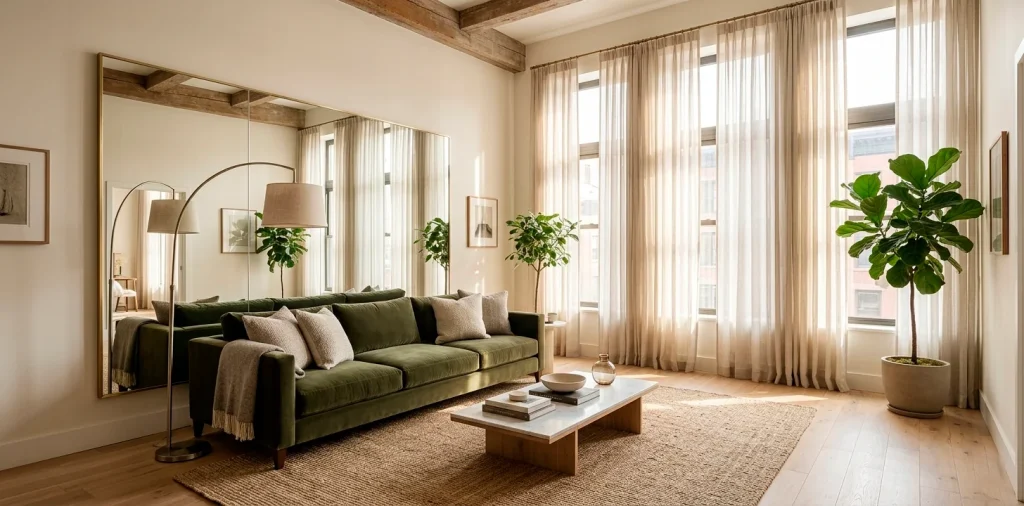

Ever felt like your living room was auditioning for a dollhouse? We’ve all been there, cramming tiny love seats and miniature coffee tables into a studio apartment thinking it saves space. Spoiler alert: it doesn’t! I spent years living in a shoebox-sized flat, and I promise you that the secret isn’t smaller furniture—it’s smarter proportions. Ready to stop bumping into your tiny chairs? Let’s fix your floor plan ✨.
The Big Furniture Paradox
I used to think that a small room needed small things. I was wrong. When you fill a room with ten tiny pieces of furniture, you just create a cluttered mess that looks like a storage unit. Instead, I suggest you try the ‘Hero Piece’ strategy. One large, well-scaled sofa often makes a room feel more expansive than a cramped collection of spindly chairs.
Does a giant sectional in a studio sound crazy? Maybe. But a single substantial piece anchors the room and eliminates the visual noise of too many furniture legs. You want your eye to rest on a clear focal point, not hop around like it’s on caffeine. Trust me, your space will feel much more intentional and high-end. If you want more tips on elevating your vibe, check out how to create a fake high-end look in a small living room.


Drawing the Eye Upward
Vertical real estate is your best friend when square footage is tight. I always tell my friends to ignore the floor and look at the walls. You can literally trick your brain into thinking the ceiling is a foot higher just by hanging your curtain rods near the crown molding. Why stop at the window frame when you can have floor-to-ceiling drama? Tall shelving units and floor lamps that point upward also draw the gaze to the one place you actually have space—the air! IMO, this is the easiest way to make a room feel breathable without buying a new house 🏠.


The Great Rug Mistake
Let’s talk about ‘postage stamp’ rugs. You know the ones—they sit sadly in the middle of the room under a coffee table, touching nothing else. They are the enemy of proportion! A tiny rug makes your floor look chopped up and small.
You need a rug that is large enough for all your furniture legs to sit on, or at least the front legs. This creates a cohesive ‘zone’ that stretches the visual boundaries of the seating area.
Essential rug design elements:
- Large scale patterns that don’t repeat too quickly
- Low pile textures to avoid a heavy look
- Light, neutral colors to reflect floor-level light
Ever noticed how a room suddenly looks twice as big the moment you swap a 5×7 for an 8×10? It’s not magic; it’s just basic geometry, my friend 😉.


Mirrors and the Illusion of Depth
If you aren’t using mirrors, are you even trying to save space? I’m kidding, but seriously, a large-scale mirror is the ultimate cheat code. A massive floor-leaning mirror doesn’t just look cool; it literally doubles the visual depth of the room. It catches light and flings it into the dark corners where shadows usually hide. Don’t be afraid to go big here—a tiny mirror on a large wall looks like an afterthought. Go for something bold that makes a statement. It’s basically like adding a window where there isn’t one. Simple, right?


The Power of Negative Space
You don’t have to fill every inch of your home.
I see people panic-buying corner tables just because a corner is empty.
Stop!
Negative space—that’s just fancy talk for ’empty space’—gives the eye a place to rest. When every wall is covered, the room feels like it’s closing in on you. Leaving a few areas ‘naked’ actually emphasizes the pieces you do have. FYI, less really is more when you’re working with a tight layout. It makes the room feel curated rather than just ‘full’. Keep some breathing room around your furniture and watch the vibe transform from chaotic to calm ✌️.


Multi-Functional Furniture with Style
When space is a luxury, your furniture needs to have a side hustle. I love pieces that offer hidden storage or change their shape based on your needs. However, don’t sacrifice scale for function! A tiny folding desk that looks like it belongs in an elementary school won’t do you any favors. Look for substantial pieces that happen to be clever—like a sturdy coffee table that lifts up or an ottoman that hides your massive blanket collection.
Investing in quality multi-functional items means you need fewer pieces overall, which keeps your floor plan open and inviting. If you’re living the small life, you might enjoy this guide on foldable furniture for small interiors. It’s a game changer for staying organized without losing your aesthetic.


Conclusion
Mastering proportions isn’t about following strict rules; it’s about making your space work for you. By choosing larger anchor pieces, utilizing vertical height, and embracing a little emptiness, you can turn any tiny box into a sophisticated sanctuary. So, which of these tips are you trying first? Let me know in the comments! Don’t forget: your home should feel like you, no matter the square footage. Happy decorating 🛋️!
Related posts
See All15 Vintage Circus Inspired Details for Playful Kids Bedroom Decor
Bring the magic of the big top home! Discover 15 playful, vintage circus-inspired decor details that will transform your kid's …
Read moreThe Complete Guide to Styling a Dining Room Credenza for Everyday Elegance
Give your dining room credenza the ultimate glow-up. Discover easy, elegant styling tips that balance everyday function with show-stopping design.
Read more15 Dried Citrus and Cinnamon Garlands for a Naturally Cozy Kitchen
Forget mass-produced decorations. Transform your kitchen into a naturally cozy, aromatic sanctuary with these 15 beautiful dried citrus and cinnamon …
Read moreThe Dog-Friendly Camper: Designing a Van Interior for Your Pets
Transform your camper van into the ultimate dog-friendly adventure mobile! Discover clever interior design hacks, durable materials, and cozy setups …
Read more