












Let’s strip away the clinical, glossy perfection of modern bathrooms. I want to show you how wabi-sabi design transforms a sterile washroom into a grounded, earthy retreat. By embracing raw textures, natural stone, and glorious imperfections, we can create a space that actually breathes. Ready to build a sanctuary that honors the beauty of the undone?
The Magic of Rough-Hewn Stone Sinks
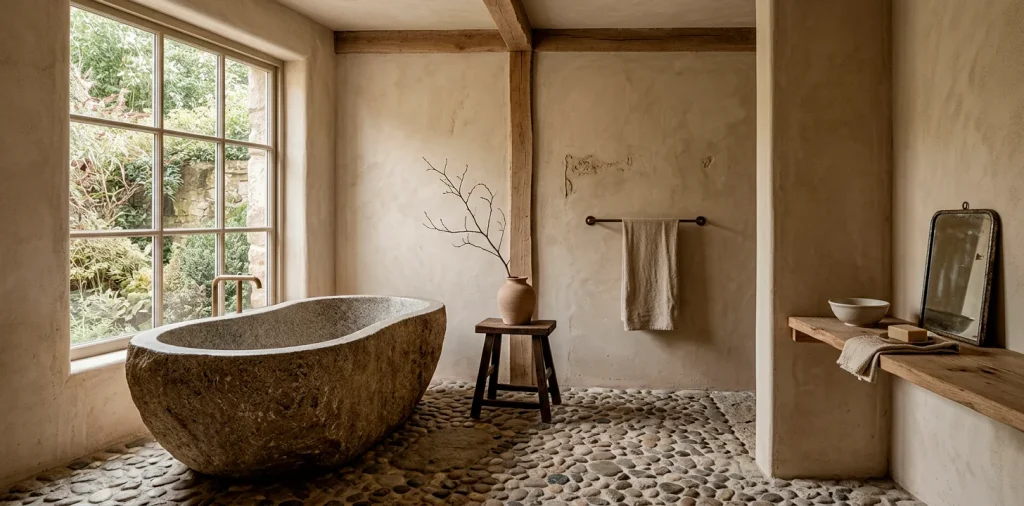
You absolutely need a rough-hewn stone sink if you want that instant wabi-sabi impact. These chunky, unpolished basins anchor the entire room with their heavy, grounded presence. I installed a river stone vessel in my powder room last year, and it completely shifted the vibe from basic to bespoke. Forget perfectly symmetrical porcelain; you want those natural jagged edges and earthy tones telling a story. It instantly makes washing your face feel like a sacred spa ritual rather than a hurried morning chore. Honestly, why settle for boring when nature does it better?

Plaster Walls for That Perfect Patina
Say goodbye to sterile, high-gloss bathroom paint.
Limewash and tadelakt plaster bring an incredible, cloudy depth to your walls that standard latex simply cannot match. These finishes absorb light beautifully, creating a soft, hazy atmosphere that wraps around you like a warm blanket. You actually feel the texture just by looking at it.
The subtle color variations make every wall look like a masterpiece of time. Essential plaster materials:
- Authentic Moroccan tadelakt mix
- Wide masonry brushes
- Natural earth pigments
It takes some effort, but IMO, the resulting organic warmth is entirely worth it.

Embracing Asymmetrical Mirrors
Who decided that mirrors must be perfectly round or stubbornly rectangular? An asymmetrical, organic-shaped mirror instantly shatters that rigid geometry and brings a fluid, natural energy into the bathroom. I swapped my builder-grade rectangle for an amoeba-shaped mirror, and the space immediately felt less like a doctor’s office and more like a coastal cave.
Look for mirrors with raw brass frames or completely frameless designs featuring a soft, beveled edge. They reflect light in unexpected ways and celebrate the beauty of irregularity.

Reclaimed Wood Vanities That Tell a Story
A bathroom vanity takes up massive visual real estate.
Why waste that space on cheap particle board?
Using reclaimed wood introduces rich, weathered history into your daily routine. Those deep gouges, knot holes, and sun-faded grain patterns represent survival and resilience. You get a piece of furniture that actually breathes life into the room.
Pair that gnarly wood with a sleek matte black faucet for an incredible contrast between rugged and refined. Ever noticed how raw timber just warms up cold tiles? It really grounds the space beautifully. If you want to continue this calming vibe into other rooms, check out how to design a harmonious zen guest room.

Pebbled Flooring for a Grounding Touch
Walking barefoot on a natural pebble floor offers a daily, mini reflexology session. It grounds you the moment you step out of the shower. Instead of slick, dangerous ceramic squares, you get a tactile, slip-resistant surface that looks like a tranquil riverbed.
You can install these stones across the entire floor or just keep them inside the shower enclosure for a subtle accent. Grout them with an earthy sand color to seamlessly blend the stones together. The whole setup screams ‘hidden mountain hot spring’ rather than ‘suburban tract home.’

Unglazed Ceramics and Pottery Accents
Forget the shiny glass jars and plastic soap dispensers. You need unglazed, beautifully flawed ceramics to hold your bathroom essentials. Think about incorporating handmade pottery bowls for your soaps and tall, textured clay vases for some dried eucalyptus branches. These porous, matte surfaces absorb the humidity and age gracefully over time. I love hunting for unique, lopsided vessels at local thrift stores because those tiny imperfections make them genuinely perfect. They add an essential layer of human touch to a room traditionally dominated by hard, cold fixtures.

Exposed Plumbing as a Design Feature
Hiding all your pipes behind drywall feels like a missed opportunity. Exposed plumbing, especially in raw brass or aged copper, adds a phenomenal industrial edge that perfectly complements rough stone and plaster.
It strips the room down to its bare, functional bones.
As that metal naturally oxidizes and develops a greenish patina, it visually tracks the passage of time—the very essence of wabi-sabi. Just imagine a beautifully tarnished copper shower pipe cascading water over a raw stone floor. It is simply cinematic. 🚿

Muted, Earth-Toned Linens
Crisp, hotel-white towels definitely have their place, but they look painfully jarring in a wabi-sabi space. Swap them out for soft, muted earth tones like mossy green, faded charcoal, and dusty clay. You want organic cotton or deeply textured waffle-weave linen that looks better wrinkled than perfectly folded.
Hang them casually from wooden pegs instead of folding them tightly on a metal rack. This relaxed approach to textiles instantly lowers your blood pressure when you walk in. And if you’re upgrading your space, little details matter—like making small swaps to rental apartment cabinet hardware to match your new aesthetic.

Matte Finishes Over High Gloss
Glossy surfaces scream for attention.
They demand constant wiping, polishing, and stressing over tiny water spots. Wabi-sabi design politely declines that kind of anxiety.
By opting for matte finishes on your floor tiles, countertops, and fixtures, you invite a softer, more forgiving aesthetic into the room. Matte surfaces diffuse the harsh bathroom lighting, eliminating aggressive glares.
Plus, they hide minor smudges and watermarks brilliantly. It makes the space look naturally lived-in rather than obsessively sanitized. Why work so hard for a shine you don’t even need?

Bringing Nature Indoors with Branches
Forget the extravagant, colorful floral bouquets; wabi-sabi thrives on the subtle beauty of decay and dormancy. Plop a simple, sculptural bare branch or a few dried stems into an earthy clay vase. These sparse botanical elements cast dramatic, shifting shadows against your textured plaster walls. I usually forage fallen branches from my yard, which costs absolutely nothing and looks incredibly chic. It creates a stark, poetic contrast against the heavy stone elements. It’s a quiet reminder of nature’s endless cycles, right next to your toothbrush.

Conclusion
Creating a wabi-sabi bathroom involves letting go of rigid perfection and embracing the organic beauty of raw materials. When you mix heavy natural stone, warm wood, and textured plaster, you craft a daily retreat that feels deeply human. These natural elements age alongside you, telling a quiet, beautiful story. Which of these raw textures are you adding first? Let me know in the comments!
Related posts
See All15 Vintage Circus Inspired Details for Playful Kids Bedroom Decor
Bring the magic of the big top home! Discover 15 playful, vintage circus-inspired decor details that will transform your kid's …
Read moreThe Complete Guide to Styling a Dining Room Credenza for Everyday Elegance
Give your dining room credenza the ultimate glow-up. Discover easy, elegant styling tips that balance everyday function with show-stopping design.
Read more15 Dried Citrus and Cinnamon Garlands for a Naturally Cozy Kitchen
Forget mass-produced decorations. Transform your kitchen into a naturally cozy, aromatic sanctuary with these 15 beautiful dried citrus and cinnamon …
Read moreThe Dog-Friendly Camper: Designing a Van Interior for Your Pets
Transform your camper van into the ultimate dog-friendly adventure mobile! Discover clever interior design hacks, durable materials, and cozy setups …
Read more