 Skip to content












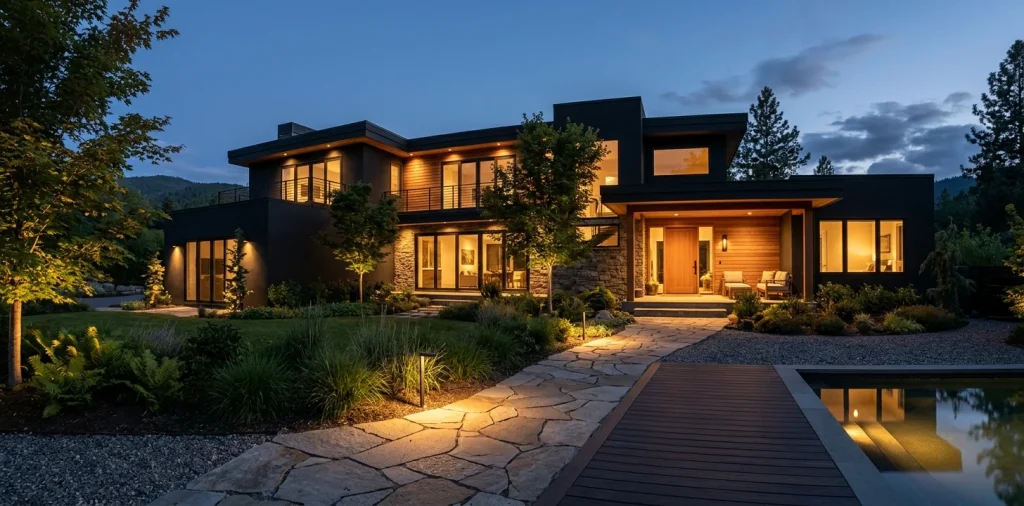

Painting your house black is a stunning move, but when the sun goes down, it can easily turn into a giant, spooky void. I love the moody aesthetic just as much as you do, but we definitely need to talk about proper illumination. Using the right warm lighting completely shifts the vibe from haunted mansion to luxurious modern retreat. Ready to make your home the absolute coziest on the block? Let’s soften those shadows.
Why Dark Paint Demands a Warm Glow
Have you ever noticed how a matte black facade just swallows light whole? It acts like a visual black hole if you leave it completely in the dark. Warm lighting is the absolute secret weapon for dark exteriors. It acts as a counterbalance, pulling out the rich undertones of the paint and creating an inviting warmth that cool white bulbs completely destroy. I made the mistake of using daylight bulbs on my dark gray shed once, and honestly, it looked like a crime scene investigation IMO. 😅 You definitely want that soft, welcoming amber hue to make your architectural details pop without feeling abrasive.

Decoding the Kelvin Scale
Let’s get a tiny bit technical, but I promise I’ll keep it painless. Color temperature is measured in Kelvins (K), and it literally dictates the entire mood of your home.
For a black exterior, you absolutely want to stay strictly in the 2700K to 3000K range. Anything higher than 3500K starts looking icy and clinical, completely ruining the cozy vibe you worked so hard to achieve. Think of 2700K as that perfect golden hour glow.
A useful little gift for your home
🎁 Free Plant Finder Tool
Filter 250+ houseplants by style, size, and care level to find your perfect green companion in seconds.
We’ll email you the link. Plus, you’ll join our newsletter for fresh home inspiration.
Lighting temperatures:
- 2700K: Extra warm, resembling a classic campfire glow.
- 3000K: Crisp but warm, offering clear visibility without harshness.
- 4000K+: Abort mission! Way too blue for a dark facade.

The Drama of Uplighting and Downlighting
You can drastically change the height and perceived texture of your home just by choosing where to point your beams. Uplighting placed at the base of your walls creates majestic, towering shadows that look incredibly high-end against dark paint.
Conversely, downlighting mimics natural moonlight. Tucking fixtures under your eaves and pointing them downward washes the siding in a soft, gentle glow. I highly recommend mixing both techniques to build a layered, multi-dimensional look that stops neighbors right in their tracks.

Highlighting Textures and Architectural Features
Does your black home feature cedar columns or a gorgeous stone veneer?
Those details desperately need their own spotlight. Black paint visually flattens out during the night, hiding all that expensive stonework you paid for.
By angling a warm 3000K spotlight directly onto textured surfaces, you immediately create depth. The shadows play across the grooves of the stone and highlight the rich grain of natural wood.
It honestly feels like magic when you flip the switch. Textural contrast is everything when you work with dark, moody color palettes.

Safely Navigating Pathways and Steps
Nobody wants their guests tripping over a rogue garden gnome in the pitch black. Proper pathway lighting is obviously crucial for safety, but it also serves as a beautiful visual runway leading up to your front door.
When illuminating walkways near a black exterior, choose low-lumen, warm-toned path lights. You want a subtle, guiding glow rather than an airport landing strip. Keeping the light low to the ground prevents it from competing with your house’s main architectural lighting. Speaking of adding a magical glow, you should definitely check out the top 5 solar path lights for a magical garden glow.

The Magic of Statement Sconces
Sconces are essentially the jewelry of your home’s exterior. Flanking your front door or garage with oversized, warm-glowing sconces breaks up massive walls of black paint beautifully. I suggest looking for fixtures with seeded glass or amber lenses to naturally diffuse the light and soften any harsh glare. Brass or warm copper housings look exceptionally striking against black siding, adding a touch of metallic elegance even during the daytime. Don’t be afraid to size up either; tiny lights just get totally lost on dark facades!

Softening the Patio with String Lights
Ever wondered why every trendy outdoor cafe relies heavily on string lights?
It is because they instantly create an unparalleled ambiance. Draping commercial-grade bistro lights across your back patio transforms a dark, imposing house wall into a cozy, intimate gathering spot. They cast a soft, diffused glow that prevents the surrounding black architecture from feeling heavy or oppressive.
Essential string lighting features:
- Shatterproof Edison-style bulbs for durability.
- A strict 2700K temperature rating for that vintage warmth.
- Plug-in dimmers to easily control the mood late at night.

Landscaping Illumination Tricks
Your yard plays a massive role in how your exterior is perceived at night.
If you have beautiful Japanese maples or structural agave plants sitting in front of your black house, light them up!
A warm, narrow beam aimed up into the canopy of a tree creates a stunning silhouette against the dark siding behind it. The vibrant greens and reds of your foliage will literally pop off the black background.
Don’t ignore the greenery. Ground-level well lights hidden in the mulch are perfect for this exact task, keeping the light source completely invisible while delivering maximum impact.

Hardwired vs. Solar Solutions
I frequently get asked whether solar lights actually cut it for architectural lighting. While solar technology has improved tremendously, hardwired low-voltage lighting remains the absolute gold standard for consistency.
Solar fixtures are fantastic for temporary setups or distant garden beds where running wire is a nightmare. However, for washing a black exterior in reliable, punchy warm light every single night regardless of the weather, invest in a good hardwired transformer system. It saves you from dealing with dim, fading lights during the cloudy winter months. If you are struggling with shadowy corners in other areas, you might also find inspiration in learning how to use warm tones to make an attic feel intimate.

Crucial Lighting Mistakes to Avoid
We need to cover a few massive pitfalls before you start ordering fixtures. First, resist the urge to over-light. Your house is not a sports stadium; embrace the shadows! Leaving negative space between light beams actually enhances the drama of a dark exterior. Second, never mix color temperatures. Sticking to a uniform 2700K or 3000K across every single bulb—from the porch sconce to the garden path—creates a cohesive, designer-level aesthetic. Just keep it simple, warm, and intentional, and your black house will look absolutely breathtaking.

A useful little gift for your home
🎁 Free Plant Finder Tool
Filter 250+ houseplants by style, size, and care level to find your perfect green companion in seconds.
We’ll email you the link. Plus, you’ll join our newsletter for fresh home inspiration.
Conclusion
Mastering the art of softening shadows on a black exterior really just comes down to intention and warmth. By utilizing the right Kelvin temperatures, layering your fixtures, and embracing textural contrasts, you transform a flat, dark facade into an inviting masterpiece. Your house deserves to shine beautifully after sunset without losing its moody charm. So, which lighting technique are you grabbing first to upgrade your space? Let me know in the comments!
Related posts
See AllA Guide to Upgrading Your Boring Builder-Grade Backyard Shed
Ready to ditch that backyard eyesore? Discover practical tips, clever decor ideas, and easy DIY projects to transform your standard …
Read more15 Lush Hostas and Ferns for a Deeply Shaded Backyard
Turn that gloomy, shaded backyard into a lush green oasis. Discover 15 gorgeous hostas and ferns that actually thrive in …
Read moreHow to Create a Butterfly-Friendly Garden Right Off Your Patio
Turn your patio into a butterfly haven! This guide breaks down the best nectar plants, layout tricks, and sun-loving flowers …
Read moreBoard-Formed Concrete Retaining Walls: The Secret to a High-End Modern Sloped Yard
Tired of fighting gravity in a sloped yard? Discover how board-formed concrete retaining walls deliver incredible structural strength and unmatched …
Read more