











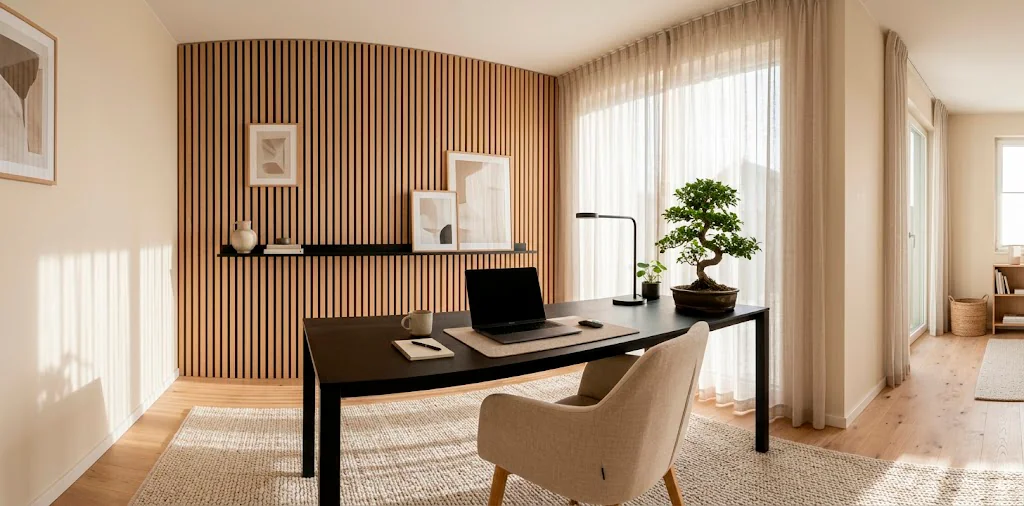

Working from home easily blurs the line between a serene sanctuary and a chaotic paper-cluttered prison. You desperately need a workspace that actually helps you focus. Enter the Japandi slatted wood wall. I installed one last year, and it completely shifted my mindset. Here are ten ways you can use this design trick to build the ultimate zen home office.
The Classic Zoom Backdrop
We all know the panic of turning on a webcam only to reveal a pile of unfolded laundry behind us. A floor-to-ceiling slatted wood accent wall instantly fixes that problem. Installing sleek light ash panels directly behind your desk frames your workspace with undeniable elegance. The vertical lines draw the eye upward, making your ceilings look higher while hiding any scuff marks. Plus, the warm wood tones bring that essential Scandinavian coziness straight to your video calls. Your coworkers will definitely think you hired an interior designer.

The Half-Wall Wrap
Going full floor-to-ceiling feels a little overwhelming for smaller rooms sometimes. That is exactly when you opt for the half-wall wrap.
IMO, I love this approach for tiny spare bedrooms turned offices. You install the slats just up to chair-rail height around the perimeter. It anchors the space beautifully without shrinking the visual volume.
You can cap the slats with a minimal floating shelf. Paint the upper half of the wall a soft, muted sage green or warm beige. The resulting contrast perfectly balances Japanese minimalism with functional warmth.

Acoustic Felt Backing for Ultimate Focus
Does your home office suffer from an annoying echo every time you type? You need acoustic slatted panels immediately. These genius panels feature a thick, dark felt backing right behind the timber strips.
The felt absorbs sound waves, turning a cavernous echo chamber into a quiet, focus-friendly pod. It dramatically improves audio quality for your meetings, all while looking incredibly chic. I always recommend walnut finishes against black felt for a slightly moodier aesthetic. If you want to lean into that darker vibe even more, you might want to explore how to combine these dark woods with metallic accents. Check out this charcoal and copper home office inspiration.

The Slatted Room Divider
Not everyone has a dedicated spare room to claim as an office. Sometimes your workspace shares a footprint with the living room.
A freestanding slatted wood divider solves this layout nightmare effortlessly.
Instead of throwing up a solid drywall partition that blocks all the natural light, build a slatted screen. The gaps between the wood let sunshine filter through, keeping the space bright and airy. It creates a necessary mental boundary between work mode and Netflix mode.
Make sure you secure the divider properly to both the floor and ceiling. Nobody wants a beautiful architectural feature to crash down during a stressful Friday afternoon deadline.

Integrated Floating Shelves
Why settle for a flat wall when you can build a dynamic storage system? You can actually integrate sleek floating shelves directly into the gaps of your slatted wall. This setup transforms a basic decorative feature into a powerhouse of Japandi organization.
Japandi styling elements:
- Minimalist ceramic vases
- Trailing artificial pothos plants
- Neutral architecture books
Keeping the shelves the exact same wood tone as the slats creates a seamless look. It honestly looks like custom millwork without the painful price tag.

The Curved Corner Transition
Sharp, aggressive corners sometimes ruin the soft, organic flow essential to Japandi design. Thankfully, tambour wood panels exist. These flexible slatted sheets wrap beautifully around right angles, completely softening the architecture of your office.
I absolutely adore wrapping a structural column or an awkward corner near the desk with these flexible slats. The continuous curve leads the eye gently across the room. It feels incredibly calming, turning a harsh architectural flaw into a standout, spa-like focal point right next to your computer.

Integrated LED Strip Lighting
Lighting makes or breaks an interior, and home offices desperately need layered illumination.
Embedding thin LED strip lights between the wood slats creates an absolutely breathtaking visual effect. The hidden lights cast a warm, ambient glow across the wall, highlighting the rich texture of the wood grain.
Always choose warm white LEDs to maintain that cozy atmosphere. Harsh blue lights will instantly make your room feel like a sterile spaceship, entirely ruining the natural vibe. 😬 You get plenty of task lighting for your desk, while the accent wall handles the mood. For more tips on achieving the perfect atmosphere, check out this guide on how to layer ambient lighting for a winter glow.

Slatted Ceiling Canopy
Who says accent walls have to stay on the wall? Taking the wood slats up and across the ceiling directly over your desk creates an incredible cocooning effect. This architectural canopy visually defines your work zone without taking up a single inch of floor space. It draws the eye upward, instantly making the room feel customized and expensive. I highly recommend running the slats parallel to your sightline when seated. It elongates the room and literally points your focus forward. You will feel perfectly sheltered and ready to tackle your inbox.

The Minimalist Pinboard Nook
Japandi aesthetics prioritize hiding the clutter, but you still need a place for quick physical notes.
Try installing your slatted panels with a deliberate, rectangular cutout right above the desk.
Fill this empty void with a high-quality linen or cork pinboard.
Framing the soft pinboard with rigid wooden slats creates a stunning tactile contrast. You keep all your chaotic sticky notes strictly confined to this specific zone. The surrounding wood keeps the overall aesthetic aggressively tidy, saving your sanity on busy days. FYI, linen looks way better than basic cork here.

Slatted Sliding Closet Doors
Many of us cram our desks into a spare bedroom that still has generic, ugly closet doors. Ripping those out and replacing them with slatted sliding panels changes the entire dynamic of the room.
The vertical wood strips completely camouflage the closet, turning a boring utility feature into a massive textured art piece. Using a sliding track mechanism saves precious square footage, so your desk chair never bangs into an open door. It hides your printer, filing cabinets, and extra supplies behind a wall of beautiful Scandinavian precision.

Conclusion
A carefully planned slatted wood wall does so much more than just look pretty. It actively shapes the acoustics, the lighting, and the overall focus-levels of your Japandi home office. You absolutely deserve a workspace that feels like a peaceful retreat rather than a stressful cubicle. Which of these designs are you grabbing first? Let me know in the comments!
Related posts
See All15 Vintage Circus Inspired Details for Playful Kids Bedroom Decor
Bring the magic of the big top home! Discover 15 playful, vintage circus-inspired decor details that will transform your kid's …
Read moreThe Complete Guide to Styling a Dining Room Credenza for Everyday Elegance
Give your dining room credenza the ultimate glow-up. Discover easy, elegant styling tips that balance everyday function with show-stopping design.
Read more15 Dried Citrus and Cinnamon Garlands for a Naturally Cozy Kitchen
Forget mass-produced decorations. Transform your kitchen into a naturally cozy, aromatic sanctuary with these 15 beautiful dried citrus and cinnamon …
Read moreThe Dog-Friendly Camper: Designing a Van Interior for Your Pets
Transform your camper van into the ultimate dog-friendly adventure mobile! Discover clever interior design hacks, durable materials, and cozy setups …
Read more