












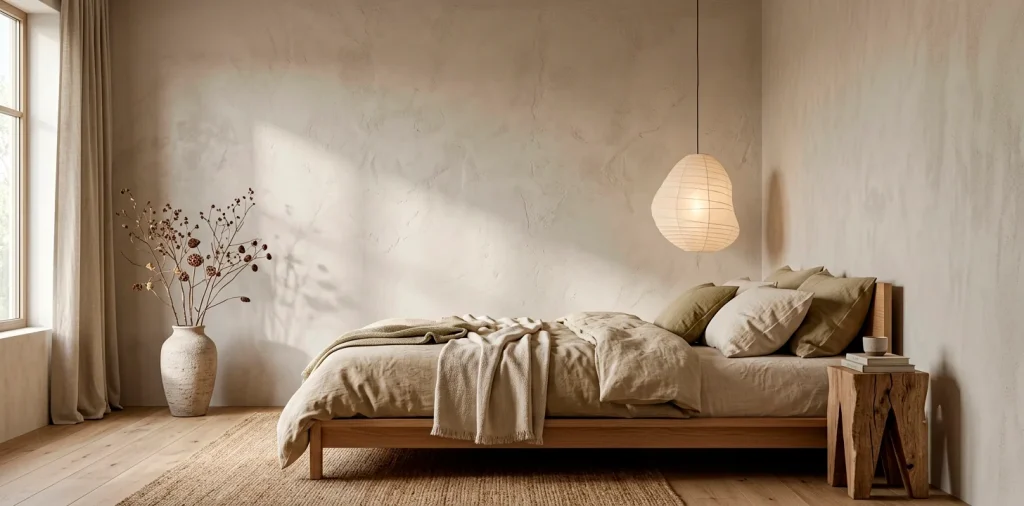

Forget the endless obsession with pristine, hotel-style perfection. The wabi-sabi philosophy flips the script entirely, begging us to find immense beauty in the flawed, the weathered, and the authentically lived-in. I finally stopped ironing my linen sheets last year, and honestly? It was incredibly liberating. Ready to let your Japandi bedroom actually breathe?
The Core Philosophy of Wabi-Sabi
What exactly are we dealing with here? Wabi-sabi acts as an ancient Japanese philosophy centered completely around accepting transience and imperfection. It actively teaches us that nothing lasts, nothing is finished, and nothing is ever truly perfect.
Translating this directly to design means celebrating the irregular. Instead of stressing over a tiny scratch on your bedside table, you honor it as a mark of personal history. It grounds the space immensely, giving your sanctuary a genuine soul rather than just leaving you with a shiny, stressful facade.

Why Japandi Desperately Needs This Touch
Japandi style successfully merges Scandinavian coziness with Japanese minimalism, but let’s be brutally honest—it sometimes leans a little too clinical. Adding wabi-sabi elements actively prevents your bedroom from looking like a futuristic waiting room. By introducing raw edges and uneven textures, you inject vital warmth directly into the sleek Scandi lines. You secure the absolute best of both worlds: zero visual clutter, but immense, lived-in character. Ever wondered why some minimal rooms feel totally icy? They critically lack this exact imperfect touch.

Grounding Earthy Color Palettes
Step away from the blindingly stark white paint immediately.
Wabi-sabi thrives exclusively on muted, nature-inspired hues that instantly soothe the eye. Think deeply about the colors of dried leaves, wet river stones, and gently faded terracotta. These earthy shades absorb light beautifully rather than aggressively reflecting it back at you.
I strongly recommend starting your transformation with a base of warm plaster or sandy beige. It softens the entire room instantly, effectively removing any harsh, anxiety-inducing contrasts from your line of sight.
FYI, you can then slowly layer in deeper tones like olive green or charcoal gray through your textiles. This creates a deeply grounded, calming cavernous vibe that absolutely demands a good night’s sleep.

Wrinkled, Highly Textural Bedding
Your bed utterly dominates the room, so it heavily dictates the entire mood. Toss those incredibly stiff cotton blends right now and invest in 100% stonewashed linen. Linen inherently wrinkles the second you look at it, and that is exactly the point. The organic, effortlessly rumpled look screams pure comfort.
Layering acts as your absolute secret weapon here. Mix a lightweight linen duvet with a chunky, heavily textured hand-woven throw blanket. The contrasting textures practically beg you to dive right in after a long day. For extra coziness, you might even consider wrapping up in one of those thick woolen blankets.

Curating Hand-Crafted Accents
Mass-produced decor simply lacks the raw energy we desperately want to cultivate here.
Seek out bespoke ceramics with visible thumbprints. These distinct “flaws” act as beautiful signatures of the human artisan. I picked up a completely lopsided clay mug at a local market recently, and it brings me genuine, unfiltered joy every single morning when I hold it.
Artisan elements:
- Uneven stoneware floor vases
- Hand-carved decorative wooden trays
- Authentic Kintsugi repaired bowls

Embracing Asymmetrical Layouts
Who officially decided every single bedroom rigidly needs perfectly matching nightstands? Break free from strict symmetry right now to make the space feel genuinely organic. Try casually placing a low, sturdy wooden stool on one side of the bed and a sleek, tall minimalist floor lamp on the other. This intentional visual imbalance draws the eye naturally around the room. It makes the environment feel lovingly collected over years rather than hastily purchased from a generic catalog in one sweeping, stressful swipe. 😅 Embrace the beautifully off-kilter energy!

Playing with Natural Light and Shadow
Lighting completely transforms exactly how we perceive physical texture.
Japandi design traditionally maximizes natural sunlight, but wabi-sabi politely asks us to appreciate the deep, shifting shadows just as much.
Use sheer, unbleached linen curtains to gently filter the incoming harsh sunlight. This active choice casts incredibly moody, beautifully dancing shadows right across your textured walls as the afternoon progresses.
When the sun finally sets, strictly rely on warm, low-wattage bulbs housed inside simple paper lanterns or woven rattan shades. Avoid flipping on that harsh, blinding overhead lighting at all costs—it ruthlessly destroys the entire carefully crafted atmosphere instantly.

Incorporating Raw Wood Materials
Wood undeniably serves as the ultimate wabi-sabi material simply because it ages so incredibly gracefully over time. Ditch the highly glossy, artificial varnishes immediately and opt for raw, matte finishes that proudly highlight the sweeping grain, the dark burls, and the natural splits.
A chunky live-edge headboard or a beautifully weathered reclaimed wood bench at the foot of the bed anchors the room perfectly. These raw materials physically connect your indoor sanctuary directly to the wonderfully chaotic beauty of the outside world. It just feels incredibly right, IMO.

Decluttering Without Creating Sterility
Minimalism clearly lies at the beating heart of Japandi design, but we absolutely must tread carefully here.
You desperately want a clean space that actively promotes a clear mind, not a completely sterile, terrifying operating room. Keep only what serves a genuine practical purpose or brings deep, undeniable aesthetic joy. Always leave some empty negative space directly on your surfaces to let the remaining prized objects breathe properly.
Store away the visually loud items—like brightly colored book spines or endless tangled charging cables—in simple woven baskets or hidden drawers. The resulting quiet calm feels absolutely profound.

Adding Subtle Living Elements
Nature constantly changes and shifts, making it the absolute perfect representation of wabi-sabi ideology. Bring a touch of the wild outdoors inside, but strictly skip the perfectly pruned, symmetrical floral bouquets. Instead, display a single, beautifully arching bare branch in a tall floor vase, or casually arrange some wild dried grasses. These subtle, slowly fading botanical touches quietly remind us of the gentle passage of time. They cleverly require absolutely zero maintenance while adding immense sculptural interest to a quiet corner. For a creative weekend project, you could even try crafting a modern dried floral hoop.

Conclusion
Mastering the wabi-sabi Japandi bedroom isn’t about nervously following strict design rules; it’s about profoundly shifting your entire perspective. You finally get to exhale fully and let your personal space just gracefully exist. Embrace the fabric wrinkles, deeply love the asymmetric lines, and watch your room naturally transform into the ultimate grounding sanctuary you deserve. Which imperfect element are you eagerly adding first? Let me know in the comments!
Related posts
See All15 Vintage Circus Inspired Details for Playful Kids Bedroom Decor
Bring the magic of the big top home! Discover 15 playful, vintage circus-inspired decor details that will transform your kid's …
Read moreThe Complete Guide to Styling a Dining Room Credenza for Everyday Elegance
Give your dining room credenza the ultimate glow-up. Discover easy, elegant styling tips that balance everyday function with show-stopping design.
Read more15 Dried Citrus and Cinnamon Garlands for a Naturally Cozy Kitchen
Forget mass-produced decorations. Transform your kitchen into a naturally cozy, aromatic sanctuary with these 15 beautiful dried citrus and cinnamon …
Read moreThe Dog-Friendly Camper: Designing a Van Interior for Your Pets
Transform your camper van into the ultimate dog-friendly adventure mobile! Discover clever interior design hacks, durable materials, and cozy setups …
Read more