












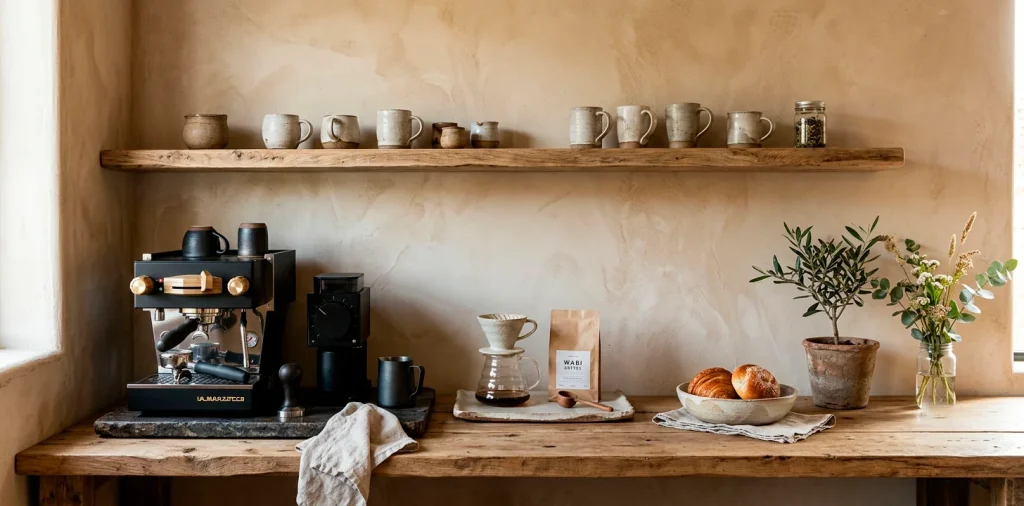

Your morning caffeine ritual deserves better than a cluttered countertop next to last night’s mail. Enter the wabi-sabi coffee bar—a space celebrating imperfection, raw textures, and mindful moments. I recently overhauled my own brewing corner, and honestly? It changed my mornings entirely. Let me show you exactly how to curate this calming aesthetic.
Embrace the Beauty of Raw Materials
Start building your foundation from the ground up. Wabi-sabi thrives on elements pulled straight from nature. Forget high-gloss finishes or stark white laminates that look entirely artificial. We want materials that tell a captivating story and age gracefully over the years. Think reclaimed wood, highly porous stone, and beautifully oxidized metals.
Have you ever noticed how a simple slab of raw oak instantly warms up a chilly room? I swapped my standard particleboard shelf for a live-edge walnut piece, and the entire vibe shifted immediately. It deeply grounds the space. If you want a closer look at making this minimalist aesthetic work, check out this ultimate guide to wabi-sabi style in small spaces.

Curating Perfectly Imperfect Ceramics
Mass-produced mugs have absolutely no place here, IMO. The soul of a wabi-sabi coffee bar lies entirely in handmade pottery. You want cups that feel slightly lopsided, featuring uneven glazes and visible finger marks from the artisan’s wheel. Every time I grab my favorite speckled stoneware mug, the slight dent on the handle reminds me a human actually shaped it. It makes a basic Tuesday morning pour-over feel like a sacred, grounded ritual. Do not stress about matching sets—embrace the eclectic mix of earthy browns, muted greens, and soft charcoal tones. ☕

Essential Gear in Matte Finishes
Let’s talk about the actual hardware. Your expensive espresso machine or pour-over kettle shouldn’t look like a shiny silver spaceship landing unexpectedly on your counter.
Swap out glaring chrome for matte black, soft cream, or brushed bronze. These muted tones absorb light rather than reflecting it aggressively, keeping the visual energy beautifully low and calming. I snagged a matte black gooseneck kettle last year, and it totally neutralized the overly “tech” feel of my morning setup.
Need some quick aesthetic upgrade ideas? Gear Swaps:
- Matte black gooseneck kettle
- Brushed brass coffee scoop
- Ceramic manual coffee grinder
It really is that simple to soften the look of your brewing equipment.

The Art of Restraint and Negative Space
Clutter acts as the ultimate enemy of the wabi-sabi philosophy. You do not need five different sugary syrups, three separate milk frothers, and a giant neon tub of protein powder fighting for visual attention. Keep only the items you use daily out on display. Everything else needs to live quietly behind closed doors.
Give your favorite, most beautiful items plenty of room to breathe. A beautifully textured stone tray holding just your manual grinder and a single bag of premium beans looks intentional and serene. Ever wonder why high-end boutique coffee shops feel so intensely relaxing? They completely master negative space. Let your bare counter show through between your objects.

Earthy Canisters and Storage
Ditch the clear acrylic and plastic containers immediately. Just trust me on this.
Store your fresh coffee beans in opaque, beautifully natural materials. Think heavy stoneware crocks, brushed tin cylinders, or dark amber glass jars.
I use a vintage stoneware jar with a chunky cork lid for my favorite roast. It keeps the damaging sunlight out (crucial for maximum freshness, FYI) and adds an incredibly satisfying textural element to the shelf. Plus, the soft thud of the natural cork going back into place feels weirdly rewarding every single time.
If you want to elevate the actual surface these beautiful canisters sit on, you might find some great inspiration in these travertine bar counter ideas.

Soft Textures with Linens
Hard, rigid surfaces desperately need a soft counterbalance. Introduce wrinkled linens to bridge the gap between heavy stone counters and harsh metal appliances. A fringed, unironed linen napkin draped casually under your espresso machine adds instant visual warmth. Avoid synthetic microfiber towels like the plague—stick to organic cotton or flax linen in muted, muddy tones like rust, olive, or oatmeal. The natural wrinkling provides exactly the kind of beautiful, effortless imperfection this specific aesthetic demands.

Integrating Organic Shapes
Nature rarely builds environments using perfect ninety-degree right angles. If your dedicated coffee station feels entirely too rigid or boxy, you absolutely need to disrupt those harsh lines.
Incorporate asymmetrical or perfectly round elements to significantly soften the visual landscape. A misshapen wooden scoop, a circular stone coaster, or a gently curved tray can completely change the dynamic energy of your setup.
Shape Enhancers:
- Irregular driftwood accent pieces
- Round natural travertine coasters
- Pebble-shaped ceramic catchalls
These small, intentional additions instantly bring that fluid, organic outdoor energy inside your home.

Lighting Your Ritual
Please do not brew your 6 AM coffee under the harsh, aggressive glare of overhead fluorescent kitchen lights. It acts as a literal crime against your circadian rhythm. Soft, low-level ambient lighting remains entirely non-negotiable for a moody, serene morning vibe.
A tiny, rechargeable paper or textured ceramic lamp tucked neatly into the back corner of your bar works absolute wonders. I use a small, battery-operated frosted glass lamp that casts a warm, amber glow directly over my grinder. It makes the whole brewing process feel incredibly intimate and deeply comforting before the sun rises.

Bringing in Nature
A wabi-sabi space completely devoid of nature feels profoundly incomplete. But we certainly aren’t talking about lush, symmetrical floral bouquets here. Look for sparse, highly sculptural branches or fragile dried botanicals. A single dried thistle, a twisted bare branch, or a few muted stems of dried eucalyptus in a weathered clay vase adds crucial life without overwhelming your minimalist aesthetic. It subtly reminds us of the inevitable passage of time—a core, fundamental tenet of the Japanese philosophy. Plus, dried branches require absolutely zero maintenance, which is a massive win in my book. 🌿

The Beauty of the Patina
Finally, simply let your coffee bar age gracefully over time. Seriously, stop trying to keep every single item looking brand new. Wabi-sabi fundamentally celebrates the visible wear and tear of daily, loving use.
The slight, stubborn coffee stain on your raw wooden tray, the dark tarnish developing on your brass measuring spoon, the slightly fading finish on your favorite mug—these definitely aren’t flaws. They act as beautiful evidence of a life lived and fantastic coffee enjoyed. Embrace the patina fully. It actively turns a sterile brewing station into a deeply personal, constantly evolving space that actually feels like a real home.

Conclusion
Building a wabi-sabi coffee bar isn’t about buying expensive gear; it’s about shifting your mindset. By embracing raw textures, imperfect ceramics, and intentional restraint, you transform a mundane morning chore into a grounding ritual. So, which piece are you swapping out first to start your journey? Let me know in the comments below!
Related posts
See All15 Vintage Circus Inspired Details for Playful Kids Bedroom Decor
Bring the magic of the big top home! Discover 15 playful, vintage circus-inspired decor details that will transform your kid's …
Read moreThe Complete Guide to Styling a Dining Room Credenza for Everyday Elegance
Give your dining room credenza the ultimate glow-up. Discover easy, elegant styling tips that balance everyday function with show-stopping design.
Read more15 Dried Citrus and Cinnamon Garlands for a Naturally Cozy Kitchen
Forget mass-produced decorations. Transform your kitchen into a naturally cozy, aromatic sanctuary with these 15 beautiful dried citrus and cinnamon …
Read moreThe Dog-Friendly Camper: Designing a Van Interior for Your Pets
Transform your camper van into the ultimate dog-friendly adventure mobile! Discover clever interior design hacks, durable materials, and cozy setups …
Read more