











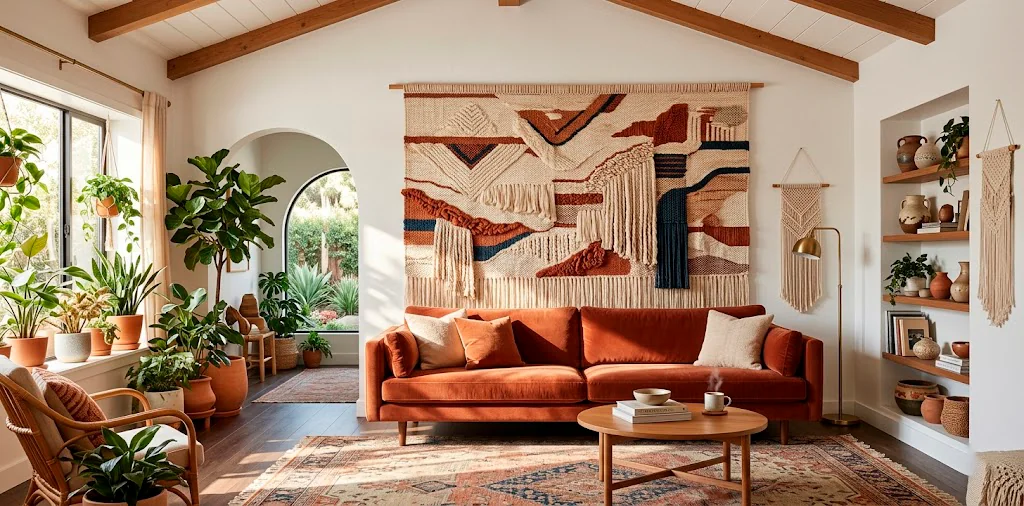

Ever looked at a completely blank, flat wall and thought, “Wow, how aggressively boring”? Yep, I’ve absolutely been there too. Paint serves a great purpose, but it totally lacks that cozy, touchable magic we all secretly crave. Enter the tapestry trend! It’s the ultimate way to inject serious personality into any room. Ready to banish those barren walls forever? Let’s fix this together!
Why Tapestries Are Having a Major Moment
I consider texture the absolute unsung hero of modern interior design.
We spent years chasing ultra-minimalist, stark white boxes, and honestly, we all got a little sick of it. You want your home to actually feel like a home, not a sterile dentist’s waiting room! Adding a gorgeous, tactile textile instantly warms up the coldest space. Woven wall hangings physically absorb sound and create an inviting atmosphere that paint alone simply cannot achieve. Plus, they offer massive visual impact for a fraction of the cost of traditional framed canvas art.

Choosing the Right Fabric for Your Vibe
Not all woven wonders deliver the same aesthetic punch, IMO.
You need to strictly match the material to your existing decor style. Lightweight silks catch the afternoon breeze beautifully, while dense wool pieces command attention and anchor a floating seating arrangement effortlessly.
Vibe check:
- Chunky Macrame: Brings instant earthy, relaxed energy.
- Printed Cotton: Perfect for bold, colorful indie aesthetics.
- Woven Wool: Adds serious mid-century modern sophistication.
I once bought a cheap polyester print, and it aggressively glared under my living room lights. Stick to natural fibers whenever humanly possible for that truly authentic, high-end look.

Sizing It Up Without Overwhelming the Room
Let’s talk scale, because tiny tapestries on massive walls just look incredibly sad. You must treat your textile like a dominant architectural feature. If you hang a piece above your sofa, ensure it spans at least two-thirds of the sofa’s width to maintain proper visual balance. Anything smaller completely throws off the room’s proportions and looks accidental. Conversely, wrapping an entire wall in fabric creates a moody, jewel-box effect that I absolutely adore. Trust your eye, measure twice, and commit fully to the statement you want to make.

Hanging Techniques That Spare Your Drywall
We’ve all experienced that dreaded security deposit panic when staring at a heavy wall hanging and a terrifyingly large nail.
You absolutely have options that skip the spackle and preserve your beautiful walls!
Damage-free methods:
- Command strips and velcro: Hold lightweight cottons perfectly.
- Curtain rods: Slide heavier woven pieces right on using simple brackets.
- Baseboard leaning: Drape textiles over large leaning floor mirrors.
These tricks save your walls and keep your landlord completely oblivious to your dramatic interior transformations.

Framing Your Fabric for a Tailored Look
Do you think tapestries only belong in chaotic dorm rooms? Let’s totally debunk that myth right now.
Stretching a gorgeous textile over a wooden canvas frame instantly elevates it to fine art status. I did this with a vintage Moroccan rug, and guests constantly mistake it for a thousand-dollar gallery piece. You simply staple the edges tightly around the back of the frame, creating a crisp, tailored edge. This approach completely tames the wildness of fringe and gives you the exact texture benefits without sacrificing an ounce of sophisticated polish.

Layering Textures: The Secret Designer Trick
Hanging a single tapestry looks great, but layering multiple textures? That shows real design mastery.
I love hanging a bold, geometric woven piece directly over a subtly patterned wallpaper.
The contrasting surfaces create an insane amount of visual depth. You actively force the eye to stop and process the beautiful collision of totally different materials.
Just ensure your background and foreground share at least one unifying color to prevent visual chaos. FYI, adding natural materials beautifully amplifies this cozy aesthetic, so definitely check out how to soften an earthy bedroom with natural fibers.

The Bohemian and Cottagecore Connection
Nothing screams whimsical comfort quite like a nature-inspired tapestry. Floral motifs, intricate tree-of-life designs, and woven landscapes physically bring the outdoors directly into your living space. I highly recommend sourcing vintage botanical prints if you want to capture that authentic, nostalgic energy. They soften harsh architectural lines and instantly turn a rigid room into a welcoming sanctuary. If you crave that lush, overgrown indoor aesthetic, you should absolutely explore these cottagecore living room secret garden vibe tips.

Tapestries as Faux Headboards
Real headboards cost an absolute fortune and weigh a ton.
Suspending a heavy, luxurious tapestry behind your bed solves both problems beautifully while adding massive drama to your sleeping quarters.
You can hang a standard curtain rod near the ceiling and drape a velvet or heavy wool piece straight down behind your pillows. This instantly draws the eye upward, making your ceilings feel incredibly high. Plus, swapping it out next season takes about five minutes! It is hands-down my favorite budget-friendly bedroom hack. 😎

Mixing Wild Patterns Like a Pro
Fear of clashing patterns paralyzes too many aspiring decorators. I say lean into the chaos, but do it strategically.
You absolutely can pair a highly detailed Persian-style wall hanging with striped throw pillows. The trick involves scaling. Match a giant, sweeping wall pattern with tight, small-scale prints on your nearby furniture. As long as you maintain a consistent color palette—like anchoring everything with a deep, moody navy or a warm terracotta—the differing patterns will actually communicate with each other instead of screaming for attention.

Keeping Your Woven Art Dust-Free
Nobody wants a beautiful wall piece that secretly triggers terrible allergies every time the AC kicks on! Maintaining these textured beauties requires almost zero effort if you establish a simple routine. I aggressively shake my smaller cotton pieces outside once a month. For the heavier, framed, or macrame installations, simply use the upholstery brush attachment on your vacuum and run it lightly over the fibers on a low suction setting. Spot clean any tragic coffee splashes immediately with a gentle fabric soap, and your art will look pristine for decades.

Conclusion
Mastering the tapestry trend ultimately comes down to trusting your gut and playing with textures that genuinely make you smile. You now have the necessary tools to banish flat walls, layer fabrics like a professional, and seriously elevate your space without losing your security deposit! Which amazing texture are you grabbing first for your next room refresh? Let me know in the comments!
Related posts
See All15 Vintage Circus Inspired Details for Playful Kids Bedroom Decor
Bring the magic of the big top home! Discover 15 playful, vintage circus-inspired decor details that will transform your kid's …
Read moreThe Complete Guide to Styling a Dining Room Credenza for Everyday Elegance
Give your dining room credenza the ultimate glow-up. Discover easy, elegant styling tips that balance everyday function with show-stopping design.
Read more15 Dried Citrus and Cinnamon Garlands for a Naturally Cozy Kitchen
Forget mass-produced decorations. Transform your kitchen into a naturally cozy, aromatic sanctuary with these 15 beautiful dried citrus and cinnamon …
Read moreThe Dog-Friendly Camper: Designing a Van Interior for Your Pets
Transform your camper van into the ultimate dog-friendly adventure mobile! Discover clever interior design hacks, durable materials, and cozy setups …
Read more